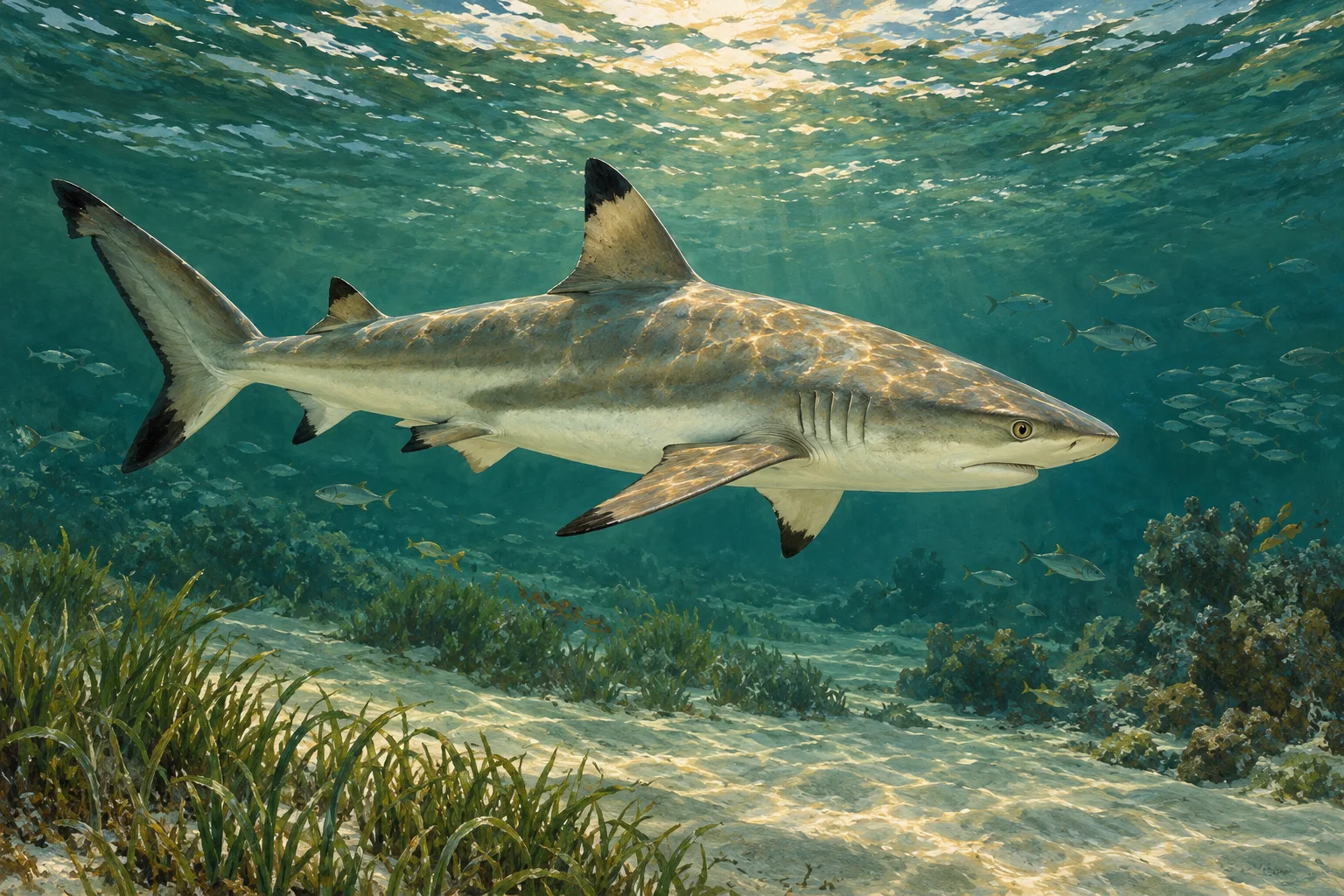
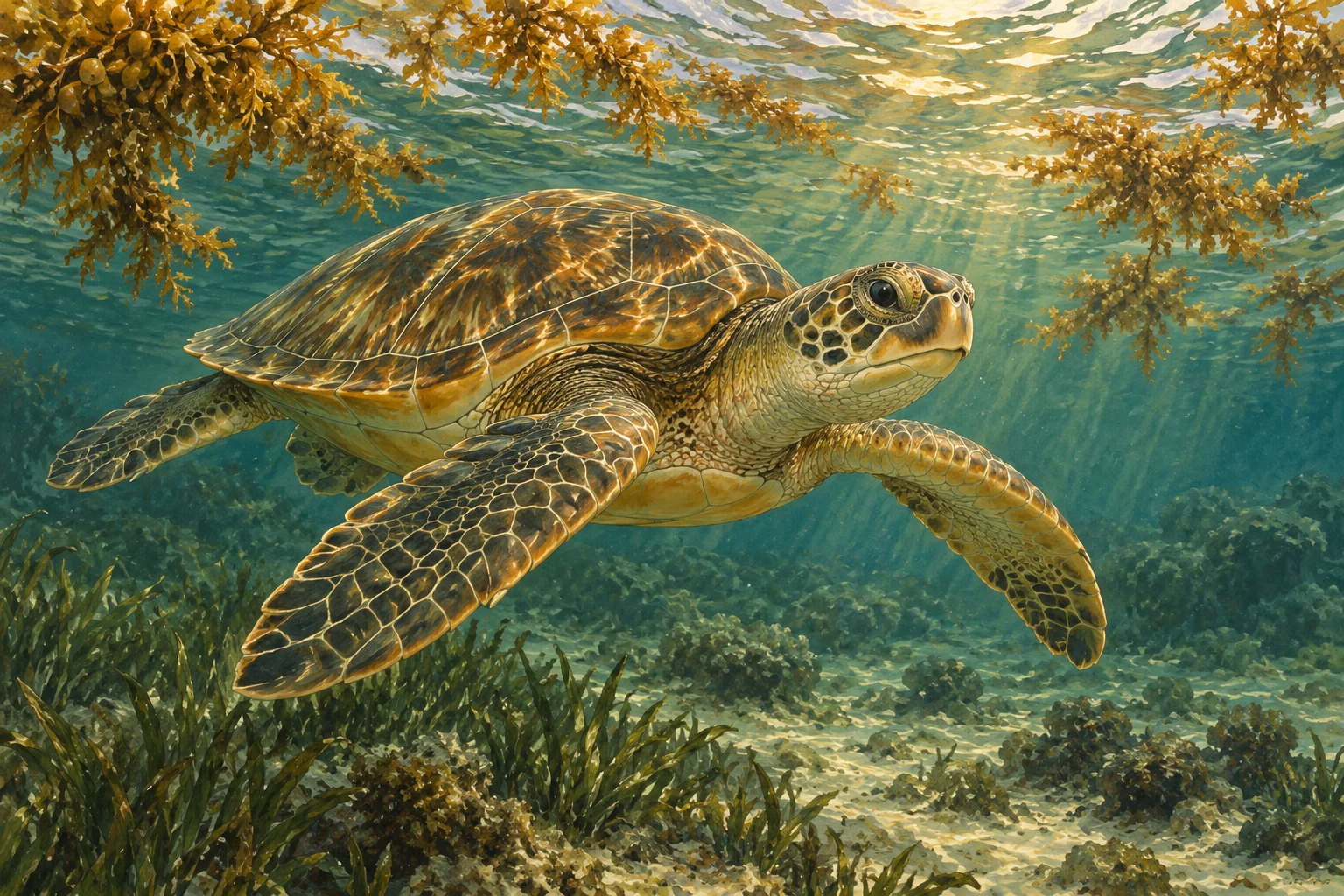
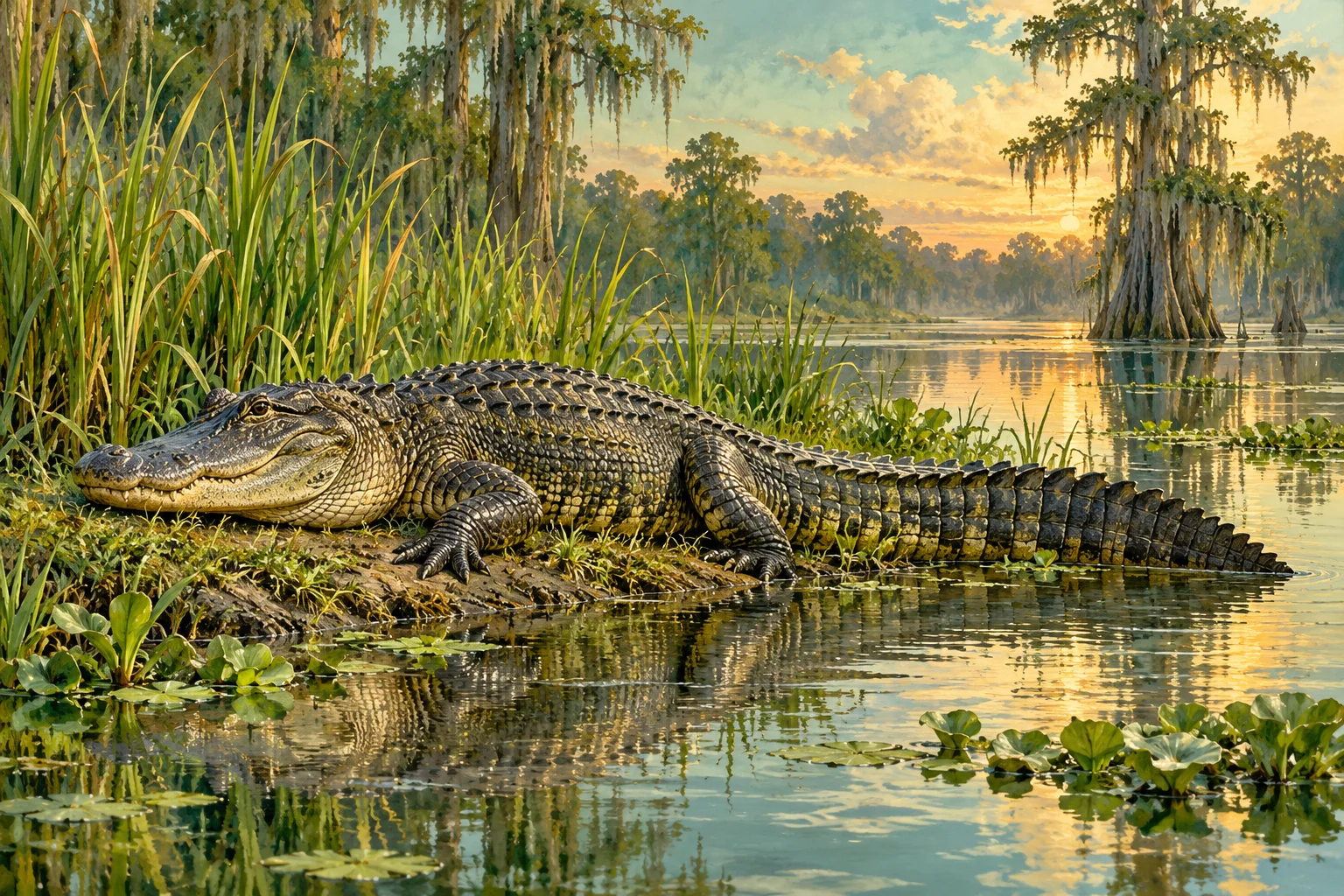
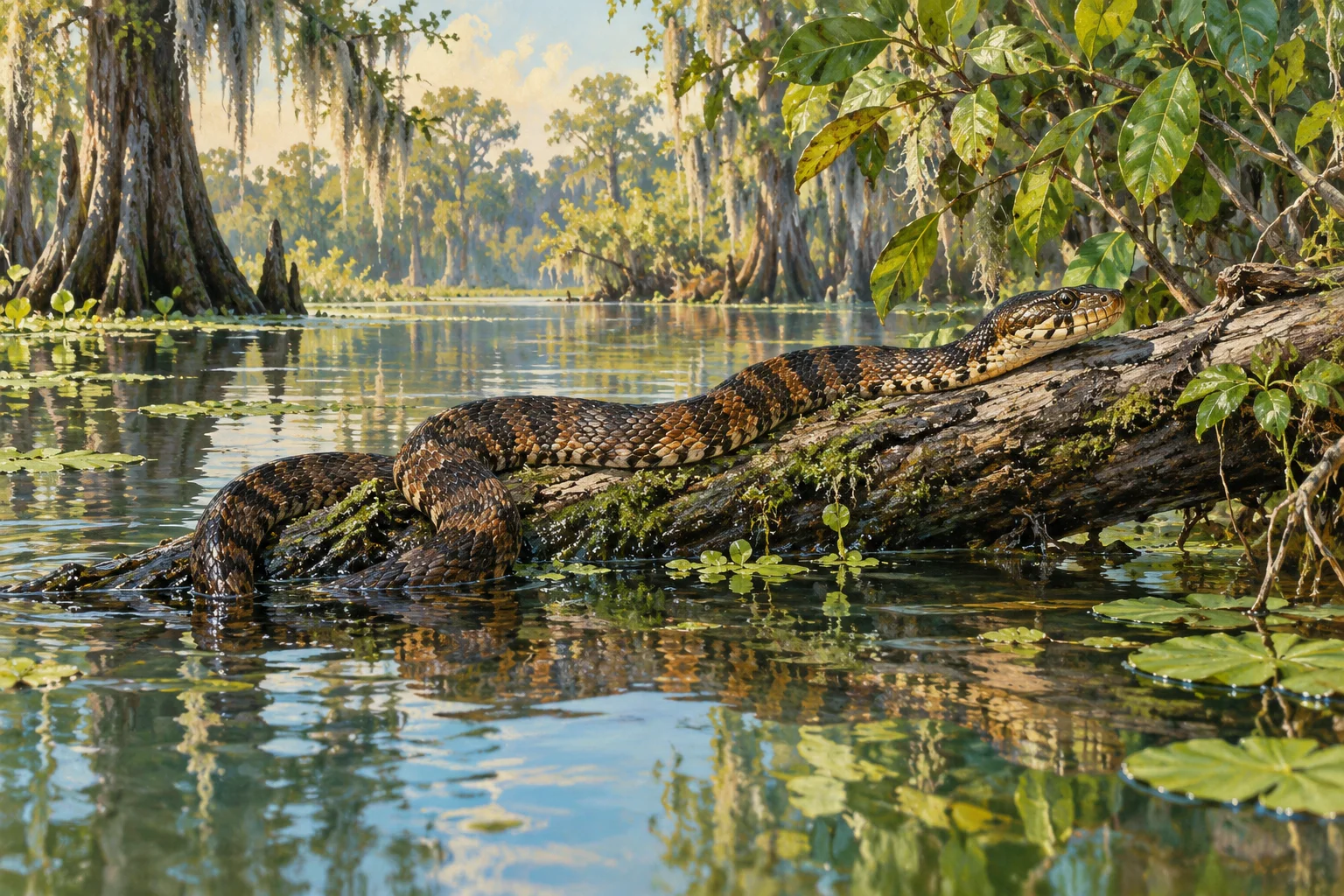
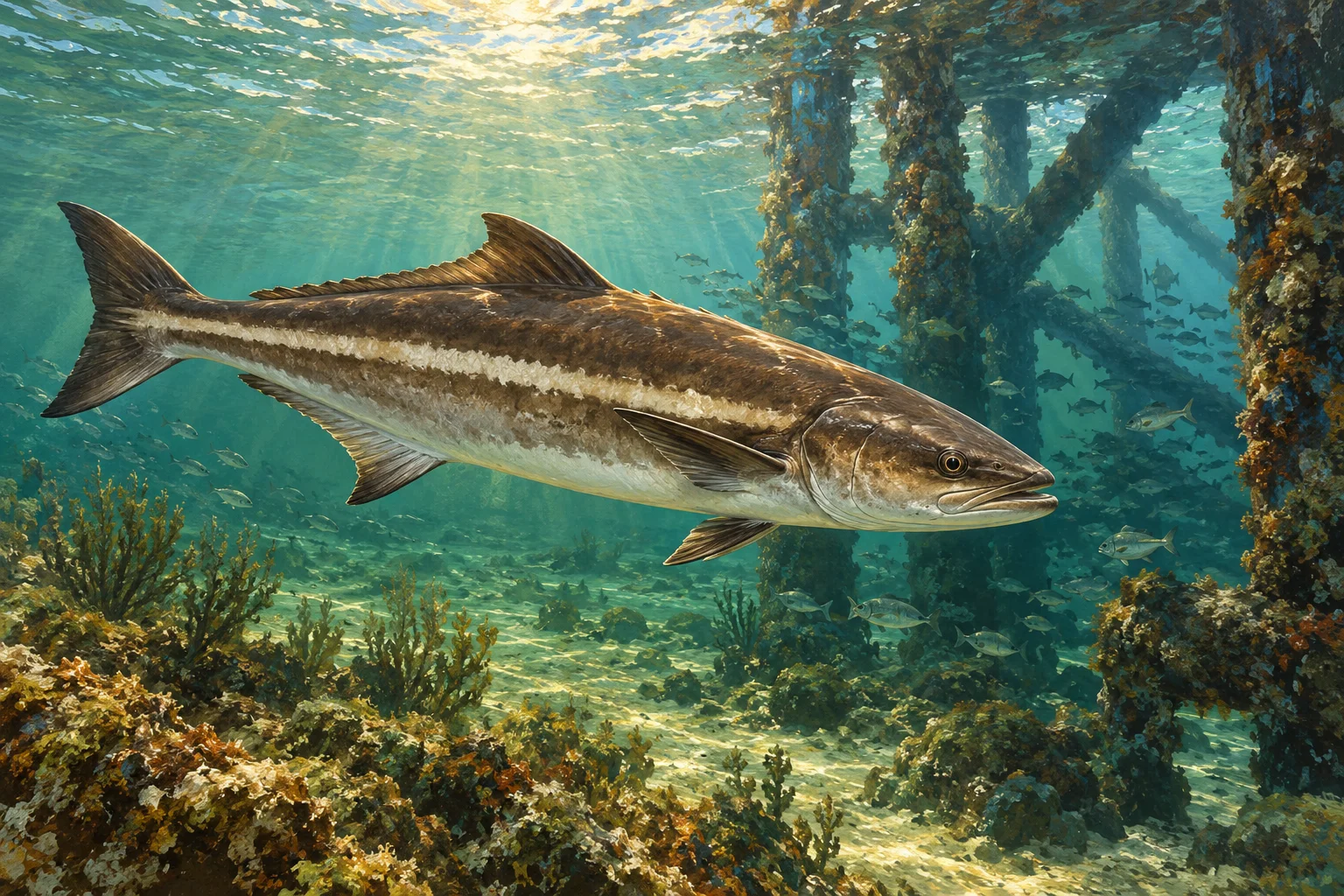
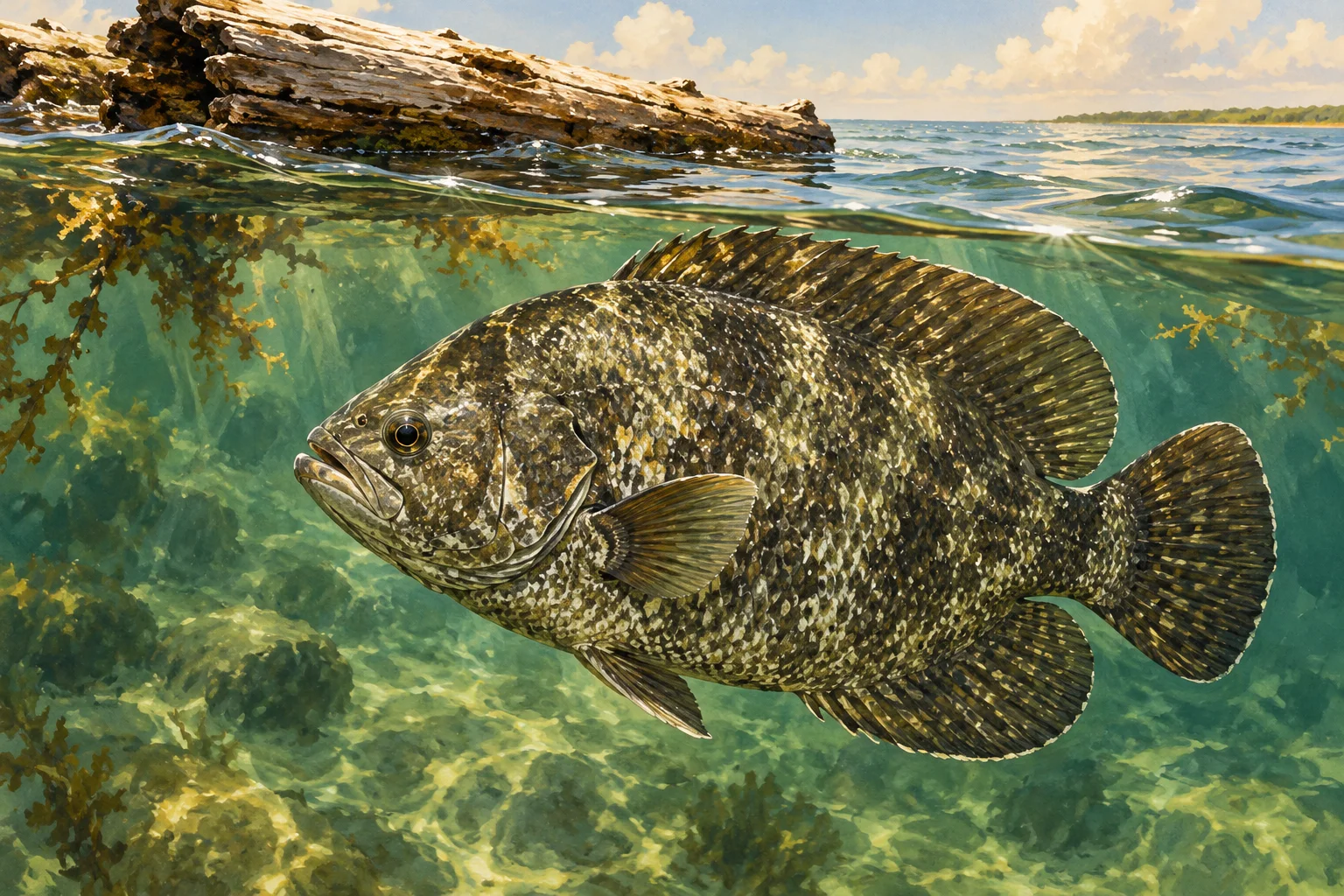
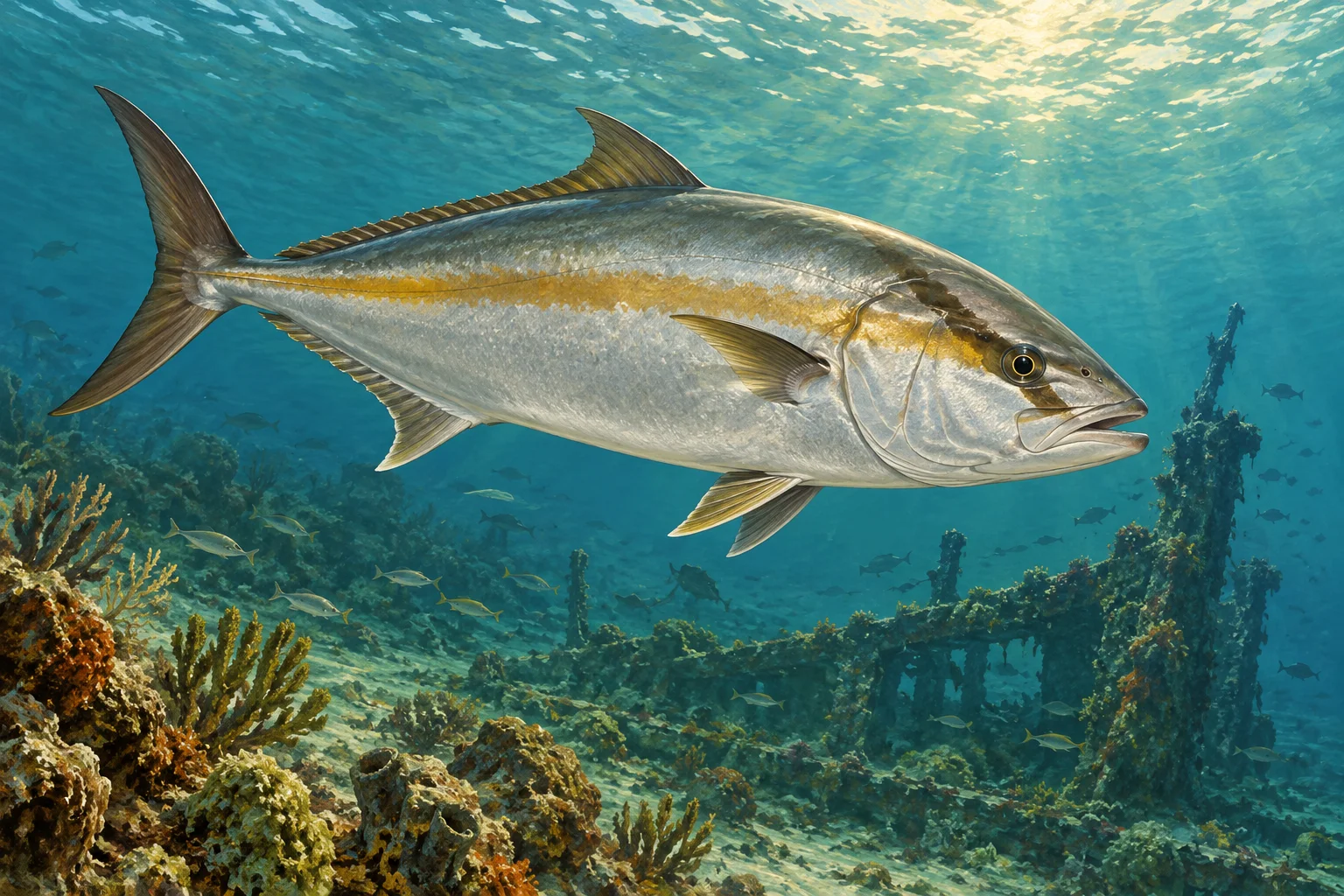
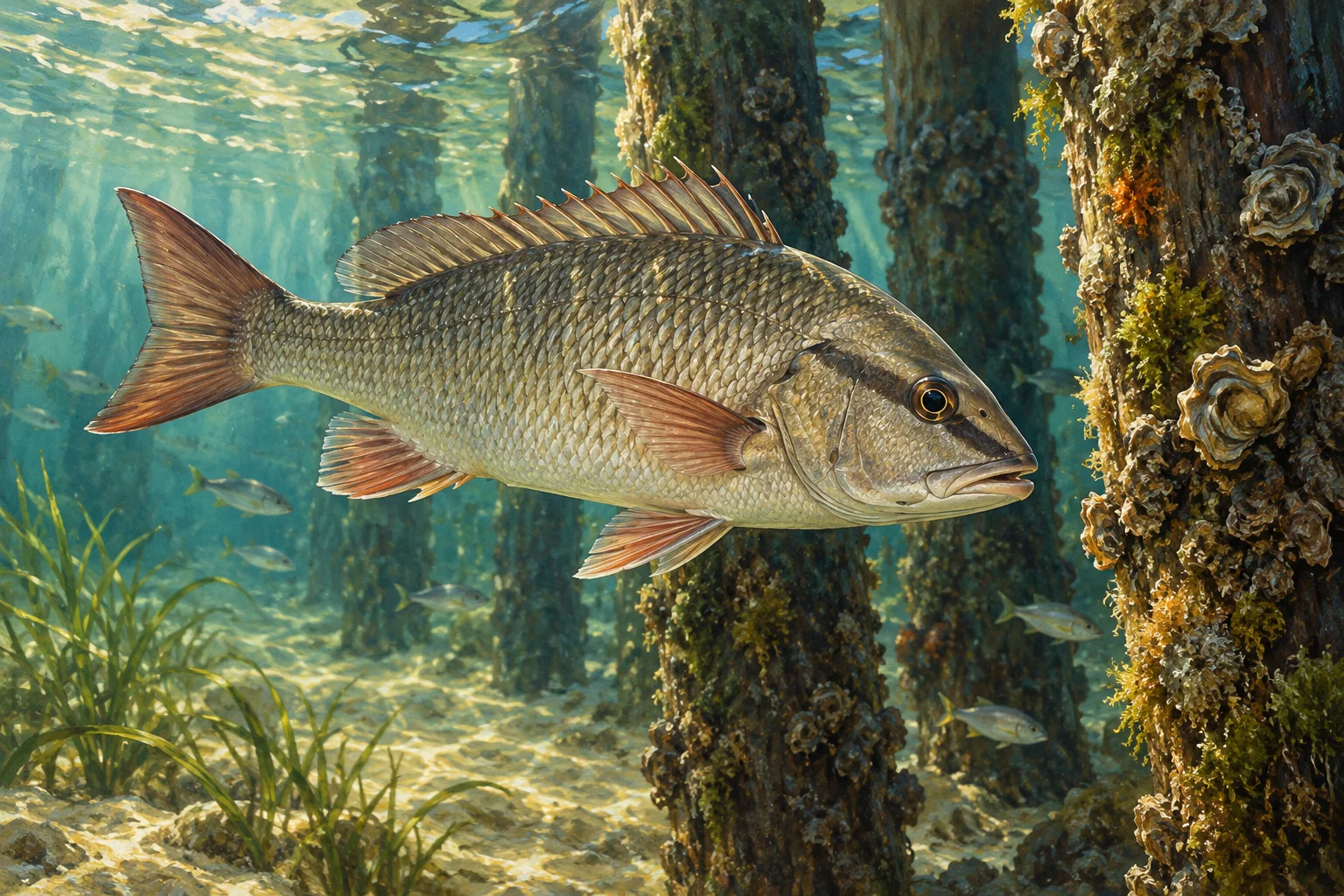
Habitat means the place an animal lives. Water tags describe broad settings, not today’s location of an animal. Some notes cover a group of animals, marked as a group entry. The illustrations introduce animal types; use a full reference for identification. In fin descriptions, dorsal means along the back, pectoral means at the sides behind the head, and anal means on the underside toward the tail.
Sharks
Blacktip shark
Carcharhinus limbatusHistorical Louisiana survey
A coastal shark associated with bays, river mouths and shelf water. It can resemble a spinner shark, so compare fins and body together.
A starting pointBlack-tipped fins can resemble spinner shark; compare the underside fin near the tail and the position of the first back fin.
Estuaries & brackish water · Coast & nearshore
Read the related guide →Sharks
Bull shark
Carcharhinus leucasHistorical Louisiana survey
A heavy-bodied coastal shark that can enter estuaries and freshwater. The setting alone cannot establish whether the animal is a bull shark.
A starting pointCompare the blunt head, small eyes and rear-sloping first fin on the back.
Freshwater · Estuaries & brackish water · Coast & nearshore
Read the related guide →Finfish · Group entry
Bowfin / choupique
Amia spp.Louisiana freshwater record
A native freshwater fish often confused with introduced snakeheads. Choupique and grinnel are useful local search names.
A starting pointCompare the long back fin, rounded tail and short fin underneath near the tail with the full reference.
Freshwater
Read the related guide →Finfish
Atlantic croaker
Micropogonias undulatusLouisiana / northern Gulf
A bottom-feeding drum of bays, estuaries and the Gulf. Its croaking sound gives the fish its name.
A starting pointLook for wavy markings and a rounded tail; compare similar spot.
Estuaries & brackish water · Coast & nearshore
Read the related guide →Rays
Cownose ray
Rhinoptera bonasusLouisiana survey record
A ray recorded in a Louisiana shrimp-fishery catch study. Rays and sharks have skeletons of cartilage, a flexible material rather than bone.
A starting pointIts broad body forms a swimming disc; use the full ray reference for identification.
Estuaries & brackish water · Coast & nearshore
Read the related guide →Mammals
Bottlenose dolphin
Louisiana coast and Gulf
A marine mammal that breathes air and feeds on fish and other prey. Coastal and offshore settings are distinct contexts.
A starting pointA dolphin is not the dolphinfish sold as mahi-mahi.
Estuaries & brackish water · Coast & nearshore · Offshore Gulf
Read the related guide →Louisiana wetlands
An important Louisiana wetland predator. The complete guide explains observation, fishing-area encounters and keeping fish scraps away from wildlife.
A starting pointA broad snout and armored body; give the animal room.
Freshwater · Estuaries & brackish water
Read the related guide →Louisiana water life
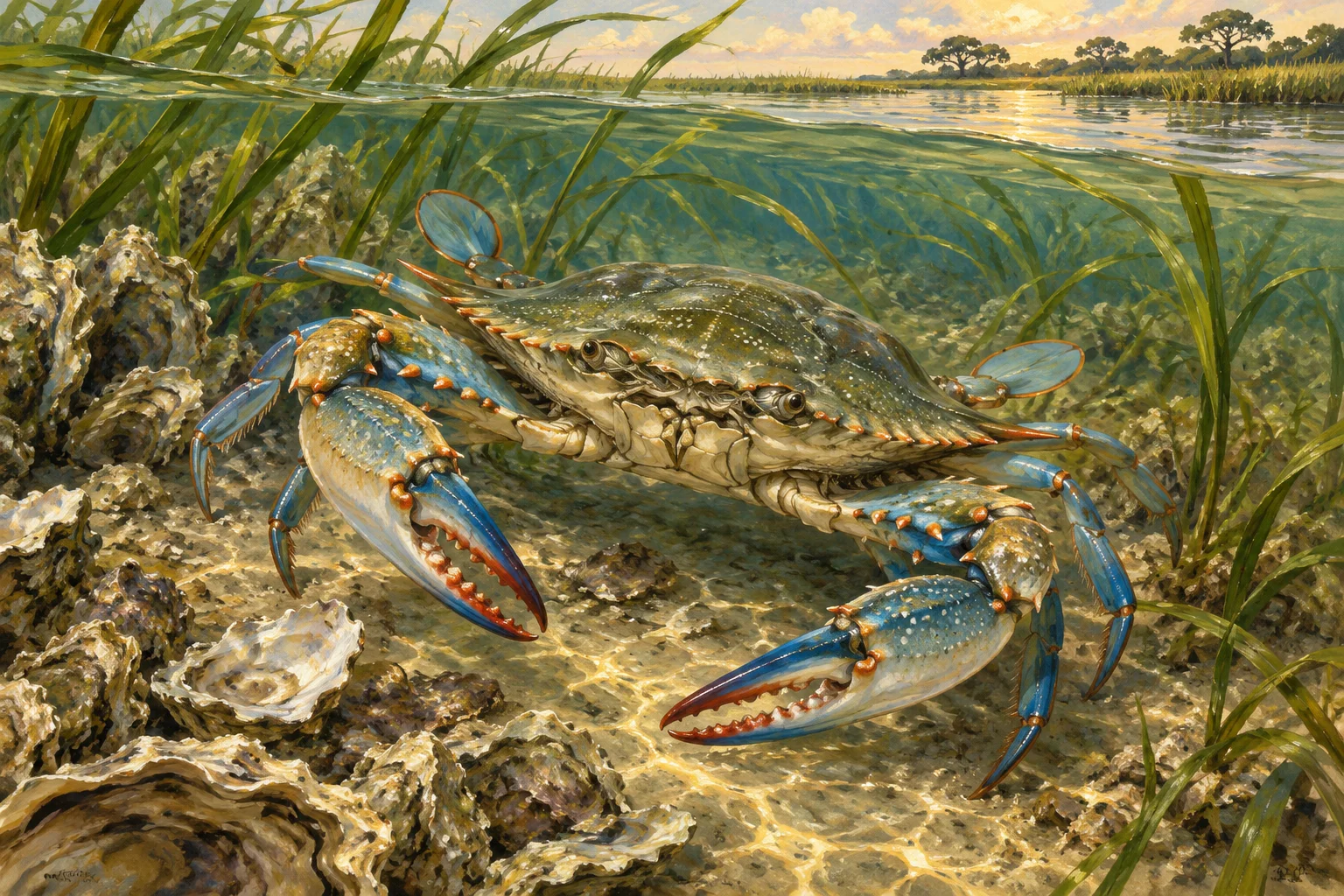
A swimming crab whose life connects mixed fresh/salt water with coastal habitat. Learn about the animal and check current recreational collecting rules separately.
A starting pointPaddle-like rear legs distinguish swimming crabs.
Estuaries & brackish water · Coast & nearshore
Read the related guide →Offshore records; uncommon encounter
A Gulf resident documented by sightings and calls offshore of Louisiana and Texas. Most records are farther east; encounters are unpredictable.
A starting pointUse the whale guide to understand offshore scope and observation limits.
Offshore Gulf
Read the related guide →Louisiana marine range
Included in NOAA’s Louisiana sea-turtle list. Follow the full lesson’s observation and reporting guidance rather than approaching a turtle.
A starting pointUse an agency species identification reference rather than size alone.
Coast & nearshore · Offshore Gulf
Read the related guide →Finfish
Redfish / red drum
Louisiana / northern Gulf
Red drum: a coastal fish associated with marshes and bays. Learn about bait below a float or a moving lure.
A starting pointOpen the guide to learn the fish’s features and the fishing activity.
Estuaries & brackish water · Coast & nearshore
Read the species guide →Louisiana water life
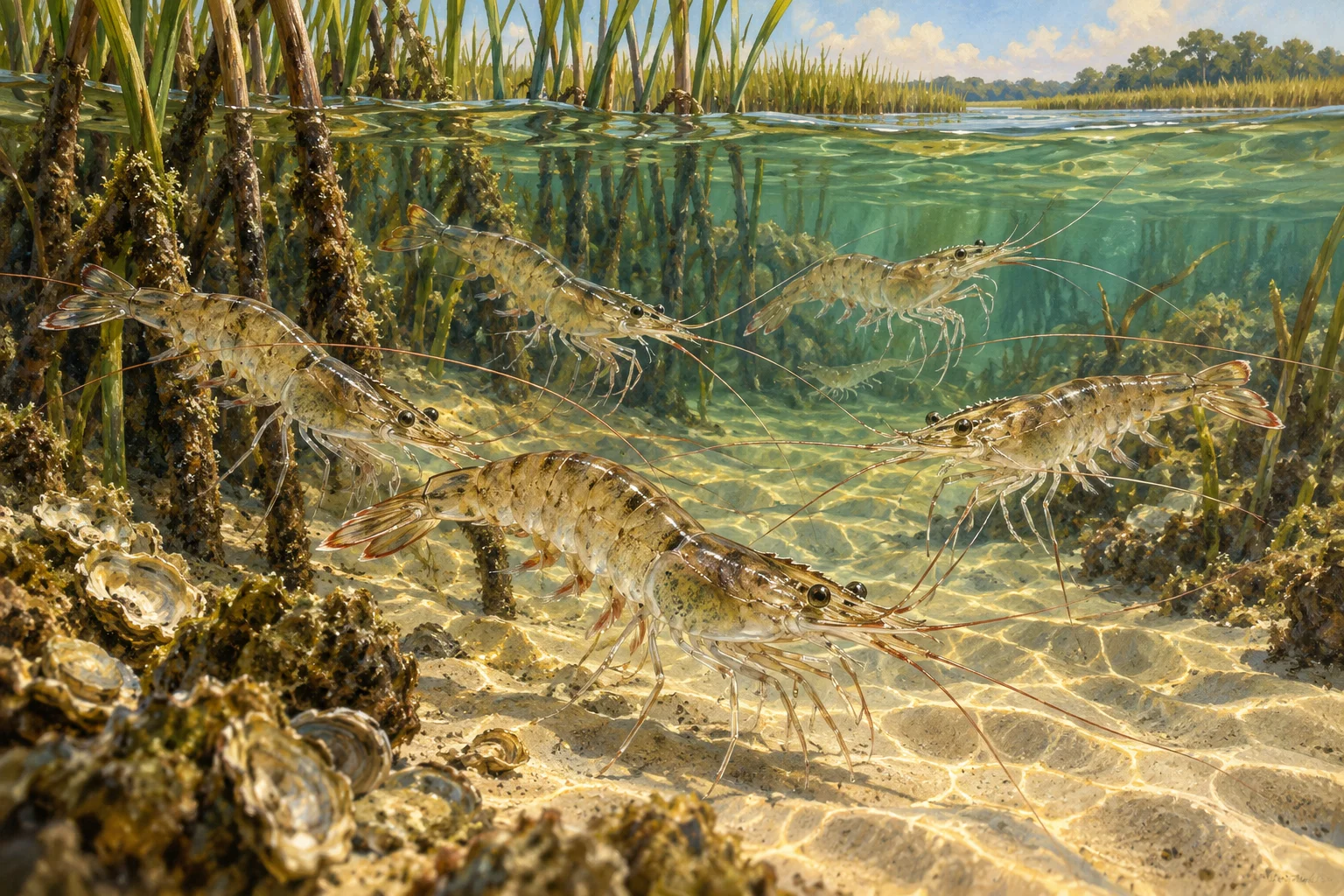
Its life cycle links breeding offshore with coastal mixed-water places where young shrimp grow. White shrimp and brown shrimp are distinct species.
A starting pointUse the full shrimp reference for species features.
Estuaries & brackish water · Coast & nearshore
Read the related guide →Louisiana / northern Gulf
Spotted seatrout is a coastal fish. Meet it and learn about floats and fishing with artificial bait.
A starting pointOpen the guide to learn the fish’s features and the fishing activity.
Estuaries & brackish water · Coast & nearshore
Read the species guide →Louisiana / northern Gulf
A coastal fish with dark bars that feeds on shellfish. Learn how its bait-fishing arrangement works.
A starting pointOpen the guide to learn the fish’s features and the fishing activity.
Estuaries & brackish water · Coast & nearshore
Read the species guide →Louisiana / northern Gulf
A coastal fish with whisker-like chin feelers. Learn the name and bait-fishing basics.
A starting pointOpen the guide to learn the fish’s features and the fishing activity.
Estuaries & brackish water · Coast & nearshore
Read the species guide →Louisiana / northern Gulf
A flatfish that lives close to the bottom. Learn its shape and how bait or a lure is worked near the bottom.
A starting pointOpen the guide to learn the fish’s features and the fishing activity.
Estuaries & brackish water · Coast & nearshore
Read the species guide →Louisiana / northern Gulf
A long coastal fish, also called lemonfish. Learn its names and what a controlled cast involves.
A starting pointOpen the guide to learn the fish’s features and the fishing activity.
Estuaries & brackish water · Coast & nearshore
Read the species guide →Louisiana / northern Gulf
A fish whose rear fins create a three-tail outline. Learn about bait below a float moving with the water.
A starting pointOpen the guide to learn the fish’s features and the fishing activity.
Estuaries & brackish water · Coast & nearshore
Read the species guide →Louisiana / northern Gulf
Also called gray snapper. Learn the fish and how bait is placed near underwater objects.
A starting pointOpen the guide to learn the fish’s features and the fishing activity.
Estuaries & brackish water · Coast & nearshore
Read the species guide →Louisiana / northern Gulf
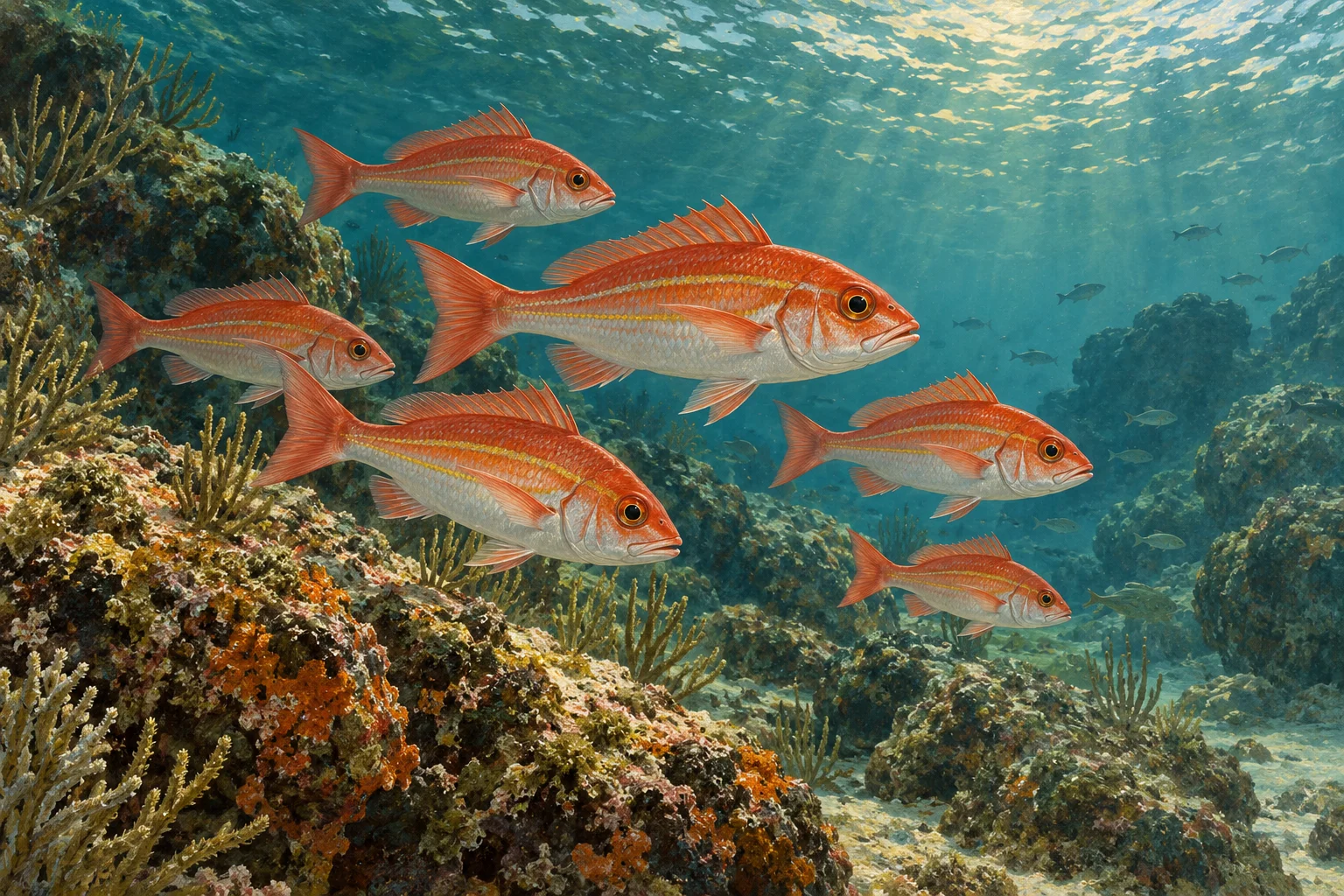
A Gulf snapper often associated with reefs. Picture lowering bait from a boat.
A starting pointOpen the guide to learn the fish’s features and the fishing activity.
Offshore Gulf
Read the species guide →Louisiana / northern Gulf
An open-water Gulf fish. Learn the methods and guest role on an offshore day.
A starting pointOpen the guide to learn the fish’s features and the fishing activity.
Offshore Gulf
Read the species guide →Louisiana / northern Gulf
A streamlined open-water fish. Understand trolling behind a moving boat.
A starting pointOpen the guide to learn the fish’s features and the fishing activity.
Offshore Gulf
Read the species guide →Louisiana / northern Gulf
Also called dolphinfish or dorado. Compare casting a lure with pulling it behind a moving boat.
A starting pointOpen the guide to learn the fish’s features and the fishing activity.
Offshore Gulf
Read the species guide →Louisiana / northern Gulf
One of several similar-looking jacks. Learn the names and how a lure is moved below a boat.
A starting pointOpen the guide to learn the fish’s features and the fishing activity.
Offshore Gulf
Read the species guide →Louisiana / northern Gulf
A separate species from red snapper. Learn about lowering a fishing line from a boat and bringing it back.
A starting pointOpen the guide to learn the fish’s features and the fishing activity.
Offshore Gulf
Read the species guide →Louisiana / northern Gulf
Meet largemouth bass and learn how a lure is sent out and brought back, plus the features to notice in the water.
A starting pointOpen the guide to learn the fish’s features and the fishing activity.
Freshwater
Read the species guide →Finfish · Group entry
Crappie / sac-a-lait
Louisiana / northern Gulf
Also called sac-a-lait. Learn about a float, a small lure and the depth where the bait is presented.
A starting pointOpen the guide to learn the fish’s features and the fishing activity.
Freshwater
Read the species guide →Finfish · Group entry
Catfish
Louisiana / northern Gulf
Meet blue, channel and flathead catfish and learn a baited bottom setup.
A starting pointOpen the guide to learn the fish’s features and the fishing activity.
Freshwater
Read the species guide →Finfish · Group entry
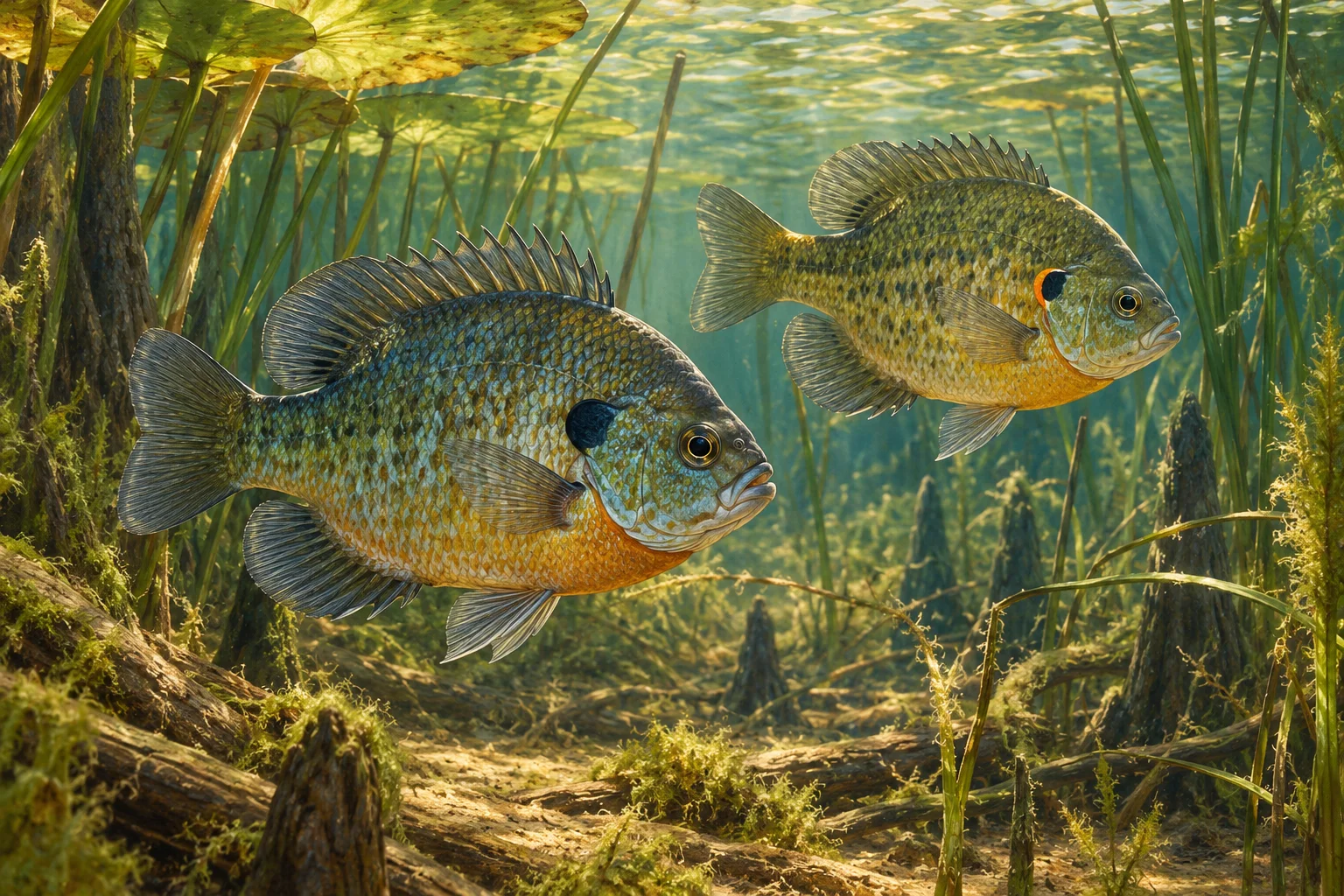
Bluegill & redear
Louisiana / northern Gulf
Learn the sunfish names often called bream and how a baited hook below a float works.
A starting pointOpen the guide to learn the fish’s features and the fishing activity.
Freshwater
Read the species guide →Finfish · Group entry
Striped & white bass
Louisiana / northern Gulf
Different bass from largemouth. Learn their names and how anglers fish for groups of them.
A starting pointOpen the guide to learn the fish’s features and the fishing activity.
Freshwater
Read the species guide →Louisiana / northern Gulf
A native freshwater fish with a long body and broad snout. Learn through observation.
A starting pointOpen the guide to learn the fish’s features and the fishing activity.
Freshwater
Read the species guide →Finfish
Sand seatrout / white trout
Cynoscion arenariusLouisiana / northern Gulf
Sand and mud bottoms support this seatrout from estuaries into the Gulf. White trout is a shared local name, so distinguish it from silver seatrout.
A starting pointOften has a yellowish tone; compare the full agency illustration.
Estuaries & brackish water · Coast & nearshore
Read the related guide →Finfish
Silver seatrout
Cynoscion nothusLouisiana / northern Gulf
A northern Gulf seatrout that is often grouped with sand seatrout under the name white trout. They are different species.
A starting pointA silver body without the yellowish tone described for sand seatrout; use the full comparison.
Estuaries & brackish water · Coast & nearshore
Read the related guide →Finfish
Gafftopsail catfish
Bagre marinusLouisiana / northern Gulf
A coastal catfish with long fin extensions and whisker-like feelers called barbels. It feeds at different levels between the surface and bottom.
A starting pointLook for the long fin extensions; the fin spines are sharp. Use the full reference.
Estuaries & brackish water · Coast & nearshore
Read the related guide →Louisiana / northern Gulf
A saltwater catfish of coastal water and estuaries, where fresh water and seawater mix. It lacks the gafftopsail catfish’s long fin extensions.
A starting pointCompare the whisker-like chin feelers and fins with the full reference; fin spines are sharp.
Estuaries & brackish water · Coast & nearshore
Read the related guide →Finfish
Striped mullet
Mugil cephalusLouisiana / northern Gulf
Mullet can group together in rivers, coastal mixed water and the Gulf. They eat algae and small pieces of dead organic material, and larger fish eat them.
A starting pointLook for two separated fins along the back; stripes can be clearer on larger fish.
Freshwater · Estuaries & brackish water · Coast & nearshore
Read the related guide →Finfish
King mackerel / kingfish
Scomberomorus cavallaLouisiana / northern Gulf
An open-water coastal predator that follows food and temperature. Young kings can have spots, making color alone an unreliable distinction from Spanish mackerel.
A starting pointCompare the sharply dipping line along the side, called the lateral line, and the first fin on the back.
Coast & nearshore · Offshore Gulf
Read the related guide →Finfish
Spanish mackerel
Scomberomorus maculatusLouisiana / northern Gulf
A coastal predator that swims in groups and feeds heavily on smaller fish. Use the full species reference when comparing it with a young king mackerel.
A starting pointOval yellowish spots; the lateral line along the side does not dip as sharply as a king mackerel’s.
Coast & nearshore · Offshore Gulf
Read the related guide →Finfish
Crevalle jack
Caranx hipposLouisiana / northern Gulf
One of the jacks shown in LDWF’s common Louisiana saltwater-fish reference. Identification should distinguish it from other jack-family fish.
A starting pointDark gill-cover spot and a steep forehead are useful comparison features.
Estuaries & brackish water · Coast & nearshore
Read the related guide →Finfish
Florida pompano
Trachinotus carolinusLouisiana / northern Gulf
Despite the name, this fish appears in LDWF’s Louisiana coastal-fish poster. Compare its body, tall from back to belly, with similar jacks.
A starting pointA tall, silver body with yellow below; the sides at the base of the tail are smooth.
Coast & nearshore
Read the related guide →Finfish
Atlantic spadefish
Chaetodipterus faberLouisiana / northern Gulf
A fish with a tall body from back to belly, included in LDWF’s common Louisiana saltwater-fish poster. Use the illustrated reference for a complete comparison.
A starting pointA spade-shaped body with contrasting vertical bands.
Coast & nearshore · Offshore Gulf
Read the related guide →Finfish
Tarpon
Megalops atlanticusLouisiana / northern Gulf
Tarpon are included in LDWF’s common Louisiana saltwater-fish poster. Begin with identification and the intended water before choosing a specialized outing.
A starting pointLarge reflective scales and an upturned mouth are starting cues.
Estuaries & brackish water · Coast & nearshore
Read the related guide →Finfish
Bluefish
Pomatomus saltatrixLouisiana / northern Gulf
Bluefish are included in LDWF’s common Louisiana saltwater-fish poster. A familiar name is not a reason to skip a species comparison.
A starting pointCompare the body, mouth and fins with the official illustration.
Coast & nearshore
Read the related guide →Finfish
Blue runner / hardtail
Caranx crysosLouisiana / northern Gulf
Louisiana Sea Grant describes blue runners around northern Gulf platforms and their place in the food web. They are fish to recognize even when another species is the intended target.
A starting pointHardtail is a local name for blue runner.
Coast & nearshore · Offshore Gulf
Read the related guide →Finfish
Blackfin tuna
Thunnus atlanticusLouisiana / northern Gulf
A Gulf tuna that can enter greener water closer to shore than some other tunas. Distinguish it from yellowfin and small tuna look-alikes.
A starting pointCompare the dark small fins near the tail, called finlets, and the golden band along the side with the full tuna reference.
Offshore Gulf
Read the related guide →Finfish
Skipjack tuna
Katsuwonus pelamisLouisiana / northern Gulf
A tuna that swims in groups in open Gulf water. Shared names such as bonito can hide differences between skipjack, little tunny and Atlantic bonito.
A starting pointHorizontal dark lines run along the lower sides and belly.
Offshore Gulf
Read the related guide →Finfish
Little tunny / false albacore
Euthynnus alletteratusLouisiana / northern Gulf
A Gulf tuna relative that swims in groups and can range close to shore. It is a different fish from albacore or Atlantic bonito.
A starting pointWavy marks on the rear back and dark spots low near the side fins behind the head.
Coast & nearshore · Offshore Gulf
Read the related guide →Finfish
Gray triggerfish
Balistes capriscusLouisiana / northern Gulf
A reef-associated fish with a distinctive locking spine on its back. Young and adult fish differ in appearance.
A starting pointA tall body from back to belly and a prominent first spine on the back are comparison clues.
Offshore Gulf
Read the related guide →Finfish
Gag grouper
Mycteroperca microlepisLouisiana / northern Gulf
Louisiana Sea Grant describes adults around raised features on the Gulf bottom and young fish closer to shore. The name black grouper is sometimes used loosely for gag.
A starting pointPatchy gray coloring; compare the detailed grouper identification reference.
Coast & nearshore · Offshore Gulf
Read the related guide →Finfish
Red grouper
Epinephelus morioGulf range
A grouper within the wider Gulf range. Adults associate with rocky ledges and bottom habitat with living growth; young fish use shallower habitat.
A starting pointReddish-brown body, pale spots and a large mouth.
Coast & nearshore · Offshore Gulf
Read the related guide →Finfish
Almaco jack
Seriola rivolianaLouisiana / northern Gulf
A Gulf jack associated with reefs and platforms. It can occur near greater amberjack, so compare the whole fish before naming it.
A starting pointCompare the taller body from back to belly and longer rear fin sections; use the full jack reference.
Offshore Gulf
Read the related guide →Finfish
Swordfish
Xiphias gladiusGulf range
An open-ocean predator that moves between depths. The Gulf forms part of its nursery range—areas used by young fish. This is a specialized offshore fishing context.
A starting pointA flattened sword-like bill and large eyes.
Offshore Gulf
Read the related guide →Finfish
Freshwater drum / gaspergou
Aplodinotus grunniensLouisiana freshwater record
A freshwater member of the drum family that often feeds close to the bottom. It is a different species from coastal redfish and black drum.
A starting pointA silvery body, tall from back to belly, without the red drum’s tail spot.
Freshwater
Read the related guide →Finfish
Paddlefish / spoonbill
Polyodon spathulaLouisiana freshwater record
A river fish that filters tiny drifting living things, called plankton, from the water. Its spoonbill nickname does not make it a catfish.
A starting pointLook for the long, flattened paddle-shaped snout.
Freshwater
Read the related guide →Finfish
Spotted gar
Lepisosteus oculatusLouisiana freshwater record
One of several Louisiana gars. Compare the head, body and fins together, especially for young fish.
A starting pointThe head and paired side fins have dark spots; compare the whole fish with a reference.
Freshwater
Read the related guide →Finfish
Longnose gar
Lepisosteus osseusLouisiana freshwater record
A gar recorded in Louisiana waters that should be distinguished from alligator and spotted gar.
A starting pointA particularly long, narrow snout.
Freshwater
Read the related guide →Finfish
Shortnose gar
Lepisosteus platostomusLower Mississippi / Gulf drainage
A gar to compare when the snout is shorter. A large gar is not automatically an alligator gar.
A starting pointCompare the head and side-fin markings with spotted gar using the full reference.
Freshwater
Read the related guide →Finfish
Warmouth / goggle-eye
Lepomis gulosusLouisiana freshwater record
A heavy-bodied sunfish recorded in Louisiana freshwater systems. Local names can overlap, so goggle-eye is not a complete identification.
A starting pointLarge mouth; compare with green sunfish.
Freshwater
Read the related guide →Finfish
Green sunfish
Lepomis cyanellusLouisiana freshwater record
A large-mouthed sunfish that can be confused with warmouth. It is one of several distinct fishes often grouped as bream.
A starting pointDark green body with turquoise markings and faint bars.
Freshwater
Read the related guide →Finfish
Longear sunfish
Lepomis megalotisLouisiana freshwater record
A colorful sunfish with a conspicuous gill-cover flap. Louisiana inventories include it alongside several other bream species.
A starting pointA long flap on the gill cover, often with pale edging; this feature is called the ear flap.
Freshwater
Read the related guide →Finfish
Smallmouth buffalo
Ictiobus bubalusLouisiana freshwater record
A native fish in the sucker family, sometimes confused with carp. Mouth position helps distinguish the buffalo species.
A starting pointLook for a downward-facing mouth without the whisker-like feelers associated with carp.
Freshwater
Read the related guide →Finfish
Spotted bass
Micropterus punctulatusLouisiana freshwater record
A black bass to distinguish from largemouth bass. The site’s bass lesson and agency reference explain why a familiar bass outline is insufficient.
A starting pointRows of dark spots on the lower sides; use the detailed bass identification reference.
Freshwater
Read the related guide →Finfish
Yellow bass
Morone mississippiensisLouisiana freshwater record
A bass recorded in Louisiana freshwater systems. Compare it with white bass and young striped bass.
A starting pointYellowish belly and breaks in the lower dark stripes.
Freshwater
Read the related guide →Finfish
Chain pickerel
Esox nigerLouisiana freshwater record
A freshwater predator recorded in Louisiana inventories. It belongs to the pike family, rather than the gar family.
A starting pointA large mouth; the fin on the back and the fin underneath are far back on the body. Compare the full reference.
Freshwater
Read the related guide →Sharks
Spinner shark
Carcharhinus brevipinnaHistorical Louisiana survey
A coastal and offshore shark easily confused with blacktip. Compare the first back fin’s position and the markings on the underside fin near the tail.
A starting pointVery similar to blacktip; use the full identification reference rather than fin-tip color alone.
Coast & nearshore · Offshore Gulf
Read the related guide →Sharks
Finetooth shark
Carcharhinus isodonHistorical Louisiana survey
A predator of small fish in shallow coastal water, bays and estuaries. It also eats squid and crustaceans, the group that includes crabs and shrimp.
A starting pointPointed snout, long gill slits and generally unmarked fins.
Estuaries & brackish water · Coast & nearshore
Read the related guide →Sharks
Atlantic sharpnose shark
Rhizoprionodon terraenovaeHistorical Louisiana survey
A small shark whose Gulf life cycle links breeding areas near the coast and deeper water. Its diet includes small fish and crustaceans, such as crabs and shrimp.
A starting pointA slender shark with a pointed snout; adults may have white side spots.
Coast & nearshore · Offshore Gulf
Read the related guide →Sharks
Bonnethead shark
Sphyrna tiburoHistorical Louisiana survey
A small hammerhead-family shark of shallow bays and estuaries. It eats crustaceans and other prey and can also consume seagrass.
A starting pointA rounded, shovel-shaped head rather than the wider hammer of larger hammerheads.
Estuaries & brackish water · Coast & nearshore
Read the related guide →Sharks
Scalloped hammerhead
Sphyrna lewiniHistorical Louisiana survey
A Gulf hammerhead with a curved front edge to its head. Historical Louisiana nearshore nursery work recorded this species.
A starting pointAn arched hammer-shaped head with a central indentation.
Coast & nearshore · Offshore Gulf
Read the related guide →Sharks
Lemon shark
Negaprion brevirostrisHistorical Louisiana survey
A yellowish to gray coastal shark with two similarly sized fins on its back. Louisiana’s historical nearshore survey summary includes a small number of records.
A starting pointTwo similarly sized back fins are a starting feature to compare, not a complete identification.
Coast & nearshore
Read the related guide →Sharks
Great hammerhead
Sphyrna mokarranGulf range
A shark found within the wider Gulf region. That range does not establish a sighting at a particular Louisiana beach or fishing site.
A starting pointA nearly straight front edge to the hammer-shaped head and a very tall, curved first back fin.
Coast & nearshore · Offshore Gulf
Read the related guide →Sharks
Tiger shark
Galeocerdo cuvierGulf range
A shark within the Gulf’s regional fauna. A regional range is not a verified sighting at a particular Louisiana beach or fishing site.
A starting pointJuvenile blotches become bars; markings can fade in adults.
Coast & nearshore · Offshore Gulf
Read the related guide →Sharks
Whale shark
Rhincodon typusUnpredictable offshore occurrence
Historically recorded at Ewing Bank off Louisiana. NOAA’s 2026 account says sharks are no longer routinely seen at that former aggregation site.
A starting pointBroad head and pale spots across a dark body; it is a shark, not a whale.
Offshore Gulf
Read the related guide →Rays
Atlantic stingray
Hypanus sabinusLouisiana survey record
A stingray recorded in a Louisiana shrimp-fishery catch study. A short directory note does not teach handling.
A starting pointCompare the broad, flattened body and tail with a detailed ray identification reference.
Estuaries & brackish water · Coast & nearshore
Read the related guide →Rays
Giant manta ray
Mobula birostrisRegional marine range
Included in NOAA’s Louisiana protected-marine-species consultation list. Its regional presence does not imply a predictable viewing opportunity.
A starting pointBroad, wing-shaped fins and projecting parts at the front of the head; compare the reference without pursuing.
Offshore Gulf
Read the related guide →Regional offshore range
An air-breathing mammal included in NOAA’s regional Louisiana marine-species list. Learn about the offshore setting in the whale guide.
A starting pointA distant breath or surface glimpse may not identify the species. Use an expert whale reference.
Offshore Gulf
Read the related guide →Mammals
West Indian manatee
Seasonal visitor
A plant-eating mammal that can visit northern Gulf waters seasonally. It comes to the surface to breathe air.
A starting pointCompare its rounded paddle-shaped tail with the two-sided tail of a dolphin.
Freshwater · Estuaries & brackish water · Coast & nearshore
Read the related guide →Mammals
North American river otter
Louisiana waterways
Compare head shape, whiskers and tail profile to distinguish a river otter from a nutria or muskrat during a surface sighting.
A starting pointA long body and a tail covered in fur that narrows toward the tip.
Freshwater · Estuaries & brackish water
Read the related guide →Introduced in Louisiana
An introduced waterside rodent with a different ecological role from an otter. A visible swimming head alone can be misleading.
A starting pointA rounded tail with little hair; compare body size and snout.
Freshwater · Estuaries & brackish water
Read the related guide →Louisiana wetlands
A smaller waterside rodent often confused with nutria. Use more than size when comparing an animal seen at a distance.
A starting pointA narrow tail flattened from side to side.
Freshwater · Estuaries & brackish water
Read the related guide →Louisiana marine range
One of five marine turtles listed for Louisiana by NOAA. Use the sea-turtle guide for encounters, nesting context and reporting routes.
A starting pointAn identification reference is needed to separate sea-turtle species.
Coast & nearshore · Offshore Gulf
Read the related guide →Louisiana marine range
One of Louisiana’s five documented sea-turtle species. A color name alone cannot identify a turtle in the water.
A starting pointCompare shell and head features in the official turtle reference.
Coast & nearshore · Offshore Gulf
Read the related guide →Regional offshore range
Included in NOAA’s regional Louisiana marine-species list. An offshore record does not establish an accessible viewing destination.
A starting pointUse the agency turtle reference to distinguish its ridged body covering.
Offshore Gulf
Read the related guide →Regional marine range
Included in NOAA’s Louisiana regional sea-turtle list. The directory establishes scope rather than predicting a local sighting.
A starting pointCompare the official species description before naming a sighting.
Coast & nearshore · Offshore Gulf
Read the related guide →Louisiana estuary record
A turtle recorded in a Louisiana shrimp-fishery study of unintentionally caught animals, called bycatch. Turtles of mixed coastal water need their own identification and conservation context.
A starting pointUse the turtle reference; this is not a sea-turtle species.
Estuaries & brackish water · Coast & nearshore
Read the related guide →Louisiana freshwater
A freshwater turtle represented in Louisiana’s wildlife action plan. Observe turtles resting in the sun without collecting or disturbing them.
A starting pointUse a detailed turtle identification guide; visible head marks are only a start.
Freshwater
Read the related guide →Louisiana freshwater
An aquatic turtle included in Louisiana’s wildlife action plan. Its name describes a turtle, not a young alligator.
A starting pointObserve from a distance and use an expert reference.
Freshwater
Read the related guide →Louisiana wetlands
A venomous snake, able to inject a harmful substance through its bite, included in LDWF’s Louisiana snake field guide. Several nonvenomous water snakes use similar settings.
A starting pointHead shape or swimming posture alone is not a dependable identification.
Freshwater · Estuaries & brackish water
Read the related guide →Louisiana waterways
Louisiana has multiple watersnake species. This group entry leads to the lesson and official field guide instead of treating every swimming snake as a cottonmouth.
A starting pointCompare species using a detailed identification reference; do not handle an uncertain snake.
Freshwater · Estuaries & brackish water
Read the related guide →Louisiana water life
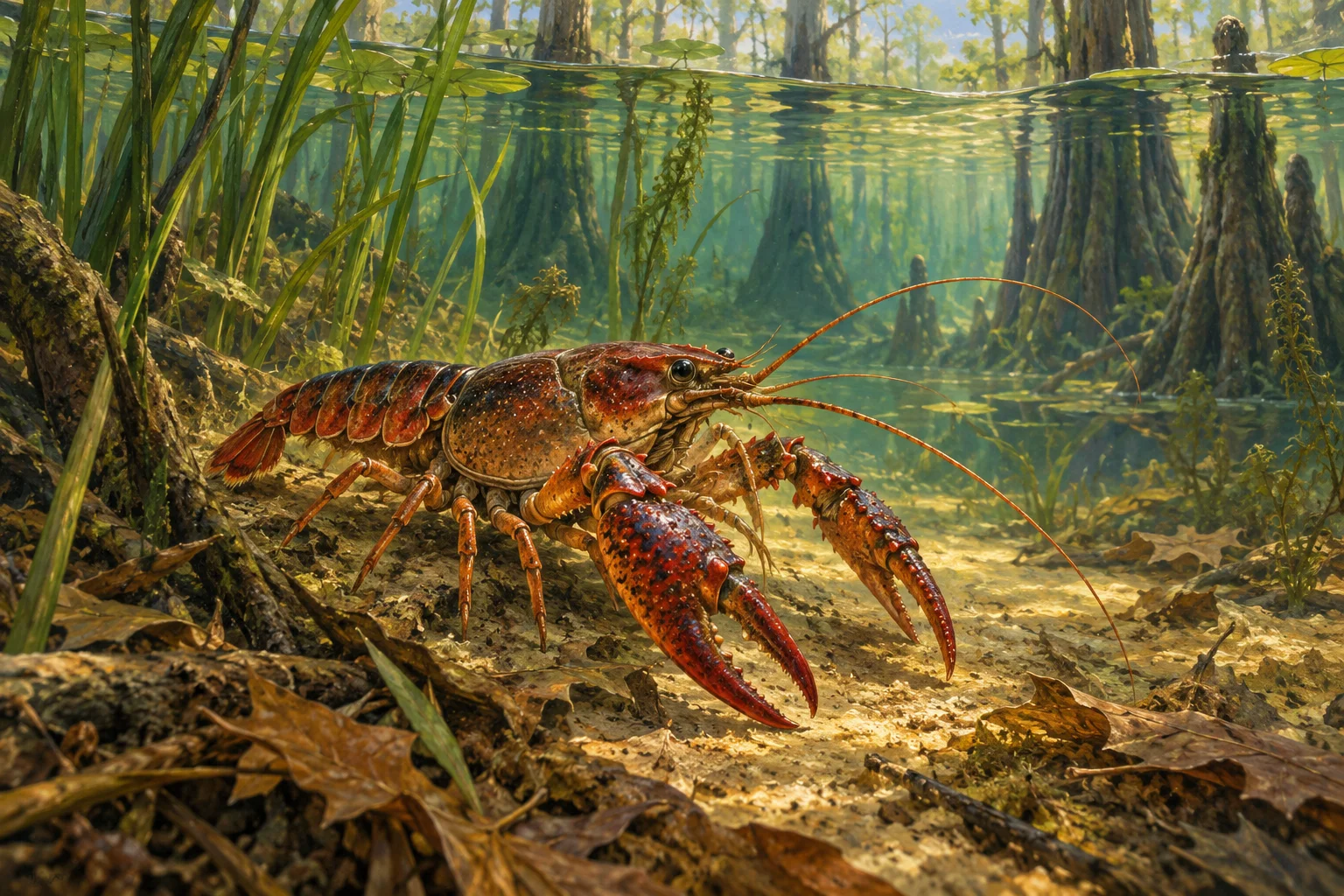
One of the two major Louisiana crawfish species described by LSU AgCenter. Using burrows—holes or tunnels in the ground—and changing water conditions are part of its life cycle.
A starting pointUse species references rather than assuming all crawfish are the same.
Freshwater
Read the related guide →Louisiana water life
Another main Louisiana crawfish species. A catch or flooded habitat can contain more than one species.
A starting pointSpecies identification needs more than the cooked shell’s color.
Freshwater
Read the related guide →Louisiana water life
A Gulf shrimp whose life cycle uses coastal areas where young animals grow. Its biology and Louisiana’s legal shrimp seasons are different questions.
A starting pointCompare the agency species account with white shrimp.
Estuaries & brackish water · Coast & nearshore
Read the related guide →Louisiana water life
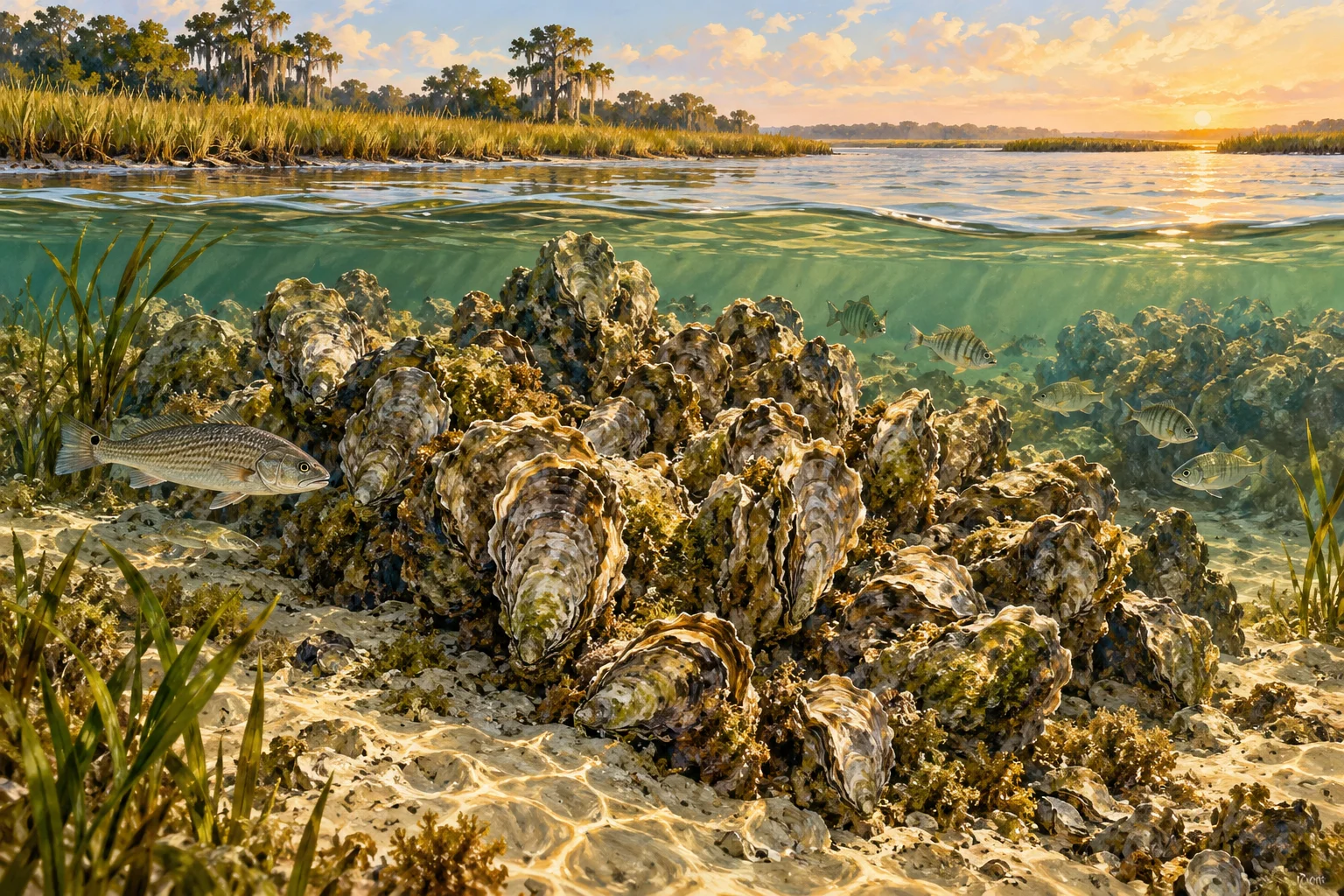
Learn oyster habitat alongside the separate rules for legal harvest areas and public-health closures. An oyster bed is not permission to harvest.
A starting pointCheck the health authority and actual area before collecting.
Estuaries & brackish water · Coast & nearshore
Read the related guide →Louisiana estuary record
Included in the Pontchartrain guide to animals without backbones, with records from Pontchartrain and Maurepas. This clam broadens the picture beyond familiar harvested shellfish.
A starting pointShell details and the hinge joining the two halves may need a specialist identification reference.
Estuaries & brackish water
Read the related guide →Louisiana estuary record
Small shrimp represented by several species in the Pontchartrain guide. They live in the estuary alongside larger shrimp species.
A starting pointThis note covers several species. Telling them apart may need a magnified view and a specialist reference.
Freshwater · Estuaries & brackish water
Read the related guide →Louisiana estuary record
The Pontchartrain guide includes hermit crabs that live inside shells made by snails. The shell alone does not identify the crab.
A starting pointLook for the animal and its legs; leave occupied shells where they are.
Estuaries & brackish water · Coast & nearshore
Read the related guide →Louisiana water life
A frog included in Louisiana’s wildlife action plan. Frogs eat and are eaten by other animals around the water; collecting them is a separate regulated activity.
A starting pointUse a detailed frog field guide rather than identifying it by one call.
Freshwater
Read the related guide →Louisiana water life
A common Louisiana marsh and swamp frog with a pointed snout and grunt-like call; check LDWF bullfrog and pig frog harvest rules before collecting.
A starting pointCompare the complete species account before making a harvest decision.
Freshwater
Read the related guide →Louisiana species reference
Louisiana has many different freshwater mussels living in different areas. This note covers the group and points to the state’s species and location records.
A starting pointUse a specialist shell-identification reference; these are not oysters to collect for a meal.
Freshwater
Read the related guide →Louisiana species reference
A freshwater mussel found naturally only in a limited stream range in central Louisiana. A statewide animal list does not mean an animal lives everywhere in the state.
A starting pointLearn about the stream habitat without collecting or disturbing the mussels.
Freshwater
Read the related guide →Louisiana species reference
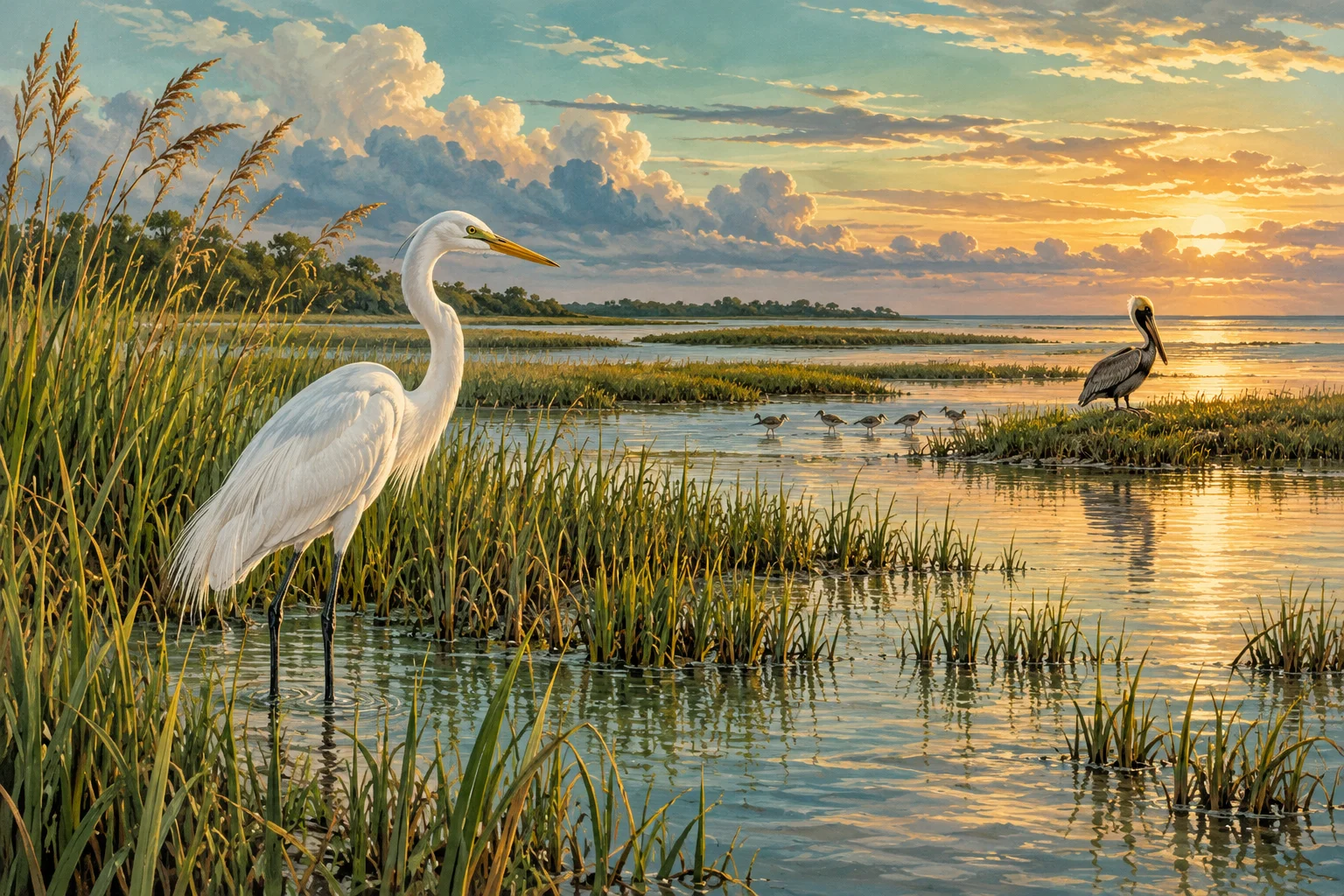
A coastal bird featured by Breton National Wildlife Refuge. Learn the bird and coastal habitat without approaching nesting areas.
A starting pointUse a bird field guide; this category drawing is not an identification guide.
Coast & nearshore
Read the related guide →Louisiana species reference
One of the bird species featured by Breton National Wildlife Refuge. It belongs in the water-life picture alongside fish and marine mammals.
A starting pointUse a bird field guide; this category drawing is not an identification guide.
Coast & nearshore
Read the related guide →Louisiana species reference
A coastal bird featured by Breton National Wildlife Refuge. Use the birdwatching lesson to plan observation around the actual refuge’s rules.
A starting pointUse a bird field guide; this category drawing is not an identification guide.
Coast & nearshore
Read the related guide →