
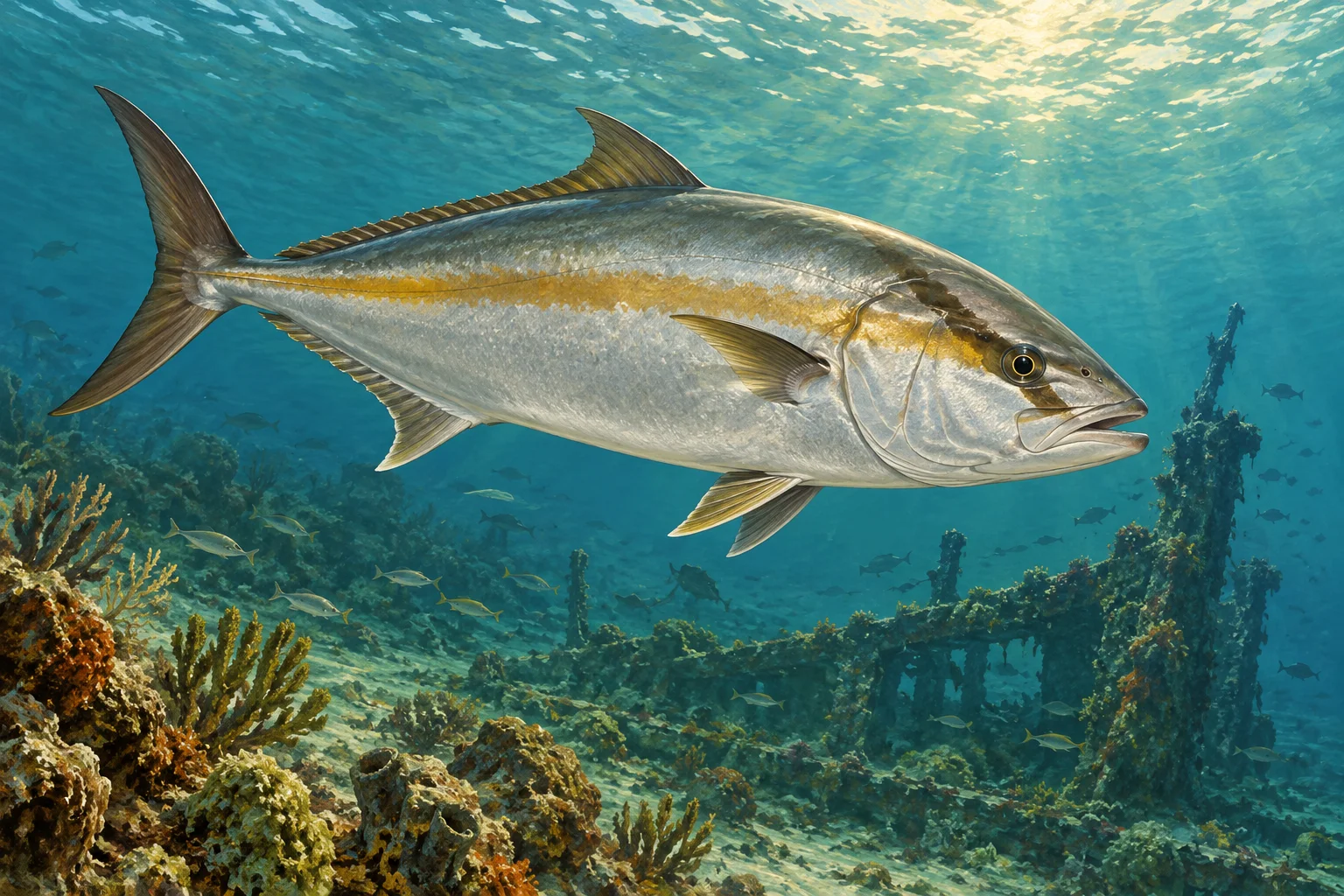
Greater amberjack are strong-swimming Gulf fish often associated with reefs and wrecks. A reef adds shape and shelter to the seabed—the bottom of the sea; a wreck is a sunken boat or ship. Anglers sometimes call these fish “AJ,” but there are several similar-looking jacks. The nickname doesn't identify every fish in that group.
A trip for greater amberjack can involve deep-water bait fishing or working a lure below the boat. For a first outing, understanding the method and the effort is more useful than arriving with a particular fish weight in mind.
Which jack is it?
The greater-amberjack profile from the National Oceanic and Atmospheric Administration (NOAA) shows the overall appearance, including a darker stripe around the head. Other jacks can look similar, so one stripe isn't a complete identification.
NOAA's comparison of four jack species covers greater amberjack, lesser amberjack, almaco jack and banded rudderfish.
Look at the comparison before fishing, then use the full features with experienced identification help on a catch. An ‘AJ’ call or amberjack-focused booking doesn't identify every jack. Keep uncertain identity unresolved before a keeping decision and retain the confirmed species name with the applicable guidance.
What does vertical jigging mean?
A jig is a weighted lure or weighted hook used to attract fish. Vertical jigging means lowering it beneath the boat, moving it up and down with the rod and winding line with the reel as the method requires. Your main task is below the boat rather than a long cast away from it.
A live-bait method instead uses a living bait animal on the hook. Both require line control, but you don't necessarily move the rod the same way.
The crew may use sonar, equipment that uses sound to show underwater features and possible fish. It can help them choose a fishing level. Keep the seabed depth, intended bait or lure level and evidence of fish position as separate questions. Fish can be above a wreck or reef; knowing the bottom depth doesn't establish the presentation. A habitat name or sonar reference is not a guaranteed fish location.
Learn the movement before a bite
The outfit is the rod, reel, line and other gear used together. Have the crew identify the parts and show one complete lowering, jig movement and return, called the retrieve. Learn the controls for releasing and stopping line, the intended level, the movement and pause, the hook response and when to wind back. Rehearse as directed with the actual equipment before a bite. A live-bait presentation needs its own demonstration rather than the jigging rhythm.
Use a movement you've been shown, not a rhythm guessed from another boat's video. Ask the crew to observe a manageable attempt and explain what to repeat or change.
Start with a movement you can repeat while keeping line clear of other anglers. Follow the line's direction and tell the crew if it crosses a neighboring line or the pull becomes unclear. Angle and line paid out don't by themselves measure lure depth when the setup moves sideways.
On return, have the lure, hook and line checked before repeating. For an illustrative note, ‘line moved sideways; retrieved line was tangled; crew reset it’ records the attempt and follow-up, not a measured depth or fish absence. Adding weight or releasing more line is not a universal correction.
The reel's drag allows line to leave against resistance when a fish pulls. That pull is tension. Have the crew set it and demonstrate the expected feel. Ask for help if the pull is more than you can manage rather than changing the setting on your own.
Agree how to request a break, hand control back or have the crew take over before the first attempt. Have any support equipment and handover demonstrated; don't invent an adjustment under load. Ask whether the actual boat and method allow seated fishing and what position is used for resting. A supplied rod doesn't establish either seating or individual instruction.
Decide whether the day suits you
Ask about the intended level, lowering and reeling effort, demonstrations, supervised practice and turns. Explain if you want a short period trying the method rather than a whole session holding a rod. Describe everyone coming, including observers, and distinguish allowed passengers, fishing positions and guests covered by the quote.
Keep the actual boat, departure and activity with arrival, both rides, moves and breaks, expected dock return and readiness to leave after unloading or collection. Mark fuel, equipment and requested services as included, extra or unanswered in the full-group price. Ask who gives the next decision and what applies to a changed boat, method, duration or date before arranging connected travel.
Adults use reef and wreck habitat, while younger fish can use floating habitat such as seaweed. That background helps explain different settings; it doesn't tell you today's fishing location.
Check Louisiana's saltwater guidance and the responsible federal information for greater amberjack and the trip. Also ask what happens if the intended target can't be fished or kept.
Agree who brings a fish under control at the boat, identifies and measures it, handles hooks and manages release or lawful keeping. Fish brought up from depth need a release plan, equipment and someone prepared to use it before fishing. The release introduction explains what to ask about.
Personal requirements, the type of boat trip and catch conditions remain separate questions. For lawfully kept fish, arrange preparation, charges, collection place and time, collector and cold transport. Include those jobs before the road journey; a species focus does not promise a catch or take-home amount.