
 FIRST SKILLS · WATER · METHODS
LEARNING TO FISH
Fishing skills:casting, knots and reading water.
Find the lesson for the job you want to learn: controlling a cast, joining line, following a bait or lure, or bringing a fish close enough to land. Practice one action, notice the result and add the next part of the sequence.
ONE ACTION WITH AN OBSERVABLE RESULT
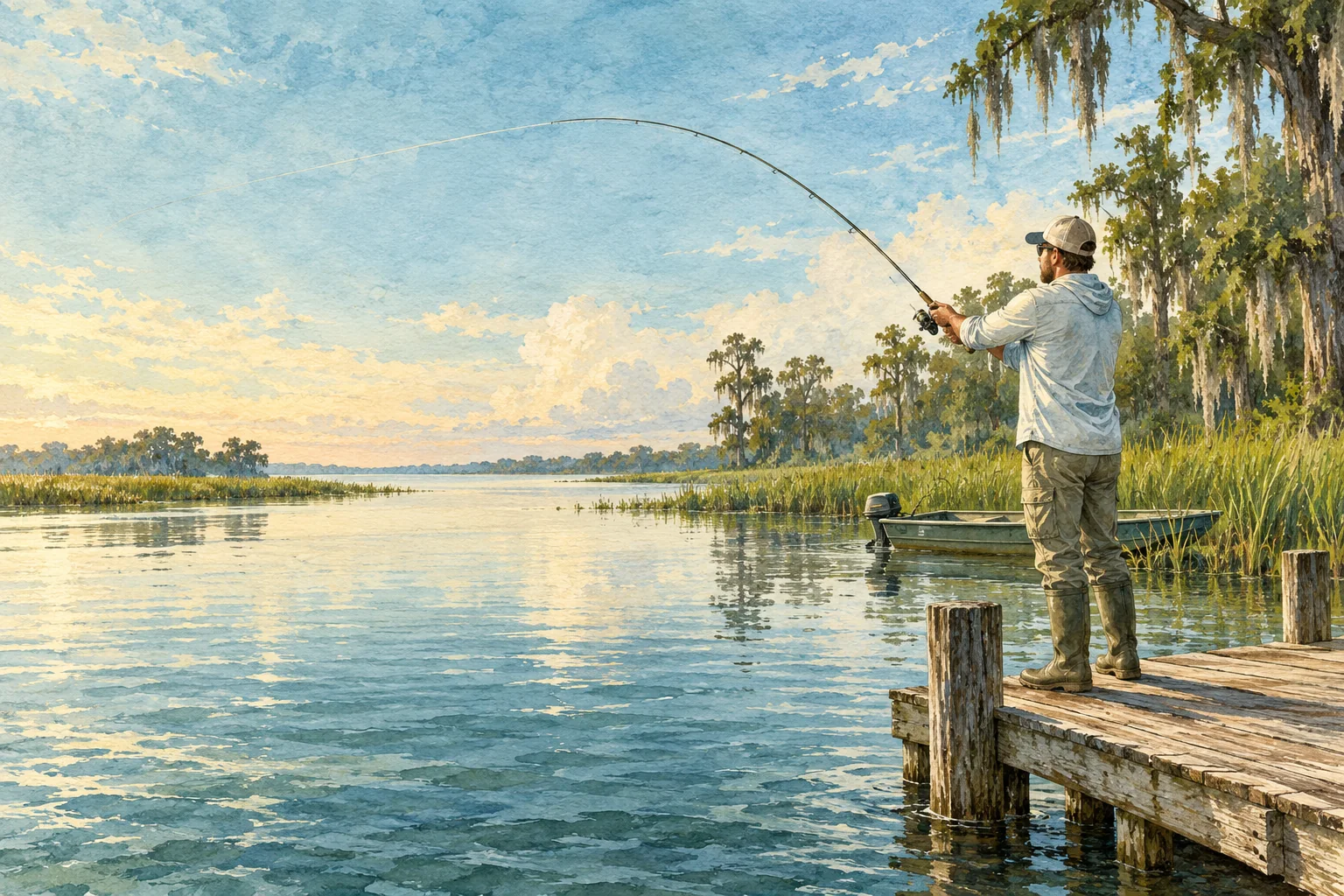
Make a short cast and bring it back.
Begin with a familiar rod and reel and suitable hook-free practice equipment within the rod’s casting range. Find how the reel releases line, how to stop it and how to wind it back. A spinning reel and a baitcaster use different controls; the casting lesson here begins with a spinning reel.
Choose clear practice space and a nearby visible target. Make a short, smooth attempt, then retrieve the practice weight by winding it back. Notice where it landed and whether line ran freely. Repeat the same movement before changing one part, so the result gives you something useful to compare.
A knot is another practice task: learn one connection and inspect it before adding an exposed hook. Landing means bringing a fish under control at the bank or boat. Before fishing, also learn the response to a bite, that landing job and how to identify the catch. The links beside this section cover those next actions.
Casting, knots, bites and fish identification
Learn the first actions in a session: send line out, make a connection, respond to a bite and compare the fish’s features. The glossary helps with unfamiliar words.
Explore these lessons 02 / 5 LESSONSCurrent, cover, bottom shape and seasonal clues
Learn what you can observe in moving water and around plants or objects. Distinguish those observations from tide predictions and broad seasonal background.
Explore these lessons 03 / 4 LESSONSCompare the fishing methods and guest jobs
Understand casting, jigging, trolling and inshore or offshore methods by what you do with the rod, reel, line and boat. Then choose a method to practice.
Explore these lessons OPTIONAL READINGExplore the evidence behind a fishing claim
Use the optional studies to investigate questions about hooks, tides, seasons and fish habitat. Read what was measured, the place and period studied, and what the comparison leaves unresolved.
Browse the researchUse the result to choose the next lesson.
Keep a short note of the equipment, action and result. “The practice weight landed left of the target” is something to compare; “I need a better rod” is a conclusion you have not established. Change one part of the movement and record what happened, including attempts that did not improve.
When you move from practice equipment to fishing, add the hook-handling and space checks for that setup, the response to a bite and the keeping or release plan. A longer cast is only one possible improvement; managing the complete session matters too.
Watch a fishing demonstration → · Learn the rig for your method → · Prepare for releasing a catch →