
FISHING LESSON
Follow the change between faster and slower water
Observe natural surface material, then compare the cast’s landing point with the line and lure path afterward.
Read the guide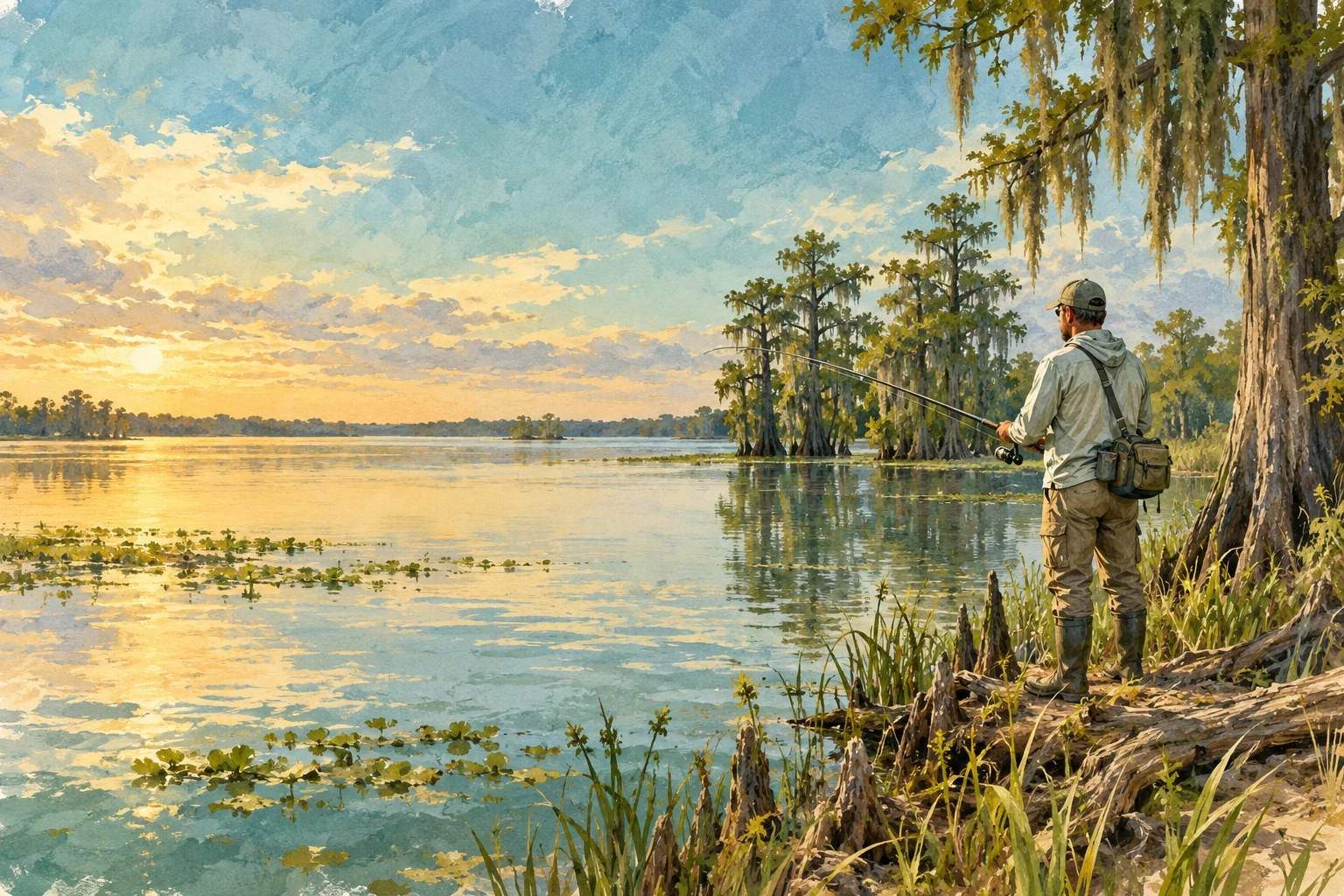 MOVEMENT · FEATURES · CONTEXT
METHODS & SKILLS
Observe surface movement, separate cover from bottom shape and compare a local feature with tide information. Keep what you saw distinct from depth, fish location and other details still unknown.
A USEFUL STARTING POINT
Reading water means observing movement, visible objects and clues about the bottom, then using those observations to ask a specific fishing question. A surface clue is a starting point, not a map of depth or a confirmed fish position.
Current is flowing water. A seam is a boundary between areas moving differently. From a suitable permitted position, follow naturally floating foam or leaves without adding anything to the water. Describe their path: straight past an opening, slowing beside an object or circling in a pocket. Surface movement does not show every force or obstruction below it.
Follow a current seam and the line’s pathCover means objects or plants in the water, such as grass or branches. Structure means the bottom’s shape, such as a slope or channel edge. Record the object or edge you see, then leave its depth, submerged extent and unseen bottom unknown until supported by other information. A visible branch is not a depth reading.
Compare cover and bottom structureA marsh is wet, grassy coastal ground; a drain connects parts of its water. Watch the movement through the opening and the nearby edges. With instruction, compare a manageable cast and return from an established fishing position: where it lands and where the line then carries it can differ. Leave boat positioning and route decisions to the person operating the craft.
Observe the drain and presentation pathA tide prediction gives expected water heights or event times for a station, with units and a reference zero. It does not directly supply current speed or direction at a nearby feature. Keep its station and times with the prediction, then write what you observed at your place and time. A seasonal redfish pattern likewise frames questions rather than locating a fish for this visit.
Separate tide height from local movement05 PAGES
Observe surface movement, separate cover from bottom shape and compare a local feature with tide information. Keep what you saw distinct from depth, fish location and other details still unknown.
FISHING LESSON
Observe natural surface material, then compare the cast’s landing point with the line and lure path afterward.
Read the guideFISHING LESSON
Name the visible cover, identify what is known about structure and keep unseen depth or obstructions unresolved.
Read the guideFISHING LESSON
Compare the opening, nearby edges and presentation path without treating the feature as a boat route or guaranteed fish position.
Read the guideFISHING LESSON
Keep station, timing and reference level with the prediction, then observe the local water movement separately.
Read the guideFISHING LESSON
Look at recent weather, visible food and water changes rather than assuming a month fixes redfish location or a legal opening.
Read the guideKEEP THE OBSERVATION SEPARATE FROM ITS EXPLANATION
For an illustrative observation, write: “Foam moved past the opening and slowed beside the grass; the line carried my float away from its landing point.” Add the place, time and setup. That describes movement you could see without claiming a depth, current speed or fish location.
If you are learning there with suitable access and instruction, compare one shorter cast using the same setup before changing weight, lure and retrieve together. Retrieve means bringing line back with the reel. Note the resulting path and any plants or tangles on the returned setup. A manageable feature from your existing position can teach more than reaching a distant one.
Keep a forecast, tide prediction or gauge reading with its own station, time and reference. Compare it with local notes rather than treating it as a direct measurement of the feature. Do not enter current, climb onto an obstruction or select a boat route from these surface clues.
Choose the presentation you want to practice → · Convert units while retaining the reading’s context → · Find weather and water planning information →