
Look for a boundary, not a magic spot
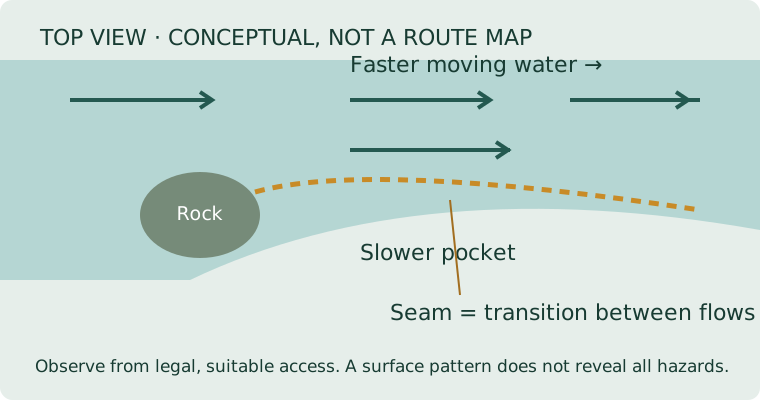
A seam is a transition between flows, often noticed where faster water passes slower water. A rock, bank shape or another obstruction can redirect current. The important observation is that water next to the main flow behaves differently—not that every visible line contains fish.
From suitable legal access, watch foam, leaves or other floating material for a moment before casting. Compare their movement on each side of the feature. Surface clues show something about flow, but they do not reveal every underwater obstruction, deep pocket or hazard.
Separate three questions
Ask where water is moving, where your presentation is moving, and where the fish might be holding. These are not the same question. A lure landing beside a visible seam may immediately move away from it because the line is pulled by faster surface water.
The boundary is a place to investigate because changes can concentrate food or create useful feeding positions. It is not a catch prediction. The Take Me Fishing references explain river-current presentations and why habitat transitions deserve attention. Apply those concepts to the actual water and target rather than importing another region's species assumptions.
Make a controlled comparison
Choose a presentation appropriate to the target, tackle and local rules. Make one manageable cast, observe its path and retrieve before it reaches an obstruction or a place you cannot control it. Change one thing on the next cast: angle, retrieve pace or the water you cover. This makes it easier to understand what changed.
Avoid adding more weight simply because you cannot see what the lure is doing. First consider line belly, presentation angle and whether the rig suits the task. Weight, depth and current interact; snagging repeatedly is a reason to reassess the approach, not to move into hazardous water to retrieve tackle.
A bank-fishing example
Suppose a small bank projection separates a faster stream of floating leaves from a slower pocket. You can compare a short cast near the transition with a cast into the pocket while staying at the same suitable access point. Watch how quickly each presentation leaves its intended area.
This is an observation exercise, not a specific fishing-location recommendation. Do not enter current, climb onto a structure or cross a barrier because the diagram labels a useful feature. Read bank-fishing access and river planning separately from the fishing lesson.
Keep a useful record
Record the water, time, approximate conditions, presentation and what you observed. “Lure swept away before reaching the pocket” is a more useful note than “river fishing did not work.” Compare observations across visits without assuming a gauge reading gives the depth at your feet.
Read river gauges, then learn cover and structure. The next step can be another observation session with your own tackle; it does not require booking a boat.