
 LEARN · COMPARE · PLAN
FISHING BUSINESS BASICS
Plan a fishing charter business.The service, work and money behind it.
A charter business sells boat outings with a captain. Start with one service you could describe to a guest, then work out who delivers it, which boat and permissions need investigation, what it costs and which jobs continue between trips.
PICK YOUR STARTING POINT
Describe a service and the roles it needs.
An owner supplies or controls the business or boat; a captain operates the boat; a deckhand helps with assigned work. One person may fill several roles, but the hours, decisions and pay for each job still need a place in the plan.
For example, a proposed lake-fishing lesson for a small group needs more than a boat and a price. Someone answers the inquiry, prepares the equipment, runs the trip, teaches the activity and finishes the cleanup. Use a proposal like that to investigate the work before buying equipment or advertising dates.
Compare ownership and working roles
Separate providing a boat, operating it, helping aboard and handling the customers. Compare who works, who pays and who controls the arrangement.
02 / LEARNING THE JOBInvestigate work with an existing operator
Ask about preparation, guest duties, training, pay and cancellations, and how to record the boat work actually performed.
03 / WRITING IT DOWNWrite down the proposal and open questions
Keep the intended service, jobs, source-backed costs and unresolved arrangements together so a change can be followed through the plan.
FIND A USEFUL STARTING POINT
Five questions to organize your idea.
Describe the stage, operating role, water, boat arrangement and guest count you are investigating. Use a still-deciding option where offered. The result suggests reading and follow-up questions; it does not verify that the answers form a workable or authorized service. Reloading or “Reset these choices” clears the answers.
EXPLORE ONE SUBJECT
Lessons on starting and running a charter business.
The map groups lessons by the problem you are working through. Start with the role or service if it is still undecided; move into boat, permissions, money or operations when you have a proposal to investigate. Each lesson retains its source dates and review limits.
Choose the subject that resolves the next question in your proposal. The links keep the related lessons together; record the answer and source separately in your plan.
LESSONS BY SUBJECT
01 / 3 LESSONS
Start with the business
Compare who provides the boat, operates it, helps aboard and manages guests before choosing an ownership arrangement.
02 / 3 LESSONS
Credentials & career
Learn the qualification terms and how actual service is documented for the work being investigated.
03 / 9 LESSONS
Licenses, permits & insurance
Separate personal, operator, boat, fishery, reporting and insurance questions for the same proposed service.
- Understand the different permissions behind a charter trip
- Get to know Louisiana fishing-guide licensing
- Understand federal Gulf fishing permits for charter work
- Gulf reef-fish charter permits and transfers
- Gulf mackerel and cobia charter permits
- Understand HMS permits for tuna and shark charter trips
- Offshore landing permits and guest fishing licenses
- Charter trip and catch reporting
- Understand insurance for a fishing charter business
04 / 3 LESSONS
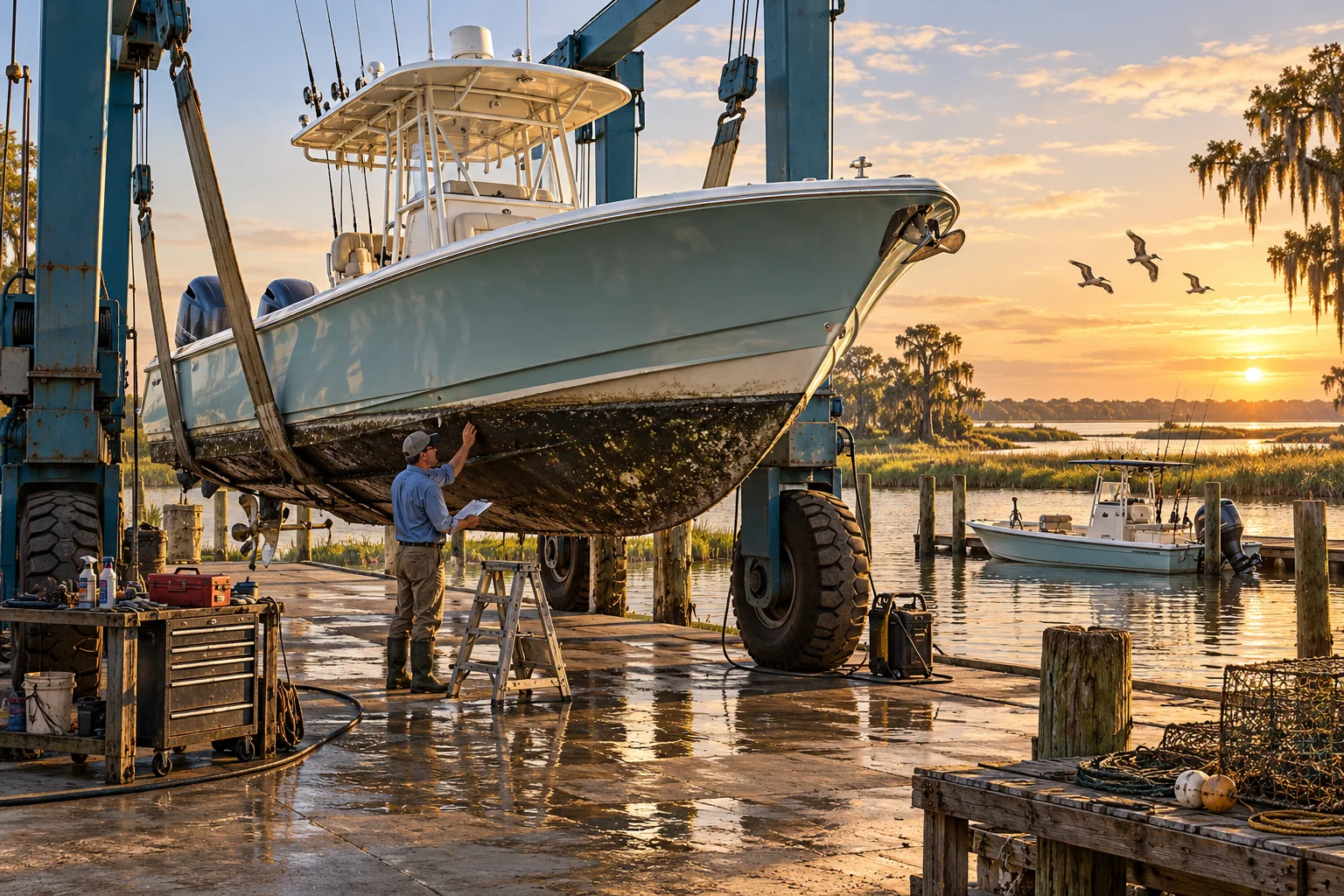
Boat & working waterfront
Investigate condition, intended paid use, guest positions, boarding arrangements and the cost of the actual boat.

05 / 6 LESSONS
Money & business setup
Keep startup cash, trip-linked costs, continuing bills, pricing and payment dates as separate parts of the money plan.
06 / 3 LESSONS
Run the day well
Follow guest communication, preparation, the trip, changes, staffing and work after guests leave.
07 / 3 LESSONS
Bookings & marketing
Describe the service clearly, compare booking channels and track inquiries, bookings and delivered trips separately.
08 / 2 LESSONS
Grow with evidence
Use operating records, people, obligations and costs before investigating another boat or an existing business.
PUT THE WORK IN CONTEXT
Steps to planning a charter business.
Carry the same proposed outing through these steps. A changed boat can change boarding, costs, insurance and permission questions; a different activity can change equipment, staff work and the guest offer. Update the connected assumptions when one answer changes.
Describe one service
Name the guests, fishing activity, departure and full time involved. Use the same proposal in the boat, cost and permission questions that follow.
Record the permission questions
List the person, operator, boat, water and activity being discussed. Keep the responsible source and unanswered condition with each reply.
Check who will captain the trip
Investigate the qualifications and actual service records for the person operating the boat, alongside the duties you expect that person to perform.
Investigate the boat and boarding place
Compare condition, intended paid use, guest positions, dock arrangements, insurance questions and the costs of making the proposal workable.
Price the work and the continuing bills
Separate cash needed before opening, costs tied to each trip, ongoing bills and compensation for work. Mark missing quotes as unknown.
Assign the administration and customer obligations
Decide who holds records, answers guests, takes payments and deals with changes. Keep those duties with the people and agreements involved.
Walk from inquiry through cleanup
Include preparation, boarding, instruction, operating decisions, the return and work after guests leave. Allow for people or equipment being unavailable.
Compare the proposal with delivered work
Track inquiries, bookings, completed trips, costs and money retained separately. Use actual results before adding another commitment.
A MADE-UP MONEY EXAMPLE
Separate trip contribution, profit and cash timing.
In this made-up example, a completed trip brings in $1,500 and its trip-linked costs are $750. That leaves $750 of trip contribution: money available toward continuing bills and work not already counted. Fixed costs continue without a trip, such as agreed monthly payments.
With $7,500 of monthly fixed costs, ten such completed trips cover those fixed costs before owner compensation. The example has not yet established take-home profit. These are teaching assumptions, not prices, market averages or an earnings forecast.
Cash flow concerns when money arrives and leaves. A guest deposit concerns a future trip and its obligations; a payment in the bank is not automatically spare money. Put due dates, possible refunds and quieter periods alongside the cost calculation.
Explore the cost calculation →HELP WITH A PARTICULAR QUESTION
Tools for startup costs, pricing and business planning.
Choose the tool for the question: cash before opening, financing, contribution per trip, selling fees, monthly timing or unresolved readiness items. An assumption is an input you supply, so keep its quote, estimate or unknown status beside it. The tools do not obtain missing quotes. Entries stay in the open page session; print or download before leaving or reloading to keep them.
NOT SURE WHERE TO START?
Organize the questions before starting
Describe one outing and keep unknowns visible before following the subjects and source questions raised by your answers.
Open the startup questionsBefore opening
Cash needed at the start and the payments that follow.
Add up the cash needed to start
Separate cash paid now, other opening costs and reserve assumptions, leaving unpriced items blank.
Counted cash needs and the unresolved-cost listEstimate boat loan payments
Compare cash paid now, regular payments and the final balance for the same boat purchase.
A regular schedule and separate extra-payment comparisonTrips and booking costs
What a trip leaves after its costs and what booking services charge.
See what trips leave after their costs
Follow one departure’s earnings and costs, then compare trips needed with the month you entered.
Trip contribution, counted monthly bills and a price to investigateCompare the cost of selling a trip
Compare five alternatives for the same month’s outings, including fees, refunded bookings and the work left for you.
Channel cash costs, trip contribution and owner time shown separatelyA working year and open questions
Monthly money, future guest obligations and questions to follow up.
Put money in and out on a calendar
Follow monthly receipts, bills and advances owed to guests, looking for the earliest cash shortage.
Twelve monthly balances and a saved-version comparisonTrack the questions you still need to answer
Use a status, supporting-record date and note to assign evidence questions and next actions.
Your entry counts and open follow-up, not verificationINCLUDE THE DAYS WITHOUT TRIPS
Try a cancellation and repair in the same plan.
In a planning scenario, one booking is cancelled and the boat then needs repair. Who contacts the guest, handles any payment obligation, authorizes the work and covers continuing bills? Which crew time and other bookings are affected? Write the jobs and cash dates before assuming another trip makes up the difference.
An inquiry is a question about a trip; a booking is a commitment under its terms; a completed trip is work delivered. Keep those counts separate when comparing demand with money earned and work still owed.
The federal-document panel below is another source to read, not the full permission check. Use its subject and document-type filters, then record the publication, effective or comment dates that matter to your question. A proposal suggests a change; read the document’s status before treating it as a requirement in force.
FIND FEDERAL DOCUMENTS
Find documents about your fishing or passenger-boat work.
Choose a subject, then a document type. “All document types” includes rules, proposals and notices. The document title opens its web page; use the official PDF link when one is supplied. Read who and what it covers before deciding whether it affects your trips.
Checking the official feed…
KEEP THE QUESTIONS TOGETHER
Worksheets for business plans, costs and guest messages.
Use a worksheet to keep the service description, cost sources, responsible person and unanswered question together. Retain a date for revisiting each open item when the boat, activity or price changes. These editable documents organize the work; they are not official applications or contracts.
Browse the worksheets →Sources checked October 22, 2026. This is educational research and original planning guidance, without independent legal, tax, insurance or maritime professional review. These resources do not provide consulting, licensing assistance or paid launch packages. Questions and corrections →