
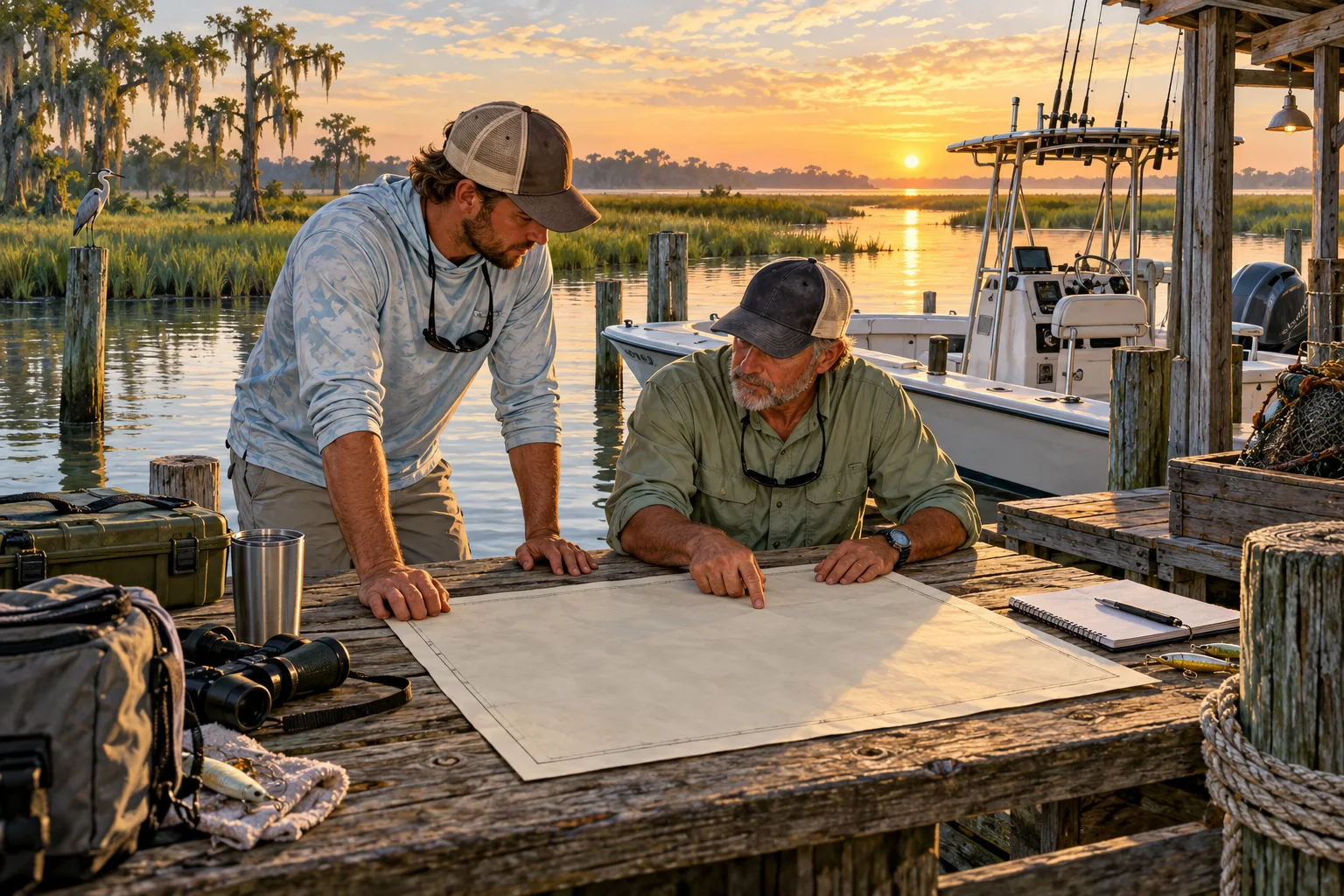
A fishing charter is a boat outing booked with a captain. Running the business means preparing and delivering that service: answering guests, arranging the boat and people, making operating decisions, taking care of equipment and handling payments and changes.
If the idea is new, start with one outing you can describe and one question that could change it. The first useful result is a workable service description and a list of evidence to obtain.
Describe the day you want to offer
Write a short description of one outing: who it is for, where guests meet, which water you would use, what they do and when they return. Count everyone coming, including people who ride without fishing. This gives you the same proposed service to discuss with a boat seller, dock manager, insurer or agency.
A made-up starting idea might be: “A guided lake outing for adults learning to fish, using supplied rods and reels.” That raises useful questions about instruction, equipment, the actual boat and meeting place. “All fishing trips for everyone” gives you much less to investigate.
A private trip books the outing for one group. A shared-seat trip sells places alongside other guests. Record which you mean, rather than assuming the same boat or price arrangement covers both. Keep that choice with the proposed passenger count, activity, equipment and full time away. If the idea changes, update the description before asking the next supplier or agency to assess it.
Separate the jobs
The owner supplies or controls the business or boat. The captain operates the boat and makes operating decisions. A deckhand helps with assigned work. Someone also has to answer inquiries, maintain the calendar and manage customer money.
One person may do several jobs, but the hours and responsibilities still exist. Walk through an inquiry, preparation, the trip, cleanup and payment: name who does each job, what time it takes and who decides when plans change. Ask who covers absences and which jobs stop if the boat needs repair. The business-model lesson compares the arrangements, including working without owning a boat.
Find the questions that could change the idea
A credential concerns a person's authorized qualifications. A permit concerns permission for a specified activity. The boat's passenger arrangement, insurance and permission to use a dock are separate matters too.
Use the same short service description when investigating each. Include the actual water, boat, people and fish you intend to target. A different route or target can change the questions. The permissions introduction explains who handles what.
For each question, record who can answer it, what they said, the date and any document still needed. For example, ask the dock manager whether the proposed paying-guest pickup is allowed and what agreement would be needed. Keep that reply with the actual service description. Permission to use a dock for a personal outing doesn't answer that business-use question.
Mark the difference between a question, an application and an issued document, including any scope or conditions still to resolve. “Applied” means requested; “issued” means granted. A course enrollment or a seller's assurance is not the final permission record. If a reply refers to a different boat, route or service, ask again about the proposal you intend to run.
Learn what guests are looking for
Ask potential guests who would organize the outing, what they want to learn, how much time they have and how far they would travel. Ask about seats, shade, bathrooms and steps or gaps when getting onto a boat. Someone liking the idea is different from making a booking or completing a paid trip.
Compare other advertised offers by activity, time, group arrangement, included items and price basis. A published price shows an offer; it does not show how often it sells or how much profit it earns. Keep notes from guest conversations separate from inquiries, confirmed bookings and completed trips. If people like the idea but need a different departure, shorter ride or more beginner help, revise the proposed day before treating their interest as demand for the original offer.
Put costs beside the work
Startup cash is money needed before the service begins. Trip costs arise from running an outing. Fixed costs continue between trips, such as agreed payments. An operating reserve is money held back for bills and disruption.
For each cost, write the amount, what it covers and whether it is a supplier's price, your estimate or still unknown. Add when it falls due and who pays, keeping initial purchases, continuing bills, trip costs and reserve assumptions separate. Include time spent answering guests, preparing and cleaning up.
For a simple disruption exercise, imagine a booking cancels while the boat needs a repair. List the customer-payment question, continuing bills, repair decision and work still required. Leave unanswered amounts visible rather than assume another person or a future trip covers them. A deposit is a customer payment made before the trip; you may still owe the service or a refund under the booking terms. It is not automatically spare money for another purchase.
The startup cost tool and simple business-plan lesson help organize those assumptions. They do not supply missing quotes or funding approval.
Choose one useful next step
If you lack operating experience, investigate working for an established service. If a proposed boat or fishery permission is unresolved, investigate that specific issue before relying on it in a purchase.
Use the startup action worksheet to record the task, who will do it, the answer or document needed and when to check progress. Choose a next action with a concrete result, such as a dock-use reply, a supplier quote or a documented work arrangement.
Keep the whole-day job list beside that evidence. After a changed boat, route, staffing arrangement or service, revisit the affected permissions and costs before relying on the old answers. An organized worksheet helps you investigate; it doesn't supply an approval, a booking or funding.