
 EQUIPMENT · CONNECTIONS · FISHING
PRACTICAL FISHING LESSONS
Fishing equipment, rigsand practical skills.
Understand what the parts do, put together one fishing setup and learn the movement from casting to bringing the line back. Choose a lesson for the job you want to learn; you can use your own equipment or learn with a guide.
LEARN HOW THE PARTS WORK TOGETHER
Start with one complete fishing setup.
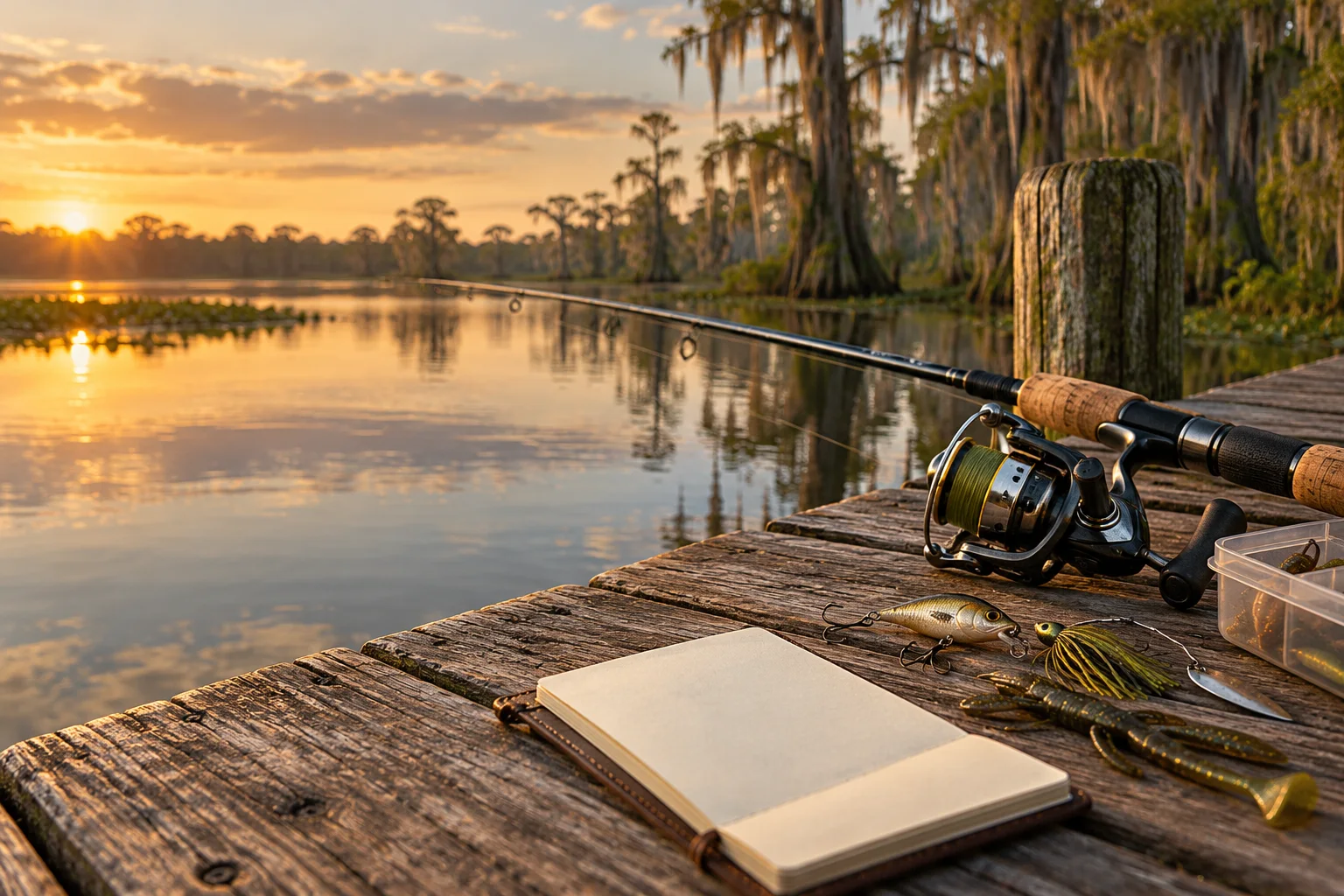
The rod helps you send out and control the line. The reel holds that line and winds it back. At the other end, a hook carries natural bait, such as a worm or shrimp, or you use an artificial lure. A rig is the arrangement of parts at that fishing end.
Learn one arrangement and its movement together. A float rig lets you watch a marker on the surface while the hook hangs below; a lure fished without a float puts more of its movement under your control through the rod and reel.
Match the rod, reel and line
See how the equipment fits together before buying separate pieces. Learn the reel controls and compare the whole casting weight with the rod’s label.
Understand a complete setup →Connect the parts at the fishing end
Follow the line to the hook, weight, leader or float. Learn each part’s job before choosing an arrangement; a leader is a separate section of line near the hook or lure.
Learn hooks, weights and connecting line →Practice a short cast and return
Use suitable hook-free practice equipment in clear space. Learn how line leaves the reel, how to stop it and how to wind it back. Aim for control before distance.
Follow the first-cast lesson →
OPEN THE SUBJECT YOU NEED
Choose a lesson topic.
Use equipment and rig lessons to build the setup, skill lessons to learn the movement, and preparation or catch-care lessons for the jobs around the fishing. If you already know one part, go straight to the question you have.
WHEN YOU WANT TO LOOK CLOSER
Read the evidence behind fishing advice.
Does a different hook change where a fish is hooked? Can wind help explain a tide prediction’s error? Research pages walk through particular questions and keep the measurements, methods and limits beside the findings.
For example, more fish caught in one season can also reflect more time spent fishing. Knowing what was counted helps you decide what a comparison can tell you. A historical result is learning context, not a catch forecast for your outing.
TAKE THE LESSON INTO PRACTICE
Learn the whole sequence before adding more gear.
Follow one setup from preparation to return: connect it, send the line out, watch or move the fishing end, then bring it back and inspect it. A tangle or a hook collecting plants gives you a specific problem to work on. Try one change before changing several parts at once.
For an in-person lesson, say which job you want to practice with the supplied equipment. For your own outing, decide how you’ll bring a fish under control and remove the hook, with the tools and instruction for that fish and setting ready before you start.
- Recognize the fish you catchCompare visible features and keep an uncertain name separate from a decision to keep the fish.↗
- Prepare to handle and release fishArrange the handling roles and tools before the first bite.↗
- Find somewhere to use the skillChoose a named bank, pier or launch, then check that site’s access and visitor information.↗