
FISHING LESSON
Control a short cast with a spinning reel
Learn the reel controls, line release and return using hook-free practice equipment, then compare where each attempt lands.
Read the guide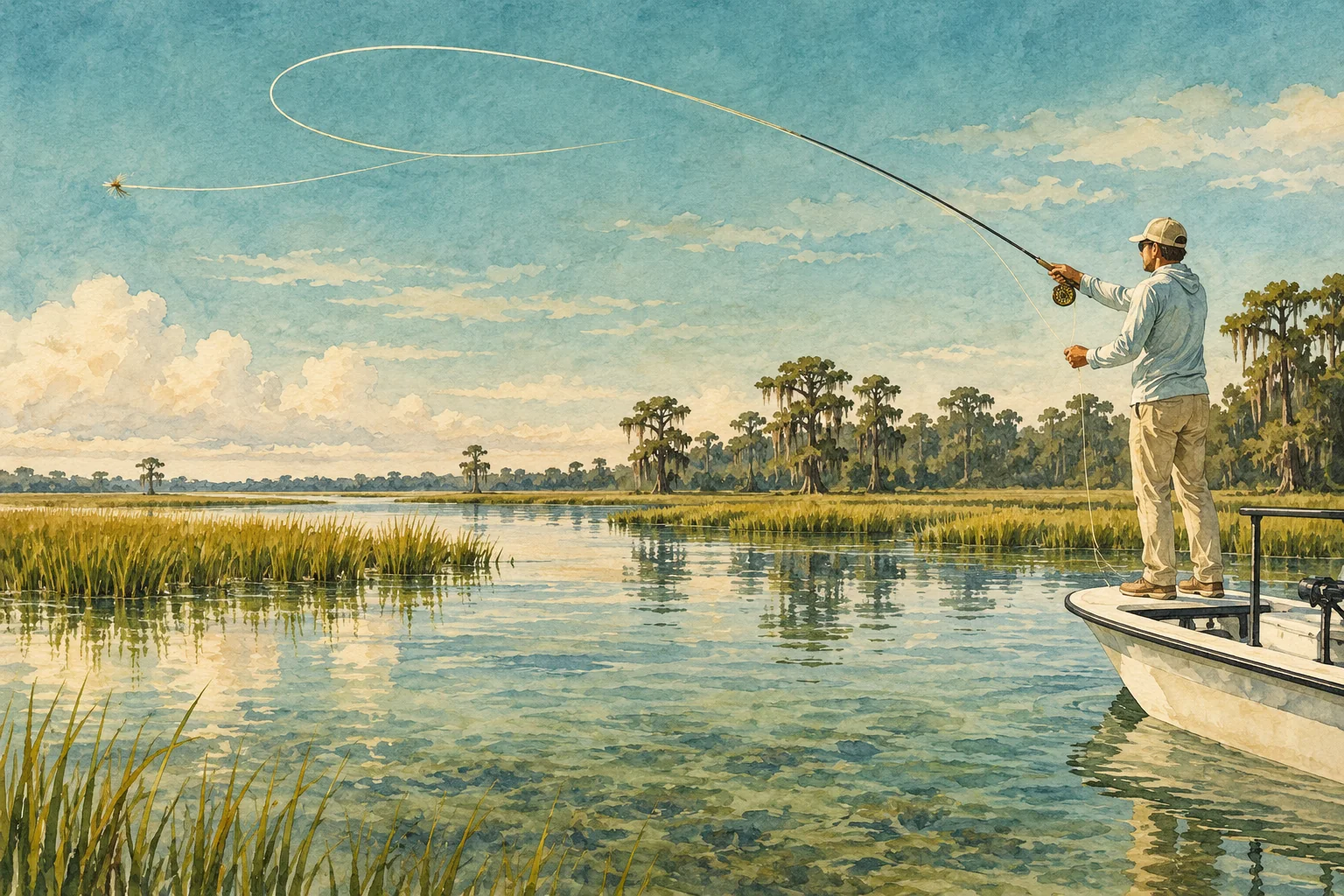 CONTROL · CONNECTION · IDENTIFICATION
METHODS & SKILLS
Learn one complete action at a time: control a short cast, make a suitable connection, understand the bite and landing jobs, and compare fish features before deciding what to do next.
A USEFUL STARTING POINT
A first session can be a short controlled cast, one suitable line connection or learning who handles a bite and landing. Pick one job, see the whole sequence and repeat it with the same setup before adding another skill.
Casting sends line out with a rod; retrieving brings it back with the reel. Have the actual reel controls shown, including release, stopping line and winding back. Use hook-free practice equipment in suitable clear space with instruction. Aim at a nearby visible target, then bring the practice weight back and inspect the line before repeating.
Practice a short cast and retrievalA knot connects line to a part or another line. A leader is a separate line section near the hook or lure. Identify what you are joining before choosing the knot; a line-to-eye connection is a different job from joining two lines. Practice with suitable cord and a blunt ring, trace the whole line path and have an unfamiliar connection checked before using it to fish.
Learn the line path and finished connectionA bite is a fish taking or touching bait or a lure. Line tension is its pull; drag is the reel resistance that lets line leave under that pull. The response depends on the actual hook and method. Learn it before a bite, and establish who will bring the fish under control, remove the hook and handle release or keeping.
Understand the response and landing sequenceCompare body shape, fins and other visible features with a reliable reference. A nickname or one color is not enough. Keep unseen features unknown and get help if the identity is uncertain. Identifying the fish is separate from checking the applicable water, date, size, count and other catch requirements.
Compare the fish’s identifying features05 PAGES
Learn one complete action at a time: control a short cast, make a suitable connection, understand the bite and landing jobs, and compare fish features before deciding what to do next.
FISHING LESSON
Learn the reel controls, line release and return using hook-free practice equipment, then compare where each attempt lands.
Read the guideFISHING LESSON
Separate line-to-eye from line-to-line jobs, trace one knot’s path and inspect the finished practice connection.
Read the guideFISHING LESSON
Understand tension and drag, then agree on the hook-specific response, landing help and unhooking before fishing.
Read the guideFISHING LESSON
Use several visible features, keep missing details unknown and resolve identity before applying catch requirements.
Read the guideFISHING LESSON
Find plain explanations of rod, reel, line, bait, lure and other terms as they arise; learn the job as well as its name.
Read the guideREPEAT THE SAME JOB BEFORE ADDING ANOTHER
For a hypothetical casting practice, use the same hook-free equipment and nearby target for several short attempts. Notice where the practice weight lands, bring it back and inspect the line. If it catches or will not run freely, stop and have the setup checked rather than forcing the movement. More distance can wait while you learn control.
For a connection, trace and remake the whole knot with the same practice parts. For identification, compare another visible feature before deciding the name. These are different practice jobs; catching a fish is not the only useful result of a first session.
Before actual fishing, fit the practice to the site, equipment and method, with help for jobs you have not learned. Arrange landing, unhooking and release or keeping before a fish is caught.
Understand the setup’s parts → · Choose the fishing activity → · Follow the fishing-requirement checks →