
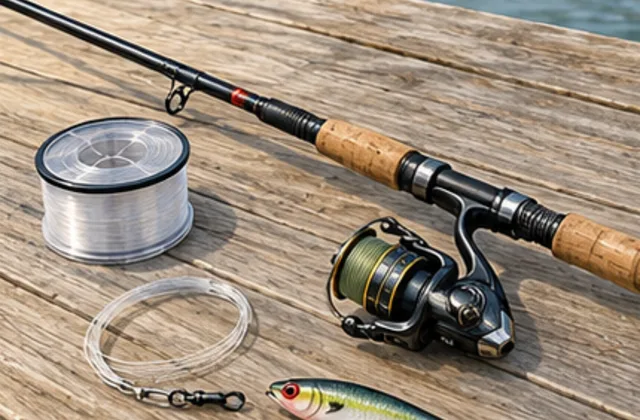
A fishing setup, also called an outfit, is the rod, reel, line and the equipment at the fishing end. The parts need to work together for the activity you're learning.
Follow the parts in order: the reel holds the line, the rod's small rings—called guides—carry it toward the tip, and the hook or lure goes at the fishing end. Some setups add a leader, weight or float. You can check each part's job without buying every possible extra.
A guide may supply the whole setup; ask before changing it. If you're choosing your own, use the checks below in order: describe the activity, match the equipment, trace the assembled parts and practise the controls. Keep a part you cannot identify or use as an instruction question rather than add another accessory.
Start with one fishing activity
“Fishing in Louisiana” covers too much to choose equipment from. Start with something specific: casting a small lure from a lake bank, watching bait below a float or lowering bait from a boat.
A lure is an artificial object that attracts fish; bait is natural food put on a hook. A float, also called a cork or bobber, sits on the surface with the hook below it.
Tell the shop where you'll fish and how you want to fish. If a guide has suggested equipment, bring those details. If the trip supplies gear, ask before taking your own.
Keep the same activity description while checking the parts. A lake-bank float setup and a boat setup for lowering bait don't become interchangeable just because both have a hook and weight. If the activity changes, revisit the intended rod, reel controls and rig rather than only swap the bait.
Pair the rod and reel type
A spinning reel hangs below a spinning rod. A baitcasting reel sits above a matching casting rod. Choose a compatible pair rather than assuming any reel that can be fastened on belongs there.
With the reel attached, check that you can hold the outfit comfortably and reach its controls. Learn how to let line out, wind it in and identify the drag adjustment. Drag controls resistance to line being pulled from the reel.
Check the actual reel model against the rod type and line information. Reel size numbers vary between product ranges; the same number on two brands doesn't prove they're the same size or fit. Make sure the reel is secured as its mounting instructions describe before handling the setup. Identify the actual rod and reel models when asking for help so the answer refers to the pair in your hands, not a similar product name.
Check the whole casting weight
Read the rod's printed lure or casting-weight range. Count all the parts you'll throw, including a sinker, hook, float, lure body or bait as applicable.
For a made-up example, a rod is rated for ¼–¾ ounce, and the proposed complete setup weighs ½ ounce. That setup is within the stated casting range. If another half-ounce weight were added, the total would become one ounce, outside that range.
The example teaches the addition; it isn't a recommended rod or rig. Keep the complete casting weight and the rod's range in the same units. If a component's weight is unknown, resolve that before treating the sum as checked. Don't try to solve a mismatch by casting harder.
Recheck the total when adding bait, a float, another weight or a different lure. A setup that fitted the range before the change hasn't automatically passed the same check afterward.
Add line and connections for that outfit
Check the rod's line guidance and the reel's capacity information for the intended line. Capacity describes how much of a stated size or diameter the reel holds; it isn't a target to exceed. Keep material, labeled strength, diameter and capacity context together. The line-materials guide explains how to read those entries without treating one number as the whole match.
Before attaching a hook or lure, run the line from the reel through each rod guide in order, from the handle toward the tip, including the tip ring. Look along the rod to check that the line hasn't skipped a guide or wrapped around the rod. Have an instructor check the route if you are unsure; successful winding alone doesn't show that every guide is threaded correctly.
Then follow the layout for your chosen rig—the hook, float and other parts at the fishing end. If it uses a leader, that's a separate section of line near the hook or lure. Learn the knot for the actual materials you're joining; the knot lesson explains a first connection.
Find the drag control and use the reel's instructions or an instructor's help to set it for the equipment. Drag should be understood before a fish pulls on the line. The printed line strength isn't an instruction to lock the reel or apply one setting to every outfit.
Try it before the trip depends on it
For a spinning reel, start with a hook-free practice weight within the rod's casting range. In clear practice space, learn to hold the line, open the bail, release the line during a short cast and close the bail before winding. The casting lesson gives the sequence. Other reel types use different controls.
Notice what feels awkward: a handle you can't comfortably reach, unfamiliar controls or difficulty managing the line. Describe the actual step where it happens and ask for a demonstration, then repeat the instructed practice. Change one thing at a time so you can tell whether it helped. A practice cast checks that sequence; it doesn't establish that every other fishing method or rig will work the same way.
Before packing, make one final pass:
- Identify the job and models: the intended activity, rod, reel and line, with the relevant instructions.
- Trace the assembled outfit: secured reel, line through every guide, any leader, joins and fishing-end parts in the chosen rig's order.
- Read back the match: line guidance, capacity context and complete casting weight against the actual equipment.
- Confirm the lesson: how to release and retrieve line, which control is drag, and what still needs help.
Keep a short note of unresolved parts or controls and leave them out of use until explained. If you replace a component after practice, repeat the affected checks before relying on the revised outfit.