
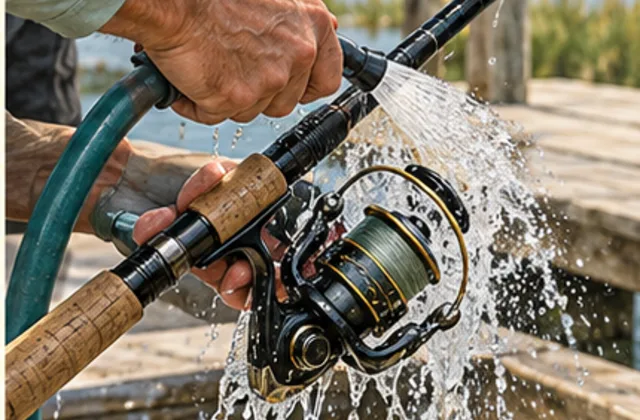
After a trip, your rod, reel and other equipment may be wet, sandy or salty. Putting everything straight into a closed bag can leave you with dirty equipment and hidden damage next time.
Use a simple sequence: separate used items, follow their cleaning instructions, dry them, inspect for wear and store only what is ready. Keep anything awaiting repair apart from the gear you intend to pack. Routine care starts with the instructions for your equipment, rather than taking a reel apart after every outing.
Separate used gear from clean storage
Tackle means fishing equipment. Keep a separate container for used lures, hooks and other wet parts during the trip. That keeps wet or dirty pieces out of the dry tackle box and gives you one group of items to clean afterward. Used doesn't automatically mean damaged, and cleaned doesn't automatically mean ready to use.
Back home, empty wet bags and separate the rod and reel, used tackle and rubbish. Keep hooks contained while sorting; don't reach blindly into a bag of loose gear. Put clipped line and packaging straight into a waste container so they don't blow away or get left beside the water. The line-waste and cleanup guide explains that separate disposal task.
Set out distinct places for items being cleaned, items drying and items needing attention. Keep the containers for sharp tackle secure throughout. If equipment belongs to a friend or another provider, agree who is handling its care before applying your own routine.
If you're using a guide's equipment, let the crew handle its cleaning and maintenance. Tell them about damage or a problem you noticed.
Follow the cleaning instructions for the reel
Find the make and model, then match it to the maker's care instructions. Keep the manual or source with those details so a similar-looking reel's instructions don't become the default. A reel is a mechanism with internal parts, not something to pressure-wash like a muddy patio.
Look for the maker's directions on wiping or rinsing, drying, lubrication and service. If wiping is specified, clean accessible surfaces with the recommended cloth or method. If rinsing is allowed, follow those directions; don't turn it into soaking or a forceful spray into the mechanism.
Read the permitted method before collecting cleaning products or lubricant. A generic reel-care kit doesn't establish that every product in it belongs on your model. If the manual leaves a step unclear, ask the maker or a suitable service contact instead of extending instructions from another reel.
Wipe the rod handle and accessible surfaces of the reel as the instructions allow. If sand has got inside or the handle feels rough, stop and arrange model-specific help or service. Don't force the handle or add oil to every opening in an attempt to clear it.
Dry before putting everything away
Once cleaned, leave the gear out to dry in a secure place before closing bags or boxes. Check the bag itself too: putting a dry reel back into a wet bag undoes that work. Keep sharp parts contained and away from children and pets while they dry. Include used tackle, bags and storage compartments in the check, not just the reel's outer surface. Leave an item in the drying group if you haven't completed that step; shutting the lid isn't the end of the routine.
Store rods so tips and guides aren't being crushed by other items. The guides are the small rings the line runs through; they need to remain smooth and properly attached.
Keep the reel's storage and lubrication directions with its model details. Before putting it away, note anything that needs service so it doesn't get forgotten before the next trip. A brief note can name the item, what you observed, the instruction followed and the next action. Describe a symptom rather than inventing an internal diagnosis.
Look at the parts that take wear
Before the next outing, check:
- Rod and guides: loose fittings, visible cracks or chipped rings.
- Line: fraying, roughness, kinks or damaged connections.
- Reel: controls and handle working as expected, without forcing them.
- Hooks and lures: rust, bent or damaged parts, and torn soft bodies.
A leader is a separate section of line near the hook or lure. Include it and its knots in the inspection rather than checking only the line on the reel.
If you find a fault, separate that item from the gear you're ready to pack. Note the problem—‘chipped guide ring’ or ‘handle feels gritty,’ for example—so you can explain it to a shop or service contact.
For an illustrative chipped-guide check, replacing frayed line alone leaves the damaged guide unresolved. Keep the rod out of the ready group until the affected part is repaired or replaced. The setup guide helps you check the parts together.
Before packing again, revisit the items set aside and confirm what was actually repaired or replaced. An appointment booked or a part ordered is still work pending. Inspect the affected setup again using its instructions rather than treating the service note as the final check.
Keep the instructions and any service details with the model name. You'll then have three useful states: care still in progress, repair or service pending, and checked for the next outing. Keep pending items apart from the gear you pack until their care and inspection are complete.