
 BAIT · LURE · HOOK · FLOAT
WHAT GOES ON THE FISHING LINE
Bait, lures and fishing rigs:connect the parts to the activity.
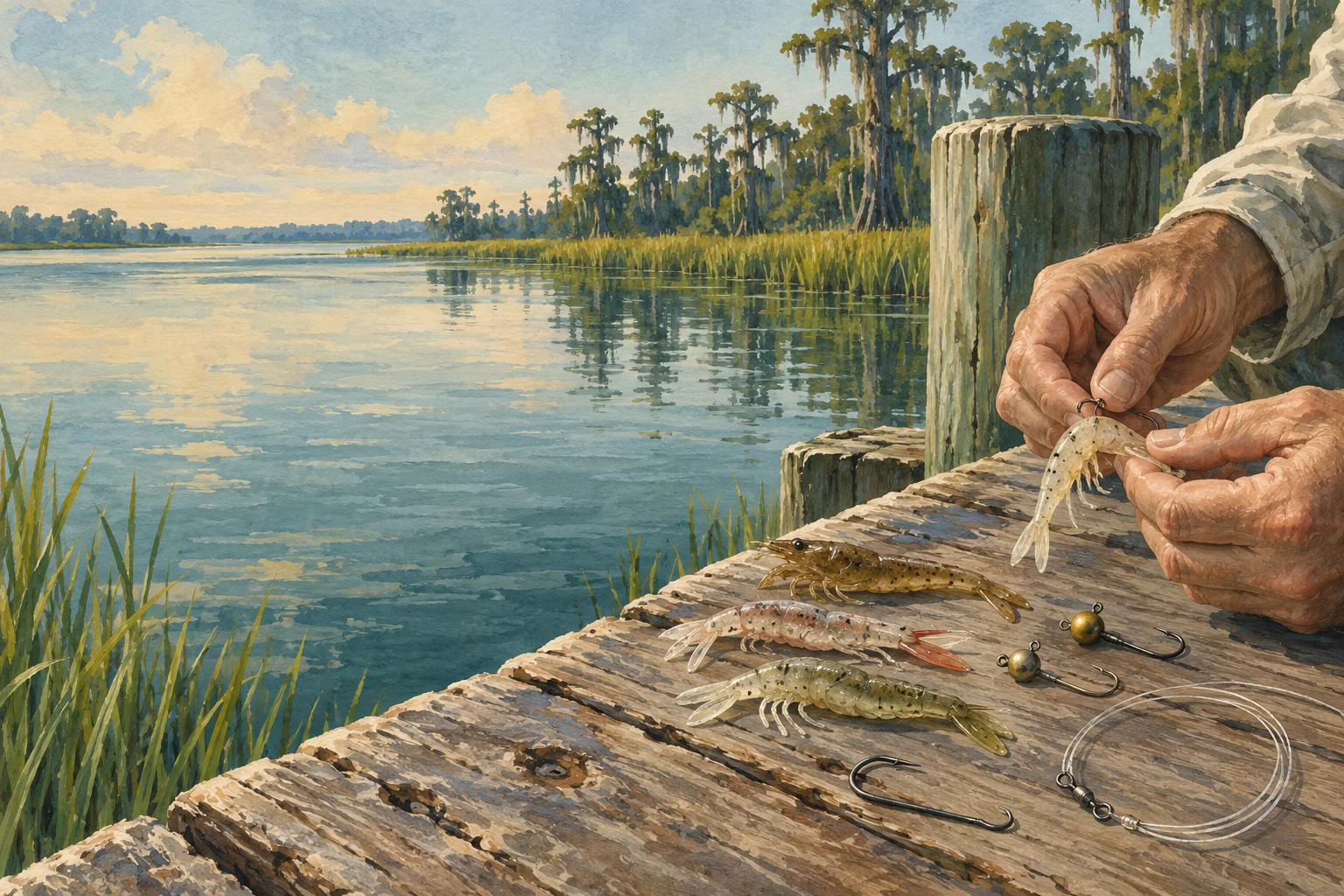
Natural bait is food such as a worm or shrimp on a hook; a lure is artificial bait. A rig is the arrangement at the fishing end of the line. Compare where the bait or lure will travel, then learn the parts and connections for one complete setup.
CHOOSE HOW YOU WANT TO FISH
Where will the bait or lure travel?
A float setup suspends bait below the surface. A direct lure uses your rod and reel movement to bring an artificial bait through the water. A bottom setup takes bait down toward the underwater floor. These are different jobs for the parts; start with the path you want to learn.
Suspend bait below a float
The float stays at the surface while a baited hook or lure hangs below. The line below a fixed float limits its reach, while current can carry it sideways. Learn the connections before adjusting that length.
Learn a complete cork arrangement →Cast and retrieve a direct lure
A paddletail is a soft lure with a moving tail. Its jighead combines a weight and hook. Fit the body straight, cast and wind it back; pauses let the weighted head sink. The lure lesson explains the assembly and movement.
Assemble and move a paddletail →Take bait toward the bottom
A sinker helps a baited setup reach the underwater floor. Its position and the hook’s connection vary between rigs. Follow one arrangement for casting or lowering it and bringing it back, counting the whole casting load.
Compare complete freshwater setups →
FOLLOW THE LINE
Trace the line to the hook or lure.
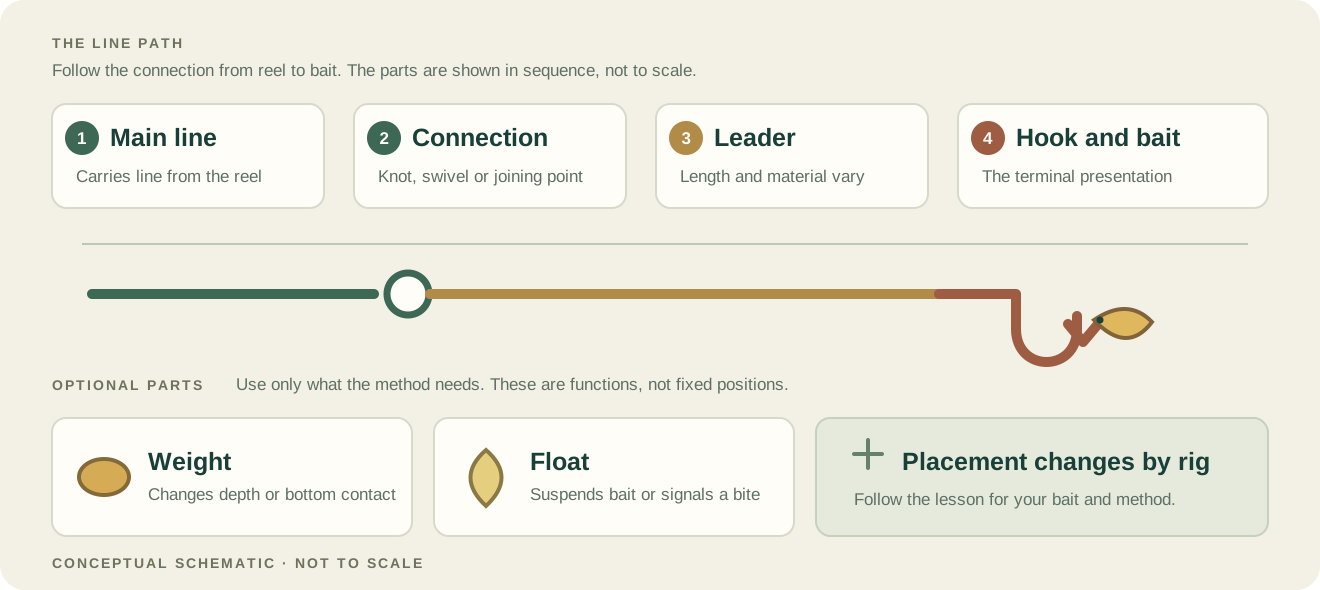
Start at the reel’s main line and follow every join toward the hook. A leader is a separate section near the hook or lure; a knot or connector can join it to the main line. A swivel allows rotation, while a sinker adds weight. Identify a part by its job before deciding whether the chosen rig uses it.
The drawing below is a parts map. Its separate weight and float boxes do not give assembly positions. In a simple fixed-float setup, changing the line length below the float changes how far the bait can hang; a jighead already combines a weight and hook. Use the relevant complete-rig lesson for the actual layout.
- Main line
The line stored on the reel and running through the rod’s guides, the small loops that direct it.
- Connection
A knot or suitable part joins sections. A swivel is a small connector that can rotate; not every rig needs one.
- Leader
A separate section of line near the hook or lure. Its material and placement depend on the arrangement.
- Hook with bait or a lure
The hook holds natural bait, or is part of an artificial lure. The separate float and weight examples are optional parts; their positions depend on the complete rig you are learning.
2 LESSONS
Choose natural bait or an artificial lure
Compare looking after and placing natural bait with supplying a lure’s movement through the rod and reel.
- Bait or lures: what's the difference?Compare bait and lures by the activity you want to learn, then follow preparation, movement, observation, return and inspection through one complete attempt.↗
- Get to know the main types of fishing lureIdentify what each lure name describes, recognize overlapping families, and learn the actual lure’s movement, return inspection and one useful correction.↗
2 LESSONS
Understand hooks, weights and connections
Learn each part’s job and why hook shape changes the response you learn for a bite.
- Hooks, weights and the other small fishing partsTrace one complete rig, name each part’s job and learn one purposeful adjustment at a time, rechecking joins and total casting weight after changes.↗
- Circle hooks and J hooks: what's the difference?Identify hook shape and offset, check bait fit, and learn the complete bite response on the actual setup, keeping current requirements separate.↗
2 LESSONS
Follow one complete rig from line to hook
Compare float, direct-lure and bottom arrangements, then use the lesson for the positions and connections in one setup.
- Get to know the main coastal fishing setupsCompare cork, direct-lure, bottom and trolling lessons by the rig, bait position, your task, return checks and crew handover.↗
- Simple freshwater fishing rigs explainedCompare where hooks, weights and floats sit, then learn one actual arrangement through assembly, controls, use, return inspection and one correction.↗
2 LESSONS
Prepare and use live bait
Work through the container and water conditions before learning where a hook goes in live shrimp.
- How to look after live fishing baitPlan the actual bait, holding system and whole outing, learn the controls and problem response, and assign handling and leftovers tasks before buying.↗
- Using live shrimp as fishing baitLearn one demonstrated placement for the actual shrimp and hook, compare condition before use and on return, and correct the observed problem with help.↗
2 LESSONS
Assemble a cork rig or paddletail setup
Follow the connections for a fixed-wire cork, or fit a soft body straight onto a jighead. Then learn the movement in water.
- How to rig and fish a popping corkConnect a fixed-wire cork, leader and hook, then learn to control the rig through a cast, short pull and pause.↗
- Get started with a paddletail fishing lureCheck the actual body and jighead fit, finish a straight assembly, then compare one retrieve change with visible movement and returned-lure condition.↗
FOLLOW ONE COMPLETE ATTEMPT
Connect the cork rig to its movement in water.
A popping cork is a float moved to make a splash or sound, with a hook or lure below it. Once the rig is assembled, a short cast lets you follow the float and line. Let it settle, make a short cork movement and watch during the pause; retrieving means bringing the arrangement back.
Current is moving water. It can carry the bait sideways or bow the line, so a hook need not hang directly under the float. Bring the rig back before it drifts into another line or an obstruction, then inspect the bait, hook and connections. Learn the response for the hook you are using before waiting for a bite.
Learn the cast, move and pause sequence →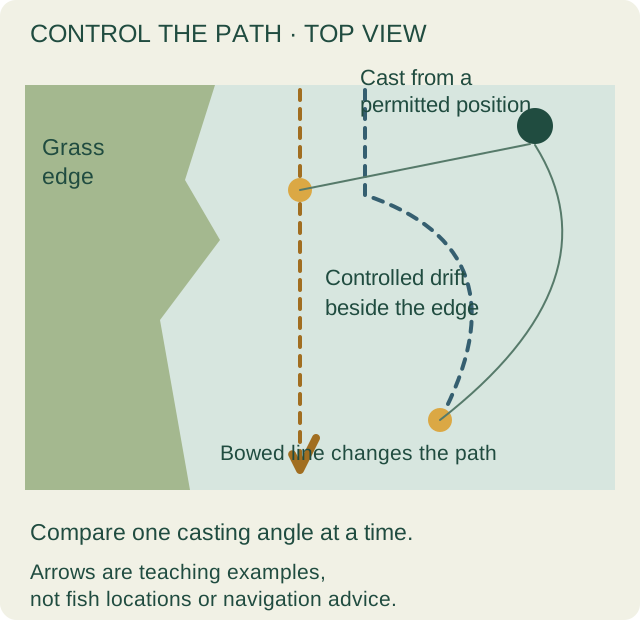
CHANGE ONE THING AT A TIME
Choose an adjustment for a visible problem.
- The hook comes back with plants
- Clear and inspect the setup using handling you have learned, then try a clearer path with the same lure and movement. Repeated plants can explain poor movement; changing color does not remove the obstruction.
- Parts keep wrapping around each other
- Bring the setup back and identify the wrapping before another cast. Compare the arrangement with its assembly lesson. An unresolved tangle needs clearing, rather than another cast or a stronger pull.
- The complete setup is awkward to cast
- Count the bait or lure, hook, float and added weight together against the rod’s casting range. A longer line below a float also changes what you must manage. Check the full assembly and practice movement with suitable hook-free equipment before adding force.
Learn the reason for each part.
Before adding a sinker, swivel or longer leader, say what you want the change to do. More weight changes sinking and the load cast by the rod; a different line length below a float changes its reach. They solve different questions.
Follow one complete assembly, learn its cast or lowering movement, observe it and bring it back. If handling a hook or clearing a tangle is unfamiliar, learn that job with help before relying on it. Use the method’s lesson and current requirements for the intended water and activity.
Rig-family reference: Take Me Fishing. The linked lessons keep their detailed sources. Reference checked October 23, 2026; it was available through indexed primary text.