
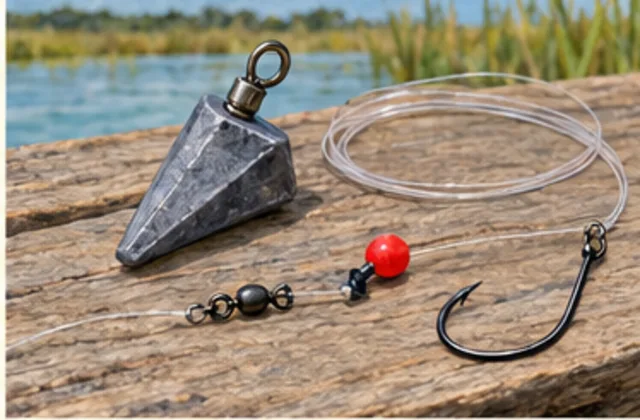
Coastal fishing takes place around the shore, bays, marshes and nearby sea. A rig is the arrangement of line, hook and other parts used to fish.
Bait is something such as a shrimp on a hook; a lure is an artificial item used to attract fish. Start with what it needs to do: hang below a float, move through the water, stay near the bottom or travel behind a boat. That position and movement determine the arrangement you need. Also ask who performs each step: you, the crew or the moving boat. Knowing the rig's name is less useful than knowing your part in the complete attempt.
A popping cork holds bait or a lure below a float
A popping cork is a float you can move to make a splash or clicking sound. A baited hook or suitable artificial lure hangs below it on a leader, a separate section of line.
The cork gives you a surface marker to follow. Casting means sending the line out with the rod. Cast the whole arrangement, let the bait or lure settle below the cork, then give the cork a short movement and pause. During the pause, watch whether it drifts, dips or changes direction. The technique lesson explains the rod and line control.
 Open the full-size illustration →
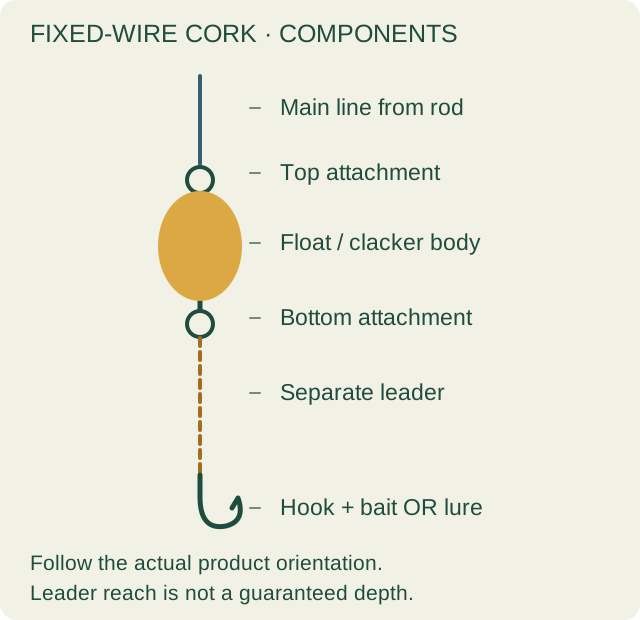
This drawing shows a fixed-wire version with an attachment at each end. The cork-assembly lesson explains those connections. Other float designs can assemble differently. Trace the actual main-line attachment, cork, leader and fishing end with the instructor before using the drawing as a guide. The drawing identifies positions; it doesn't prescribe a leader length, hook size or casting weight.
Ask to see the movement, pause and return, including what the instructor watches and when to bring the rig back. On return, inspect the fishing end and any tangles before changing the pause, leader or weight. A cork moving on the surface doesn't by itself establish the bait's exact position below it.
A direct lure puts you in charge of its movement
A lure is an artificial object used to attract fish. Without a cork, you control its travel through the rod, line and reel.
For example, a paddletail is a soft lure with a flattened tail that moves as it travels. It can fit onto a jighead, a weight and hook combined. After a short cast, a steady turn of the reel brings it back; a pause lets the weighted lure sink again. Bringing it back is the retrieve. Start where you can follow that path rather than guessing at its depth from a fixed countdown.
This can suit someone who wants to practice casting and working a lure. It also means learning where the lure travels instead of watching a surface float. Start with one paddletail setup you understand.
Have the instructor show the intended movement close by, then try one short return using that movement. Note what is visible and inspect the body, hook and connection when it comes back. If the body is twisted or the hook carries plants, address that problem before changing speed, weight and color together.
A bottom rig uses weight to reach down
A bottom-fishing setup places a baited hook on or near the underwater floor. A sinker is a weight used to help it reach the intended area.
Different rigs put the weight beside, above or below the hook. You may lower the arrangement beside a boat or cast it from shore. Check its part order before using it; moving a weight to another position changes the arrangement. Include the whole hook, bait and weight when checking what the rod is designed to cast.
Learn whether the chosen method rests the weight on the bottom or keeps the bait above it, how to stop letting line out, and which response the hook needs after a bite. If the hook keeps returning covered in plants or getting stuck, bring it back and check its path before adding weight. The component guide explains what weights and hook positions change.
Ask for the whole sequence on the actual setup: cast or lower, control the descent, establish the intended position, respond to the taught signal and retrieve. Confirm who adjusts the reel and who helps with a snag or uncertain bite. A weight reaching the bottom answers a different question from how the hook and bait are positioned.
Trolling works behind a moving boat
Trolling means the boat pulls bait or lures through the water. Rods may sit in holders, with the crew setting and managing the lines.
The boat supplies the forward movement, so you aren't necessarily casting or winding repeatedly while waiting. You may take a turn with a rod after a bite. Ask who lets the lines out and who handles the rod when a fish takes one. Before a turn, ask the crew to show the handover, your rod/reel task, the help call and the return of control. Leave release and adjustments with the assigned person until your role is explained. The fishing-methods explanation compares those jobs.
For an illustrative choice between a direct-lure lesson and a trolling turn, the first involves your repeated cast and retrieve; the second may begin with a crew handover after a bite. Ask which participation is actually offered, with instruction and breaks, rather than assume both bookings provide the same casting practice.
Choose by the experience you want
Tell the guide or shop what you'd like to learn. “I'd like to cast a lure myself” and “I'd like to try bait below a cork” give them a useful starting point.
For your own outing, choose equipment around the actual water, fishing position and rules. For a guided trip, ask what is supplied before buying extra gear. Read the chosen lesson back as: actual rig, your task, intended bait or lure position, what to watch, return checks and when to ask for help.
If the method or components change, recheck the layout, connections, complete casting weight where relevant and the control lesson. Learn one complete arrangement first; you can add another method when you have a reason to use it.