
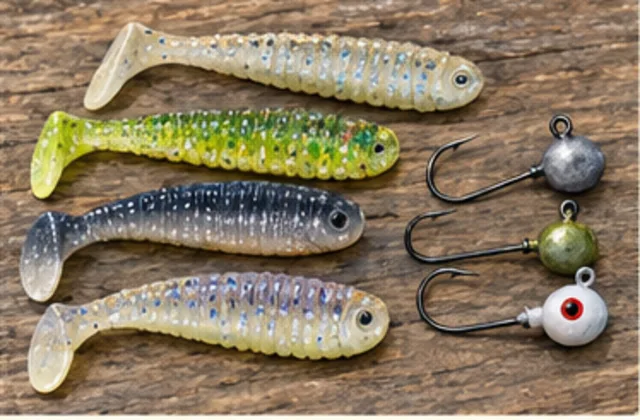
A paddletail is a soft, flexible lure with a flattened tail that moves as it travels through the water. It usually resembles a small fish. Unlike live bait, you supply its movement through the rod, line and reel.
This example uses a jighead, a weighted head and hook combined. The soft body fits onto the hook. Other hook systems exist, but learning one straight, compatible assembly is enough to start. Keep three tasks separate: establish body/hook fit, check the finished alignment, then learn the movement on the actual setup.
Lay the hook beside the body first
Match the actual lure and jighead rather than choosing by color alone. The hook needs to fit without bunching up the body or crowding the part that should move.
The nose is the front of the soft body, opposite the paddle tail; the back is the upper side. Lay the hook beside the relaxed body with its point toward that back. Note where the point will enter the nose and where it should emerge. Use any alignment marks or slots on that particular lure; don't stretch it to make a mismatched hook appear to fit.
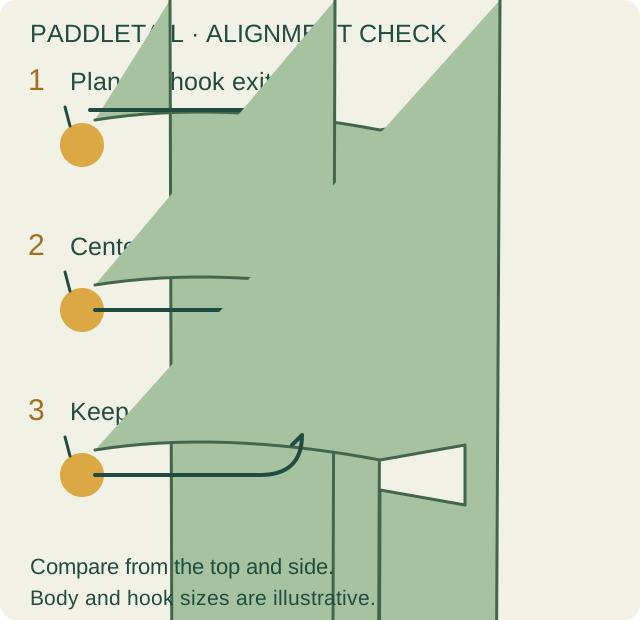 Open the full-size illustration →
The drawing shows the idea, not a hook-size recommendation for every lure. Compare the actual body's relaxed length, hook path and keeper with its instructions before threading. If the planned exit would force the body to stretch or bunch, ask for the intended pairing rather than copy the drawing's proportions.
Thread it straight
Keep fingers away from the point and ask for a demonstration if handling hooks is new to you.
- Start the hook point at the intended entry in the lure's nose, keeping it centered for this straight rigging.
- Feed the soft body along the hook, following the planned path rather than twisting or stretching the body around it.
- Bring the point out through the back at the place you noted when laying the hook beside the body.
- Slide the nose toward the jighead onto its keeper, the part designed to hold the soft body. Don't stretch the lure to hide a poor fit.
- Let the body relax, then look from above and from the side. It should sit straight instead of bowed or corkscrewed, with the tail clear to move.
If the body bunches up or twists, compare the entry and exit points with the hook laid beside it. Refit it on the intended path if the plastic is still usable. If the nose is torn and won't stay on the keeper, replace the damaged body rather than repeatedly stretching it over the same hole. Keeper designs and soft materials differ; use the product's instructions instead of adding glue or forcing a fit.
Finish the assembly check before assessing the retrieve: nose seated as intended, relaxed body straight from both views, hook positioned for this layout and tail clear. Have the instructor check an uncertain fit. A lure that can be threaded onto the hook hasn't necessarily passed those checks.
Learn its movement close by
Retrieve means bringing the lure back by winding the reel and moving the rod. Make a short cast where you can follow the line and, if the water allows, see the lure's movement. Casting is sending the line out with the rod.
Turn the reel handle steadily and watch whether the body stays upright and the paddle tail moves freely. Then pause and restart while keeping the same lure and jighead. The weighted head can sink during the pause; winding moves it back toward you. You're comparing what one change does, not searching for a universal winding speed.
Keep the assembly and casting path the same for that comparison, and note whether you can actually see the tail and body or only follow the line. If the view is unclear, ask for a closer demonstration instead of describing unseen movement as confirmed.
Weight, line angle, current and retrieve all affect where it travels. There's no single countdown that tells you the depth of every paddletail. Count the complete lure's weight when checking the rod rating, not only the jighead. The whole-setup guide connects that total to the rod, reel and line. A different body or head leaves the affected fit, attachment and casting-weight checks to repeat.
Fix the visible problem first
- It rolls or spins: check for a twisted body, off-center hook path or attached debris.
- The tail doesn't move freely: check that the hook or body isn't restricting it and that you're using the intended movement.
- The plastic slides down: inspect the keeper fit and damage to the nose.
- It keeps catching plants: bring it back, clear the hook and try a clearer path. The exposed hook can catch on plants. A harder pull or a new color doesn't remove the obstruction.
Retrieve and inspect before choosing a correction. For an illustrative rolling lure, first compare the returned body with the planned straight assembly and clear any debris. Correct an observed twist with the instructor, then repeat the same short retrieve before changing speed or head weight too. If the problem remains, use the product instructions and ask for another demonstration rather than assume one visible symptom proves the cause.
A weighted hook with a more protected point is a different assembly, so learn its instructions separately. It isn't a reason to improvise changes to a rig you haven't understood.
After the trip, remove damaged plastic and packaging from the fishing area. Store different soft materials as their makers direct. Keep a short note of the actual body/head pairing, alignment check, retrieve used, visible behavior and condition on return. Name one useful change for the next attempt. Start your next session with a lure you can rig and control before buying another handful of colors.