
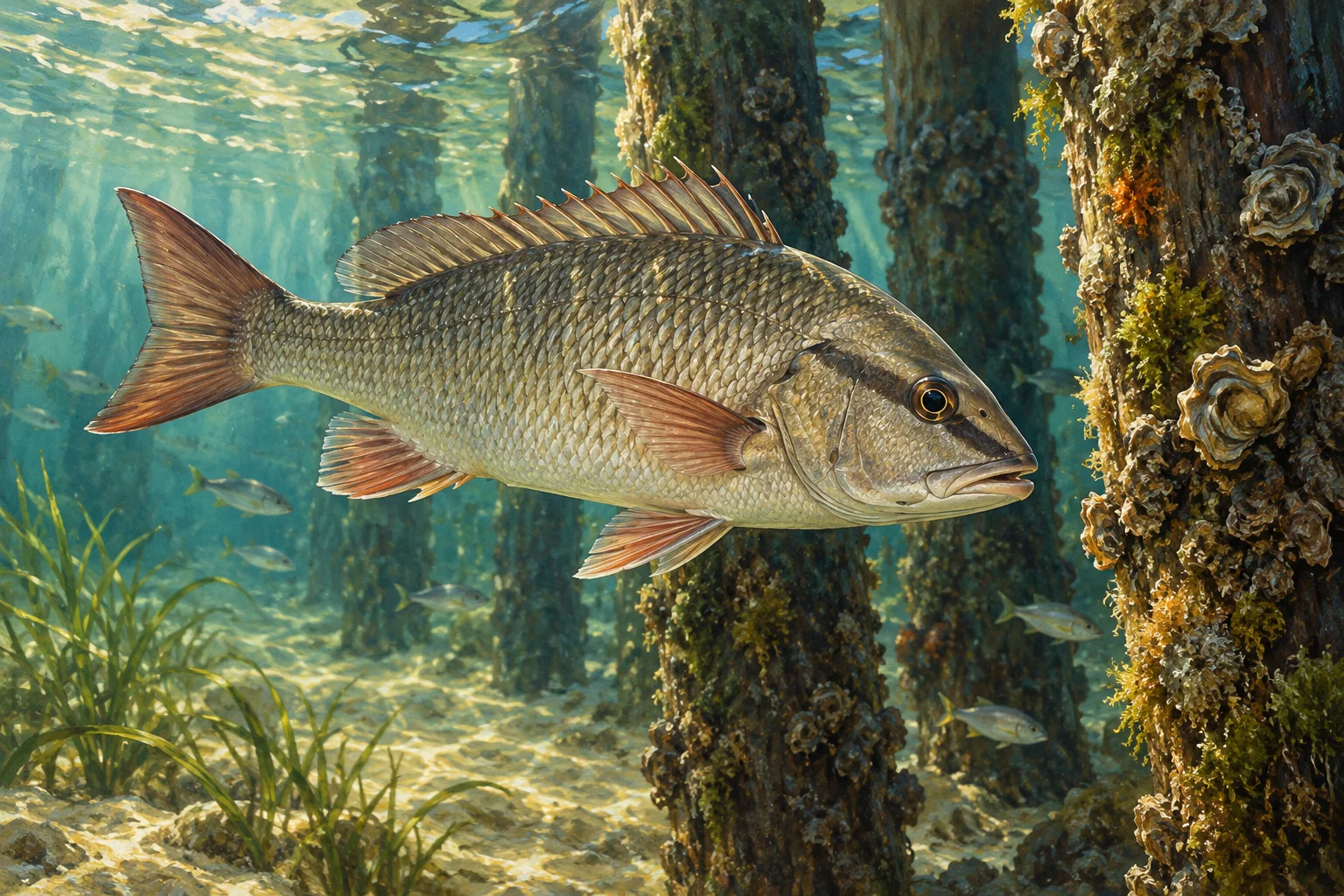
Mangrove snapper is another name for gray snapper, a coastal saltwater fish. “Mangroves” in a fishing conversation may mean these fish, rather than a trip to a forest of mangrove trees.
They are different from red snapper and vermilion snapper. Learning the full name helps you follow a trip description and look up the right fish afterward.
Learn the fish before choosing the setting
The Louisiana Sea Grant gray-snapper profile explains the names and appearance. Don't expect every individual to be one shade of gray; color changes with the fish and the way you see it.
Compare body shape, markings and fins with the full reference before the outing, then ask for help with uncertain identification on a catch. On a mixed-species day, a target name or gray color doesn't identify every snapper. Keep the full species name with the keeping question rather than apply another snapper's answer.
Smaller gray snapper use coastal habitats, while larger fish can use offshore habitat, farther out from shore. That means the name alone doesn't tell you whether you're arranging a sheltered coastal visit or a longer Gulf day.
Understand fishing beside cover
Cover means objects or plants in the water, such as posts or submerged branches. These can give a bait a particular place to investigate, but can also catch a hook or damage line.
Current is water flowing in a direction. A bait dropped beside an object can drift past it instead of staying where it first entered the water. Separate its entry point from the later path. A visible post doesn't establish bottom depth, and the surface line's direction doesn't measure bait depth or fish position.
A useful first goal is placing bait beside a reachable feature and bringing it back under control. Use a permitted fishing position with a clear return path and let the boat operator manage the boat; moving closer isn't always the answer to an awkward cast. A snag is a hook caught on an object. Ask for help with an unclear pull or snag; don’t pull harder by default.
What the rig parts do
Bait is food on a hook used to attract fish. A leader is a separate section of line near the hook. A sinker adds weight to help the bait reach or hold a position. The rig is the way those parts are put together.
More weight changes how the bait moves. It can help it sink, but can also bring it into contact with the bottom or an obstruction. A stronger leader may resist rubbing better while changing the bait's movement too.
Before using the actual setup, have placement, line release and stopping, intended bait movement, hook response and return demonstrated. Casting sends bait out with the rod; retrieving brings line back with the reel. Holding bait beside a feature and working a moving presentation need different instructions.
With known equipment and appropriate help, try a short cast or controlled lowering along a clear path. Follow the line after placement and retrieve before an obstruction or loss of control. Is the bait attached, is the hook clear, and is the leader tangled or scraped? Sort a tangle or have a damaged section checked and replaced before another attempt.
For an illustrative comparison, keep the rig and movement the same while trying one clearer path. Record the path and returned bait and leader condition, with catch or no catch separately. A scraped leader suggests a condition to inspect, not a complete diagnosis of the underwater route. More weight or a different leader is a change to evaluate, not an automatic improvement.
The coastal-rig lesson shows how different arrangements work. You don't need a shopping list of line strengths to understand their jobs.
Make the trip description specific
When a provider offers “snapper fishing,” ask which snapper, what method and what water. Establish demonstrations, supervised attempts, guest jobs and whether people fish together or take turns. Describe help needed with baiting, tangles, landing, hooks and identification.
Compare the actual boat, departure, rides, fishing and rest positions, facilities, hours and full-group quote with that activity. Neither common name establishes a sheltered ride, a particular lesson or included services. If the boat, method, area or date changes, revisit the affected answers and connected travel.
Check gray snapper specifically in Louisiana's saltwater guidance, along with the federal information that applies to the trip. A red-snapper season announcement doesn't settle this fish's rules.
Before fishing, agree the landing, identification, measuring, hook-removal and release roles for the actual outing. Personal requirements, vessel and trip conditions and lawful keeping remain distinct checks. The release guide helps with preparation for fish going back, including the actual depth and method rather than treating every gray-snapper outing as identical.
For lawfully kept fish, arrange preparation, charges, collection place and time, collector and cold storage before the journey home. Expected dock return is not necessarily readiness to leave after those jobs. Keep the full species name with the applicable rule information.