
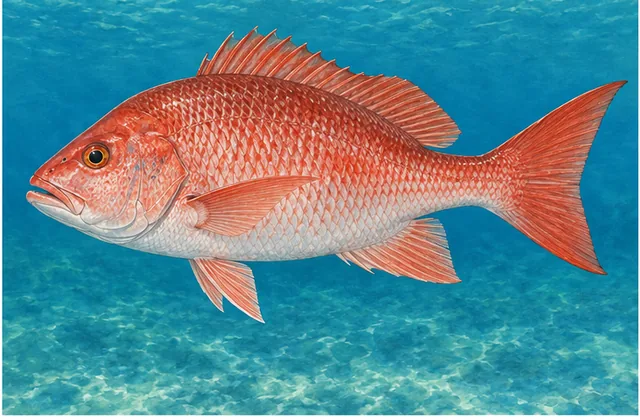
Red snapper are saltwater fish found in the Gulf, often associated with reefs and other underwater features. They are one particular snapper species. A red-colored fish brought aboard isn't automatically a red snapper, and redfish are an entirely different fish.
A snapper outing often involves lowering a baited rig from a boat. Before thinking about tackle sizes or a catch limit, learn what happens between the boat and the bottom, what the crew expects you to do and how fish will be identified and handled. An advertised target doesn't identify every catch or establish which fish may be kept.
What does reef fishing mean?
A reef is an underwater habitat with raised or uneven features on the seabed—the bottom of the sea. It can be natural or built from materials placed in the water. A wreck is a sunken boat or ship; a platform is a structure built in the water. Those objects can also appear in a fishing plan.
Fish can use different parts of these features and the surrounding seabed. The feature's shape, depth and water movement help determine where the crew tries to place a bait.
A chart marker shows a location, rather than fish waiting there. It doesn't supply today's fish position, usable boat position or permission to approach a structure. For an outing, establish what you'll do at the feature: lower bait, work a lure or use another method. Keep boat positioning and moves with the operator's directions.
Treat bottom depth, bait depth and fish-position evidence as three questions. Knowing the seabed depth doesn't tell you the level the crew wants your hook to reach. The method should explain that intended presentation before the first drop.
Picture your first bait drop
Bait is food placed on a hook to attract fish. A rig is the arrangement of hook, line, weight and other parts at the fishing end. The weight helps it sink; the hook holds the bait.
Before the first drop, have the crew identify the parts of the actual rig and demonstrate releasing line, stopping it, watching the presentation and winding back. Ask which level the bait should reach, which response to use with that hook, how to call for help and what to do if the rig won't move normally. Rehearse the controls as directed before a bite. Then follow the routine you've been shown:
- Lower the rig under control, keeping clear of neighboring lines.
- Stop at the level the crew has explained.
- Watch where the line travels and notice changes in pull through the rod.
- Bring it back when instructed, then have bait, hook, line and any tangle checked before another drop.
Bottom depth is the distance to the seabed. Bait depth is where your hook is fishing. They aren't always the same. Current can carry a rig sideways, so simply letting out more line doesn't tell you where the bait ended up.
Have the crew explain a bite, contact with the bottom and a hook caught on an object—a snag—using that setup. A change in pull doesn't identify the cause by itself. Letting out more line, adding weight or pulling harder is not a universal answer to an unclear result.
For an illustrative learning note, record ‘line traveled sideways; rig returned tangled; crew checked the setup before another drop.’ That is an observation and follow-up, not a measured bait depth or proof the fish were absent. The offshore-methods guide explains the guest jobs in lowering bait and other methods.
Prepare for fish going back
Pressure falls as a fish is brought up from depth. Gas inside can expand and make it difficult to return below the surface. Injury caused by that pressure change is called barotrauma.
A descending device is a tool used to return a fish to deeper water before releasing it. The setup needs to suit the fish and conditions, and someone needs to know how to operate it before fishing begins.
Before the first drop, agree who identifies the fish, handles the hook, makes the keeping or release decision under the applicable rules and operates the release equipment. Have the crew explain the sequence and where guests should remain clear. Equipment aboard and a person prepared to use it are separate questions.
Our catch-and-release guide introduces that preparation; the red-snapper release study is an optional deeper look at the research. Its evidence is not a survival forecast for an individual catch. Neither a quick descent nor a fish swimming away guarantees later survival.
Check the trip as well as the date
When checking the rules, describe the actual boat and trip: a privately operated boat or a paid charter, plus any further category the operator says applies. Booking a charter just for your group doesn't by itself answer that fishery question. Use the Louisiana Department of Wildlife and Fisheries' red-snapper information and the responsible federal guidance for the offered trip.
Before booking, establish whether red snapper are the focus, which method guests use and how demonstrations, supervised drops, turns and crew assistance work. A species label doesn't promise continuous rod time or a particular lesson. Count everyone coming and check the assigned boat's riding, fishing and rest positions.
Separate arrival, boat departure, both rides and moves, expected dock return and readiness to leave after unloading, payment and any collection. Keep the full-group quote with included, extra or unanswered fuel, equipment and preparation charges. Ask who gives the next decision and what applies if the boat, activity, hours or date changes. Evaluate an alternative against the group's goal and connected travel.
If fish are lawfully kept, arrange cleaning, charges, collection place and time, collector and cold storage for the journey. Personal requirements, vessel and trip category and catch conditions remain distinct checks. Keep unresolved answers visible rather than borrow a season or limit from another type of outing.