
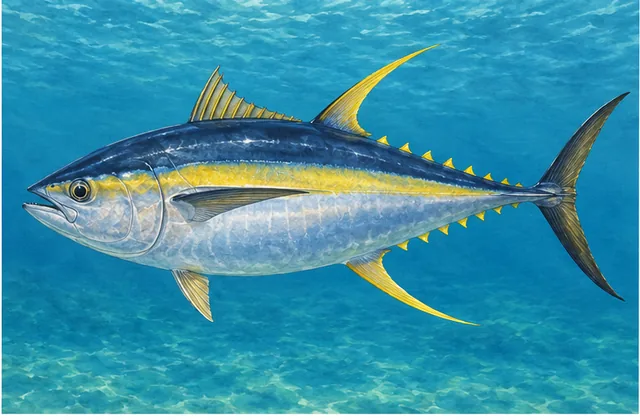
Yellowfin tuna are large, strong-swimming saltwater fish found in the Gulf's open water. A Louisiana trip for them is an offshore boat day, out in the Gulf away from shore. It includes travel and searching as well as time holding a rod.
That doesn't mean you need offshore experience to ask about a guided lesson. It does mean the boat, the activity and the help available matter more than a photograph of someone's biggest catch.
Meet yellowfin before choosing a trip
The National Oceanic and Atmospheric Administration's yellowfin-tuna profile describes the fish, including the yellow fins behind its name. It is one tuna species; not every tuna encountered on a Gulf outing is yellowfin. Learn the reference before the trip and have identification established before a keeping decision. The advertised target doesn't identify the actual catch.
Pelagic means associated with open water rather than living on the bottom. Yellowfin feed on other animals, including fish and squid. Crews may look for feeding activity or investigate offshore features where food gathers.
Keep the depth beneath the boat, the level where bait or a lure is presented and any evidence of fish position as separate questions. One doesn't establish the others. That helps explain why methods can change during the day without giving a universal fishing depth or a guarantee that a particular offshore feature holds tuna.
What do the fishing words mean?
A trip might use one or several methods:
- Live-baiting: putting a living bait animal on a hook and placing it where the crew wants to fish.
- Chunking: using pieces of bait. You may also hear chum, food placed in the water to attract fish. A hooked bait and loose chum are different parts of the activity.
- Casting: sending a bait or artificial lure out with the rod, then controlling its return.
- Trolling: pulling baits or lures behind a moving boat, often with rods in holders until a bite.
Those are different guest experiences. Ask which methods the provider expects to teach and whether everyone fishes at once or takes turns. For each method, establish who prepares bait, releases line, watches the rod and handles the return. A mixed day can include waiting while the crew searches or prepares bait.
If your goal is instruction, ask for a complete demonstration and supervised practice for the actual method. Taking a turn after a bite is different from learning to cast or present bait. Supplied heavy equipment doesn't establish individual teaching or a full day holding a rod.
Learn your job before a fish bites
An outfit means the rod, reel, line and other gear used together. Before fishing, have the crew show where to stand, which parts you hold, how to wind in line and how to call for help. Rehearse the guest's sequence with the actual equipment as directed, including passing control back to the crew. Ask which jobs are yours and which stay with the crew; a bite is a poor time to discover that division.
The reel's drag allows line to leave against resistance when a fish pulls. That pull on the line is tension. Line going out can be part of the process; ask the crew to demonstrate what it should look and feel like. Keep its setting and follow its instructions rather than tightening the reel whenever line moves.
If a rod holder, support belt or other equipment is used, have the crew demonstrate what supports the rod and what you handle. Keep adjustments and changes in support with its directions rather than invent a technique under load. Before booking, describe the group's practical needs and agree how effort, breaks, shared turns and crew assistance work. Count observers and children as guests too; passenger allowance, fishing positions and people covered by the quote are separate questions.
When a fish comes close, landing means bringing it under control at the boat. Keep the crew's working area clear and follow its directions. Getting hands near the line, hooks or moving fish isn't an extra job to invent in the moment.
Put the full day in the plan
Get the actual meeting dock, entrance, parking, requested arrival, departure and expected dock return. Separate both rides, searching, bait preparation, fishing turns and breaks within the boat hours, then add unloading, payment and catch collection before road travel. Ask about usable seats, rest positions, shade, toilet and supplied versus included equipment. Venice, Port Fourchon and Grand Isle are places to investigate, rather than one fixed route or run time.
Tell the provider whether you want an introduction to the methods, a tuna-focused day or a broader offshore experience. Keep that goal with the assigned boat, full-group price and included, extra or unresolved fuel and other charges. Separate the full charge from deposit credit, payments and balance.
Ask who gives the next weather or service decision, when to expect it and what applies to cancellation or a changed boat, method, duration or date. A proposed mixed-species or shorter outing needs to fit the group's goal and connected travel; it isn't automatically an equivalent replacement.
Tuna have their own species and fishery requirements. Use the appropriate federal recreational guidance, Louisiana saltwater information and the operator's explanation of the vessel's fishing permissions.
Resolve identification, personal and vessel requirements and release or lawful keeping before fishing; the operator's explanation and responsible official guidance address different parts of that preparation.
If taking fish home is part of the plan, use the fish-cleaning guide to arrange handling, charges, service, collector, place/time, packaging and cold storage through the journey. The full fish and prepared take-home portions are different quantities. Keep the expected amount uncertain until the actual catch and preparation are known, and allow collection time before any hotel, transfer or flight commitment.