
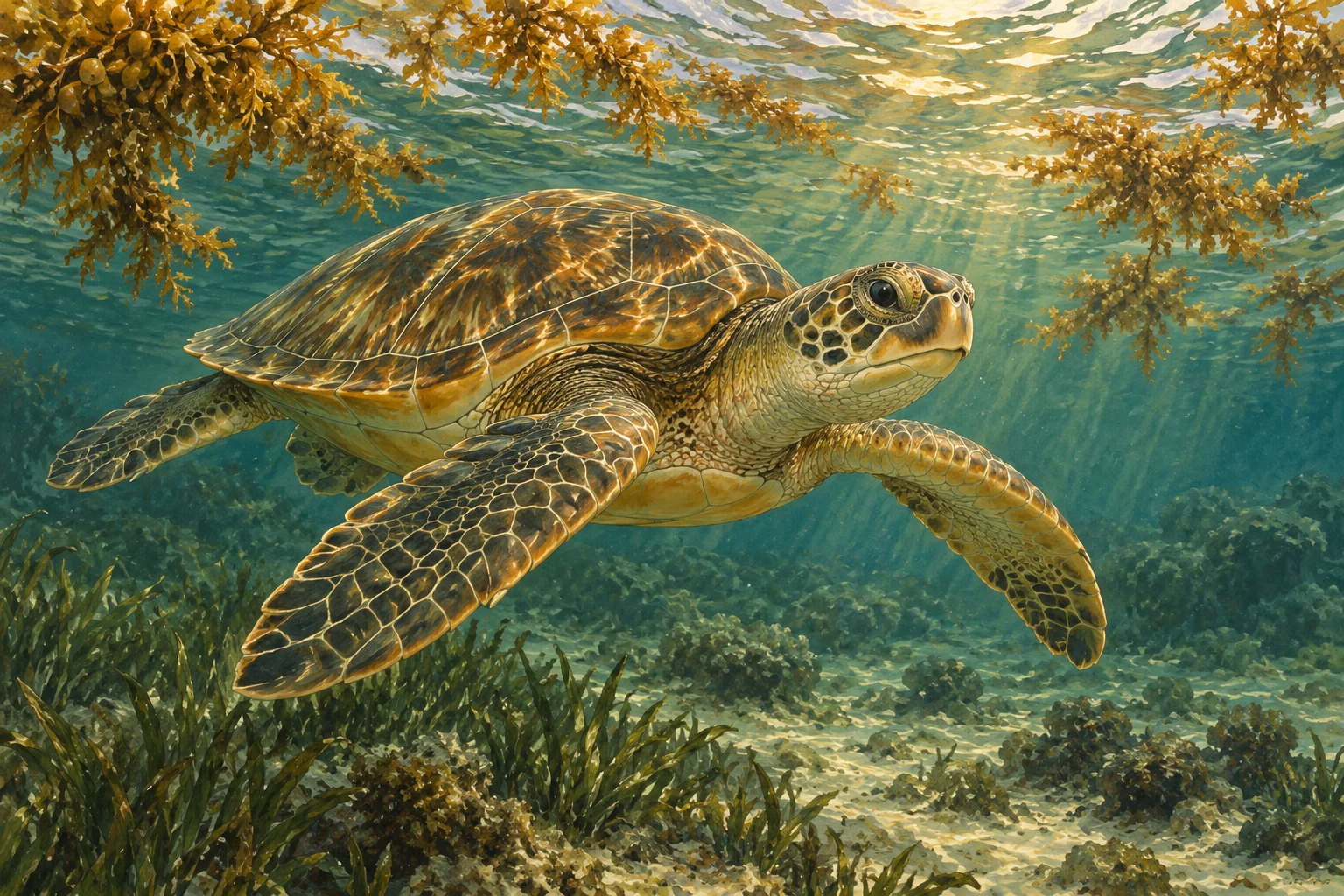
Sea turtles are reptiles adapted to life in the sea. They swim with flippers and breathe air, so a turtle coming to the surface may simply be taking a breath.
Louisiana's coastal and offshore waters are part of sea-turtle habitat. You might notice one during a fishing or boating day, even when wildlife-watching wasn't the reason you went out.
There is more than one species
The National Oceanic and Atmospheric Administration's Louisiana species reference includes sea turtles such as Kemp's ridley, loggerhead, green and leatherback.
Those are different species, not size or age labels for the same turtle. Shell appearance, shape and other features help with identification, but a brief surface view may not show enough.
From your existing viewing position, note the shell outline, visible markings, head or flippers and which parts remained unseen. A brief glimpse is not a complete view of the animal. Compare several features with the official references afterward; use ‘sea turtle, species uncertain’ if the evidence isn't enough. Don't approach or handle it to fill a gap.
For an illustrative note, ‘shell outline visible briefly; head and flippers not seen; species uncertain’ records the limits of the view. Add place, sighting time and the direction it went if observed. A later photograph or species list is a comparison aid, not proof of what that glimpse showed.
Look before casting near floating habitat
Sargassum is brown seaweed that floats in the Gulf. It provides habitat for small marine animals and can interest both anglers and wildlife.
A weedline is a band of floating vegetation. Before casting around it, look for turtles and other animals near the surface. A patch is habitat to observe, not proof a turtle will be visible or that the area is clear when you cannot see one.
If you see a turtle, hold off on another cast there and tell the crew its position, sighting time and any direction observed. Let the operator manage the boat and keep the fishing activity away from the animal. Don't use bait for a closer view or move toward it for a missing identification feature. The sargassum guide explains observation as an activity of its own.
Keep spare line, bait wrappers and other rubbish contained. A turtle sighting is a good reminder that hooks and loose line share the water with animals you didn't intend to catch.
Beaches have a different role
Some sea turtles come ashore to lay eggs. The young turtles that emerge from those eggs are called hatchlings.
A Louisiana Department of Wildlife and Fisheries (LDWF) report from October 2024 documented hatchlings on Louisiana's Chandeleur Islands. It helps explain the value of island habitat.
Keep the report's place and October 2024 date with its finding. It does not confirm a current nest, visitor access or a hatchling-viewing opportunity for your date.
Leave nests, tracks, eggs and hatchlings undisturbed. Identify the particular beach or island, manager, permitted visitor area and current access arrangements before planning a visit. Follow posted wildlife boundaries; an island visible from a boat isn't automatically a landing place. You can learn about nesting without walking up to a nest or moving a hatchling.
If a turtle is hooked, entangled or stranded
Tell the crew and use LDWF's wildlife reporting page to find the appropriate response instructions. Stranded means an animal is ashore or otherwise in a situation where it may need assessment; it isn't an invitation to push it back into the water.
Report the actual location or usable map position, observation time and visible problem: attached line, a hook or an animal ashore, for example. Entangled means caught in line or other material. Keep what you can see separate from a guessed cause or injury.
Say whether the turtle is still visible, when that was last checked and its last-seen position or direction if it disappears. Reporting time and sighting time may differ. Photograph only from your existing position; a useful report can include ‘species uncertain.’ Don't lift it by fishing line, pull at a hook or attempt an untrained rescue. Follow the responsible responder's instructions rather than improvise from a photograph.
Before a fishing day, have the reporting route and the crew's protected-wildlife response plan available, including who contacts the responder and who manages the boat and fishing gear. These are assigned jobs, not a reason for everyone to reach toward the animal.
For an ordinary observation outing, choose the actual permitted viewing position or boat activity, approach, seats or breaks and the whole return plan. Ask what the visit involves when turtles aren't seen; neither a sighting photo nor an old nesting report promises an encounter. An ordinary sighting can be a brief view recorded carefully while the animal continues.