
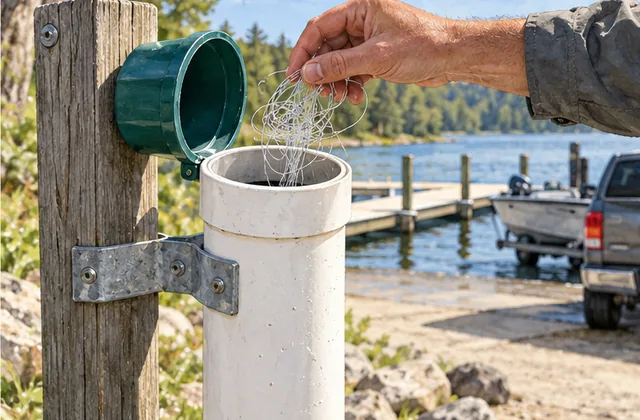
Fishing creates small scraps: trimmed line, damaged lures, empty bait packets and food wrappers. A lure is artificial bait. Set up places for line scraps, sharp tackle and general rubbish before you start. Then collect each item as it is created and confirm where it will be disposed of after the outing.
Loose line can entangle wildlife, and a hook stays sharp after you're finished with it. Cutting rubbish into smaller pieces doesn't make it harmless.
Put trimmed line straight into a container
The tag end is the short loose end left after tying a knot. Collect it when you trim it, along with any line removed from a tangle.
Put a closable container or secured waste pouch within reach of where you tie knots and cut line. Drop each scrap into it as you trim. Don't leave scraps on the boat floor or pier for later, when they may already have blown away.
Before tying the first rig, check that you can reach, open and close the container from your fishing position. Name who carries it when the group moves. A pouch still in the car doesn't collect the scraps made on the bank, and an open container can lose what you have already gathered.
If there is a fishing-line collection point, read its sign. Use it only for the materials it accepts. A bin intended for certain line isn't a place for hooks, bait, packaging or every type of tackle. If the label is missing or you cannot tell whether your material is accepted, keep it contained and ask the site manager. A tube's shape or a recycling symbol alone doesn't identify every material it accepts.
Contain damaged hooks and lures
Tackle means fishing equipment. Keep discarded hooks and other sharp parts in a separate secure container that holds the points safely inside. Check that it closes before packing it; a loose hook in a pocket or thin rubbish bag can catch the next person handling it.
Keep wet tackle you intend to inspect or reuse separate from discarded sharp parts. The equipment-care guide follows the reusable items through cleaning, drying and inspection. Don't empty the waste container into the working tackle box just to sort everything later.
Keep torn soft-plastic lures with your collected waste. Don't wash them from the boat floor or leave them in the water. Sort and dispose of materials using the facility's or local waste instructions. Keep ordinary packaging out of any specialist collection point unless its instructions accept it; collected doesn't automatically mean recyclable.
If you find another person's hook or tangle and can collect it from your existing position without risk, contain it carefully. Don't enter water, climb an obstruction or maneuver a boat toward a snag just to retrieve rubbish. Report a problem to the site manager when appropriate.
Secure rubbish before moving
Close bags and containers before the boat leaves a spot or the car leaves the access point. Empty drink bottles, ice bags and wrappers can blow from an open boat or vehicle.
Ask where the crew wants waste kept aboard. On a bank outing, bring your own suitable container if there isn't a bin you can use. A full bin isn't a reason to leave a bag beside it.
For an illustrative move between fishing spots, pause before departure: contain the line scraps, secure discarded sharps, close general rubbish and name who takes each container. Check the fishing position and tackle-preparation area before the group moves. That prevents cleanup becoming a job left behind for the final stop.
Check the site's arrangements for leftover bait and fish-cleaning waste before you create it. Ask which disposal point accepts each material. A line-recycling tube, general bin and cleaning station can have different instructions; don't use the water as a default disposal point.
Finish with a short look around
Check where you fished, where you prepared tackle and where you packed the car. Look for clipped line and small pieces, not only large bottles. Compare the areas with the jobs you did there: knot tying, bait preparation, eating and packing. Collect only what you can reach safely from your existing position, as described above.
Leave any shared cleaning station as the facility directs, with your waste properly dealt with. Then check wet gear for plants, mud and retained water before taking it elsewhere. The clean, drain and dry guide explains that separate step.
Split the final jobs if you're with friends: one person closes and carries the waste containers, while another checks the fishing and packing areas. Confirm that both jobs happened rather than assuming the person holding the rubbish also checked every spot.
Before leaving, name the destination for each material: an accepting collection or disposal point, or home for disposal under the relevant instructions. If the intended facility is full, closed or doesn't accept the material, keep it secured and change that destination. Follow through to the accepting collection or disposal point. If you carry waste home, finish that disposal task rather than leaving the containers packed for the next outing.