
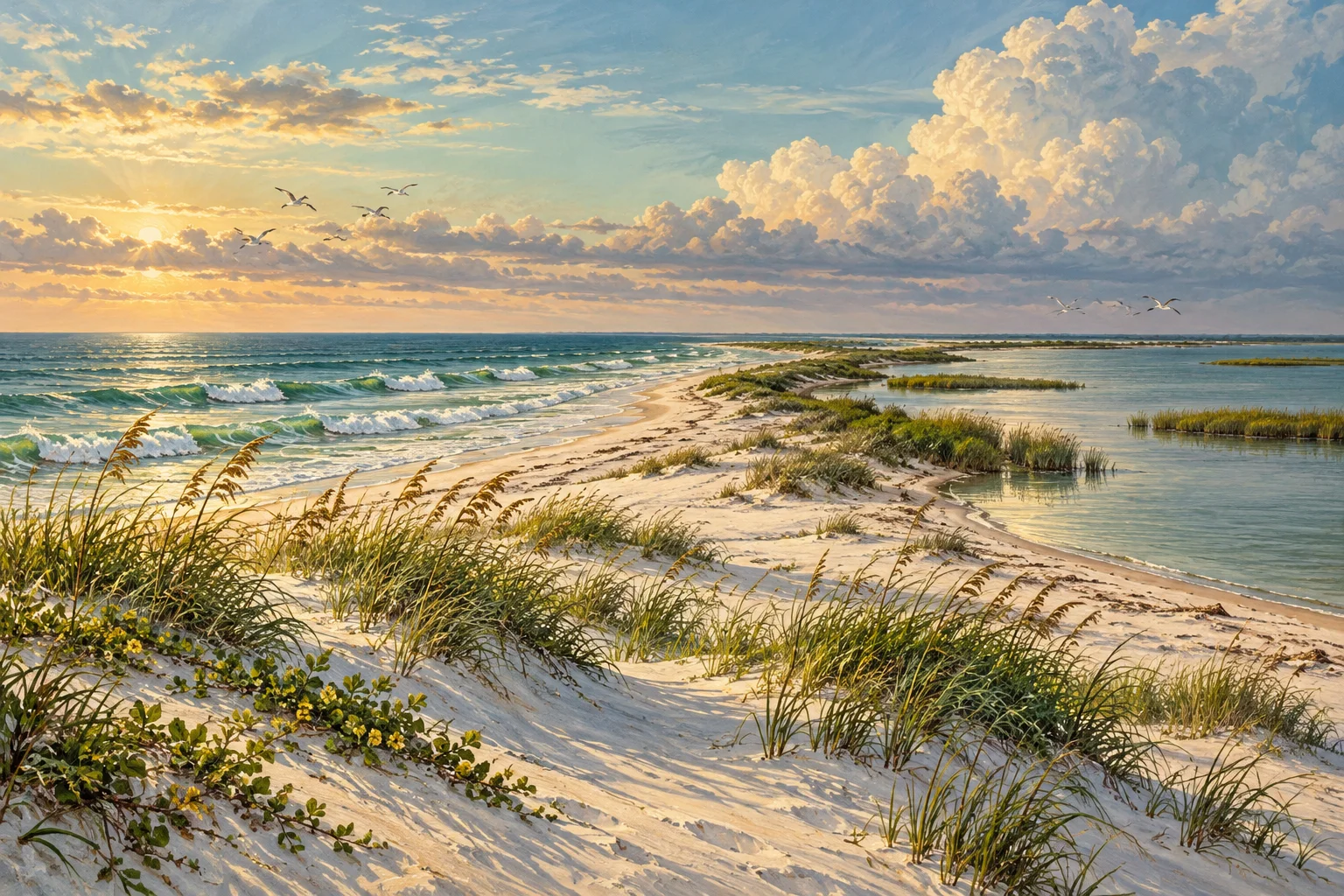
Barrier islands are low islands along the outer coast, with open Gulf water on one side and bays or other coastal water behind them. Many have sandy shores and habitat used by birds and sea turtles.
They help shape the water between the Gulf and the mainland. For a visitor, the important first distinction is between a developed island destination and a remote island reached by boat.
The shoreline keeps moving
Waves, storms and moving sediment—sand, silt and other material—can change an island's beach and outline. Louisiana's coastal-change information explains the wider setting.
A pass is an opening connecting coastal waters. A bay or sound is a coastal water area you may cross on the way to an island. Those words describe features, rather than telling you the water will be calm.
Keep a photograph or map with its place and date. An older landing place may not look or work the same way on your visit. A recognizable island outline doesn't establish the current shore approach, water depth or permitted landing. Physical conditions and access permission are separate questions to resolve for the actual stop.
Choose the kind of island day
Grand Isle is a developed coastal destination to investigate. A remote refuge island is a different outing: don't assume it has drinking water, toilets, shade or a dock because another island does.
Choose the activity before the transport: watching from the boat, going ashore to walk, or fishing nearby. Ask which is included and permitted at the named place for your date. For boat-only observation, establish the actual viewing position, seats and breaks. For going ashore, establish how guests transfer from boat to shore, the walking surface and distance, assistance, facilities and how they board again.
Passing an island or paying for a boat ride doesn't establish permission or practical arrangements to land. A beach suitable for one member of the group may still present an unanswered transfer or walking question for another. Discuss those actual movements with the people concerned and operator before booking.
Identify the responsible manager and ask about the particular place and activity, keeping the source or answer with your date. For the Breton refuge area, the official visitor information is a starting point. Keep an unresolved landing question open rather than substitute an old photo, another island's facilities or a boat operator's general service area.
Give nesting wildlife room
A nesting colony is a group of birds nesting close together. A shore that looks empty from a boat can still contain birds, nests or eggs.
Sea turtles use island habitat too. A Louisiana Department of Wildlife and Fisheries report from October 2024 documented young turtles emerging on the Chandeleur Islands. Keep that place and date with the finding: it explains habitat value without identifying a current nest, visitor opening or viewing opportunity.
Follow posted wildlife boundaries, keep pets away and leave nests, eggs, tracks and young animals undisturbed. Binoculars can let you see more from an authorized viewing position. Record what is actually visible, with uncertain species or unseen features left unknown; don't approach to complete an identification. A useful island observation can be shoreline shape, habitat and bird movement without a nest or turtle encounter.
Plan both water crossings
A crossing is the part of the boat trip through the water between your departure and destination. Include the return in the plan: wind, waves, daylight and the group’s comfort may change during the day.
Before booking, keep the actual departure, requested arrival, outward crossing, observation or shore time, return crossing and expected dock return together. Add reboarding, unloading and the onward journey before deciding when everyone is ready to leave. Check riding, viewing and rest positions, shade, toilets and other facilities on the assigned boat and at any stop.
Agree personal versus shared water, food, bags and rubbish jobs, and confirm storage space. Retain the full-group price with included, extra or unanswered transport and services. Ask who gives the next decision, when to expect it and the terms for a changed boat, stop, landing, hours or date.
For an illustrative comparison, a boat-only observation proposed instead of an agreed shore walk may still be interesting, but it is a different activity. Review access, participation, facilities, time, price and onward travel affected by the change before accepting it. The marine-forecast guide explains matching source area and valid hours to both crossings.
Use current marine information and the responsible manager's access guidance. For an independent trip, the boat operator needs the relevant navigation and boat-handling skills; this introduction doesn't choose an anchorage or crossing route.
If your main interest is wildlife, compare a shore-based birdwatching option too, checking its own permitted position, approach and current arrangements. A changed crossing does not automatically make another site available. Learning the habitat can be the goal even when a remote island visit doesn't fit the day.