
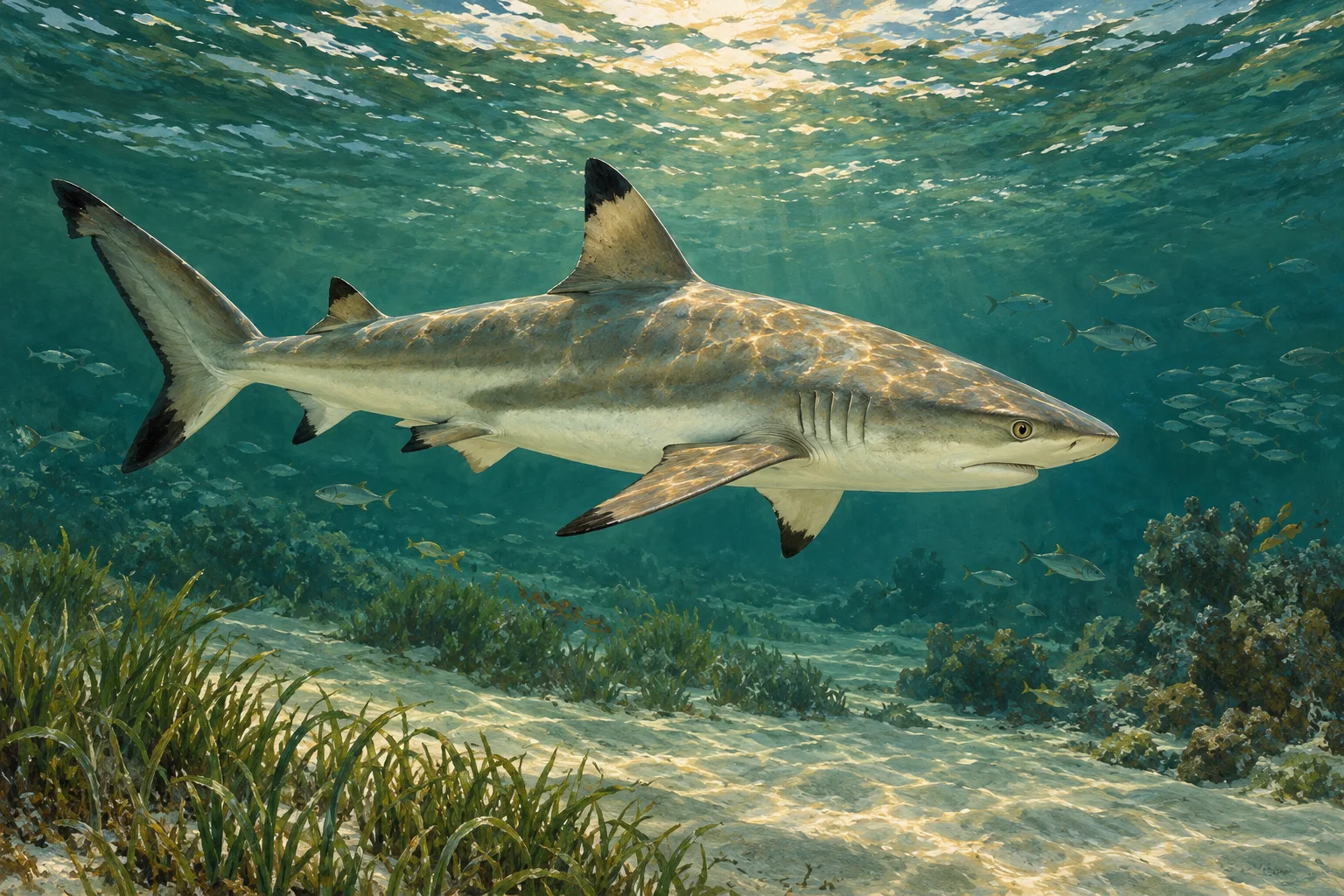
Sharks are fish that live in Louisiana's coastal and Gulf waters. They breathe through gills, unlike dolphins and whales, which come to the surface for air. Their skeletons are made of cartilage, the flexible material in your nose and ears, rather than the bony skeleton of a redfish.
You might see a shark while boating or encounter one while fishing for something else. Start by distinguishing an observation, an unexpected fishing encounter and a deliberately planned shark outing. What you need to record, ask or prepare differs between them.
There is more than one kind of shark
Blacktip and bull sharks are two names you'll hear in Louisiana fishing conversations. Blacktips are associated with coastal water; bull sharks can also enter mixed and fresh water.
Brackish water is a mixture of fresh water and seawater. The setting helps describe an observation, but it doesn't identify the shark by itself.
A dark fin tip isn't enough to name every shark. Several species can look similar, especially when only part is visible. Use the NOAA identification resources to compare the visible features afterward. NOAA is the National Oceanic and Atmospheric Administration. If the view doesn't show the features needed, keep the name as “unidentified shark.”
Watch the whole encounter
From your existing position, note what was actually visible: one fin, part of the body, the tail or the whole outline. Add the direction of travel and whether it stayed near the surface. Keep 'not seen' separate from 'not present' when comparing a partial view with an identification picture.
For example, a brief fin-only view leaves body shape and other identification features unanswered. Record the place, time and visible feature, then compare what the picture or observation actually shows. Keep an uncertain sighting unidentified rather than fill in the missing features from a species you expected to see.
Keep a camera ready if you'd like a photograph, but use the zoom rather than moving closer. Don't put bait in the water to draw the shark beside the boat. A short observation can be interesting without becoming a feeding event.
Whale sharks are fish too. Their name doesn't make them whales; the whale guide introduces the marine mammals.
Seeing one and hooking one are different situations
An incidental catch is an animal caught while you were fishing for something else. Seeing a shark nearby, hooking the shark and having a shark take an already-hooked fish are different situations. Tell the crew which happened and what you can actually see so it can direct the response. Don't turn a nearby sighting into an attempt to hook the animal for a closer look.
Before fishing, ask the crew how it handles an unexpected shark and where guests should stand. If it happens, give the working area room and let the prepared crew manage the release. Don't reach toward the mouth, grab a tail or bring a child closer for a picture.
NOAA's handling material and the Louisiana Department of Wildlife and Fisheries' best practices are preparation resources. If arranging your own fishing, learn the method and equipment for an unexpected shark before the outing. The release introduction helps with planning roles; it doesn't teach shark handling.
Ask who identifies the catch and directs the response, what guests should do with their own gear and where observers wait. Resolve those jobs in advance rather than let a photograph become the reason to improvise handling. An identification comparison afterward is useful for an observation; it doesn't replace the preparation needed for a hooked animal.
If shark fishing is your goal
Ask whether the provider offers that activity, which species and method it means, what guests do and how release is handled. An offshore boat listing alone doesn't answer those questions. Describe your experience and whether the goal is learning about sharks, observing them or taking part in fishing. Confirm the actual instruction, guest roles and full time away before choosing the offer.
Sharks have species-specific rules, including species that cannot be kept. Check Louisiana's saltwater guidance and the responsible federal fishery information for the water and outing before targeting or keeping one. Keep the proposed species, activity, method and intended water with the provider's answers, including anything still unresolved.
Ask what changes if the intended activity can't be provided and whether an offered alternative still fits the group. An inquiry isn't a reservation or a decision that a catch may be kept. Get the actual service and terms confirmed, with the rule and handling questions settled for that outing.