
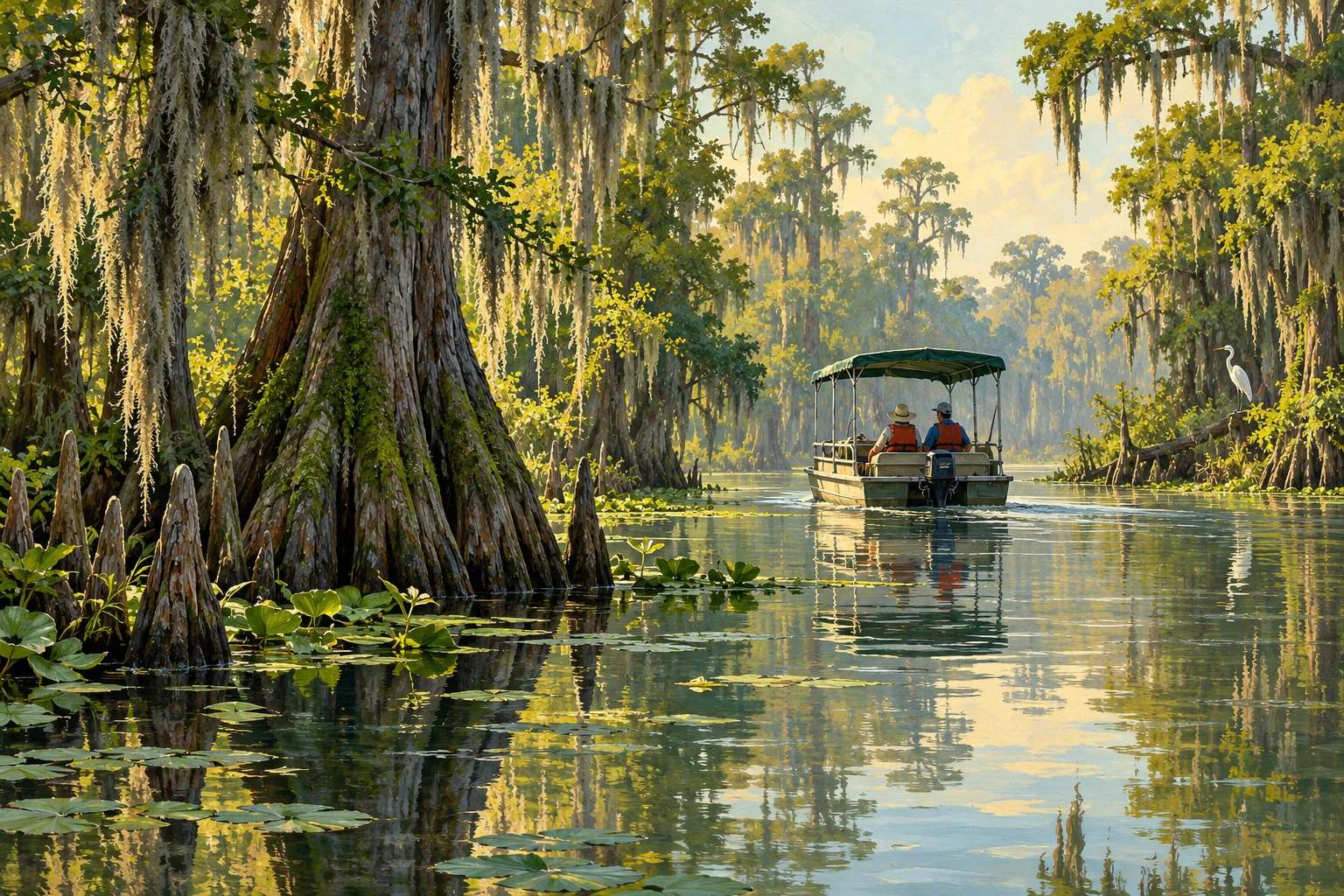
A swamp is a wetland with trees. A wildlife outing is a visit organized around watching animals or learning about their habitat. In Louisiana, that might mean a boardwalk walk, a guided paddle or a motorboat tour.
Those are different ways to spend the day. Start with what your group wants to do and how everyone wants to participate, then compare the place or operator.
Picture the three activities
A boardwalk is a raised walking surface through or above wet ground. Check whether the visit is self-guided or a timed guided walk. On a self-guided route, establish the permitted route, hours, places to pause and return walk. On a guided walk, ask about distance, pace, stops and how someone takes a break or finishes early. A boardwalk label alone doesn't establish every surface, seat or step-free connection.
A guided paddle uses a canoe, kayak or similar craft moved with a hand-held paddle. Tell the provider if you haven't paddled before. Establish the actual craft, instruction, supervision and equipment, including which skills are taught and which are expected already. Entry, control and return are tasks to learn before adding a camera or trying to watch animals while moving. Confirm the launch, takeout, any transport between them and time for carrying and loading afterward. The paddling guide explains that preparation.
On a motorboat tour, the crew operates the boat while guests ride and observe. Ask where you'll sit, whether you watch from that seat or move elsewhere, how boarding works and what shade is available. Check ride, viewing and rest positions, toilet arrangements and time aboard on the assigned boat. The crew's operation of the craft and a guest's ability to use the viewing position are separate questions.
Ask which boat and activity the offer means. A fishing trip may include a wildlife sighting, but its main activity and equipment can be different from a nature tour.
Pick one main interest
You might want to watch birds, learn about wetlands, photograph scenery or see how an alligator uses the water. Choose a tour or public visit that explains that interest, rather than one that depends on a close animal encounter.
Learn a little beforehand: alligators, waterside mammals and coastal birds give you things to recognize even when sightings are brief.
Don't feed or touch wildlife to improve the view. Ask how animals are observed and what guests do when animals remain distant or aren't seen. Natural movement and ordinary habitat can be part of the experience; a close-up photograph doesn't establish the encounter your group will have.
Choose one manageable observation from an agreed position. An illustrative note might say ‘wooded water edge; one bird walking in shallow water; species uncertain.’ Keep place and time, visible features and action separate from guessed identity or cause. You can compare a reference afterward without moving closer or needing a sighting of one particular animal.
Ask about the day you'll actually have
Before paying or traveling, find out:
- The actual entrance or meeting point, parking or drop-off, requested arrival and whether both transfers are included.
- Walking distance or time aboard, instruction and observation time, breaks and the return, including loading or unloading.
- Steps, seats, surfaces, viewing positions and assistance for everyone coming.
- Shade, toilets, water and personal versus shared supplies, including what is supplied and included in the price.
- Full-group or ticket price, extra or unanswered charges, payment timing and cancellation and change terms.
- Decision contact and timing, the proposed alternative and which arrangements change with it.
If someone needs step-free access or a place to sit, check the whole route from parking to the viewing position, facilities and return. Ask for the particular step, surface or space information they need. The access guide helps turn a general label into practical questions.
Public visits need current information too
The Barataria Preserve visitor FAQ and Big Branch Marsh visitor information are official starting points to investigate.
Keep the manager, named route, activity, visit date and relevant notice together, including its stated dates and affected facilities. Check surfaces, hours, permitted areas and the return. A notice about one route or an earlier closure doesn't establish another route's status; the day you open the page is not necessarily the notice's effective date. Resolve unanswered access questions with the site manager before traveling.
If the outing is part of a New Orleans stay, arrange both journeys around the actual entrance, arrival and finishing time. A changed walk, paddle or boat route needs its own participation, access, facilities, equipment, price and transfer answers; one format doesn't automatically replace another. Pack water, suitable clothing and sun or weather protection for the chosen activity, with shared supply and rubbish jobs assigned.
A simple first visit can be one route, a few quiet pauses and one animal or habitat feature you understand better afterward.