
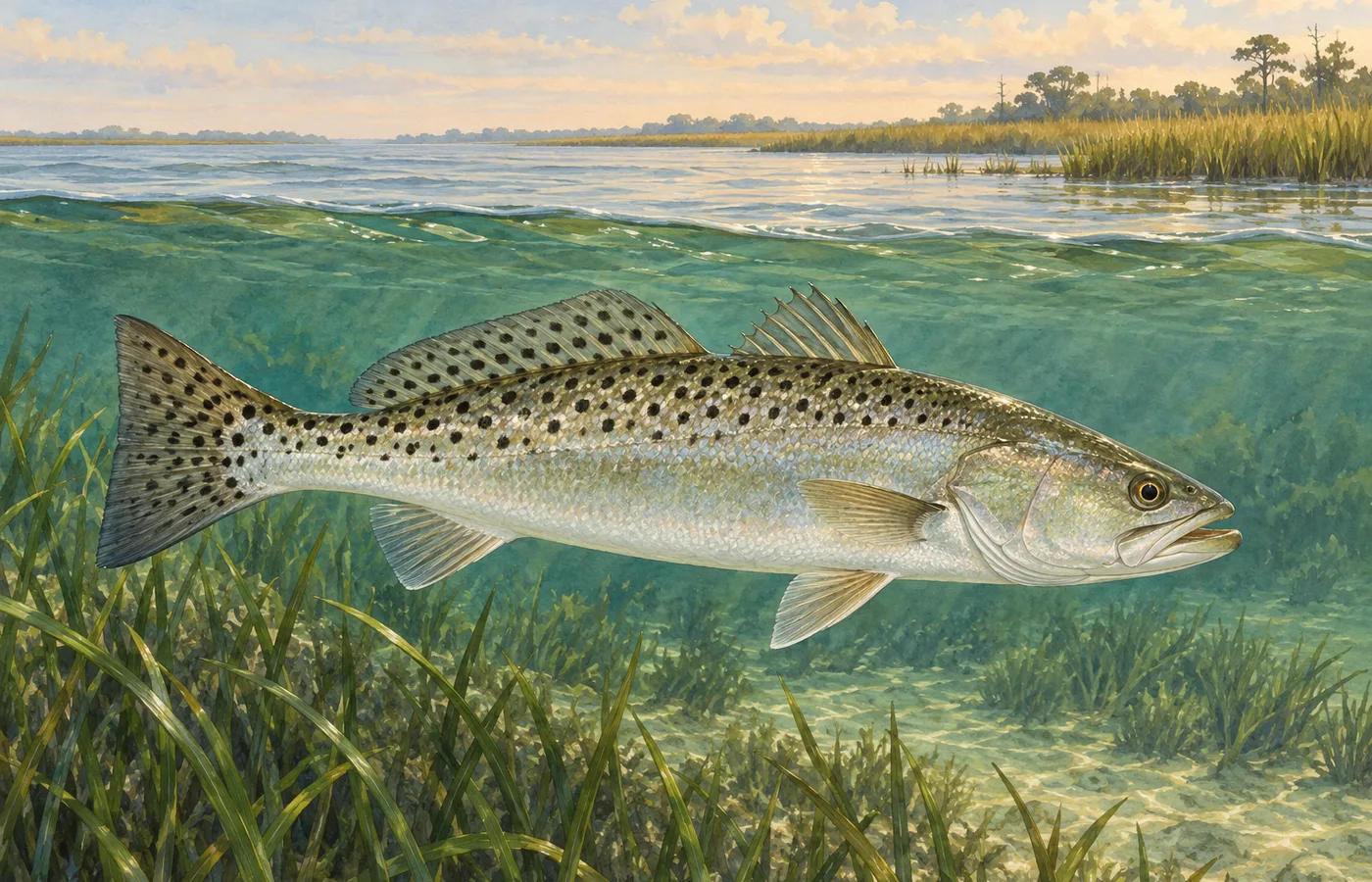
Speckled trout is the familiar name for spotted seatrout, a coastal fish. It isn't the freshwater trout you might associate with a cold stream.
Louisiana anglers may seek it in coastal lakes, bays, marsh connections and passes. Those settings can differ in water movement and exposure, so begin with the actual outing rather than one universal trout tactic.
Learn the name and recognition clues
Spotted seatrout have a relatively slender body with dark spots on the upper body and tail. Compare the whole fish with the Louisiana Department of Wildlife and Fisheries' spotted-seatrout information rather than identifying it only because someone says “trout.”
Related coastal fish can be confused with it. A photo and one feature aren't always enough; ask the crew or use a reliable reference before deciding to keep a catch.
Look at the body and tail features in the reference before the outing, so the first catch isn't your first introduction to the fish. Keep identification separate from the next question: whether that fish can lawfully be kept on this outing. A trout-focused trip does not identify every fish brought alongside.
Understand the water words
Brackish water mixes fresh water and seawater. Salinity means how salty it is. Current is water flowing in a direction; depth is the distance from surface to bottom at a place.
A pass is a connection through which water moves between coastal areas. A sheltered marsh connection and an exposed pass may both appear in a trout report, but they can mean very different boat days.
Weather and water changes can affect the outing. Keep the actual place, date and source with a report or measurement. A salinity reading doesn't supply temperature, and a tide height doesn't measure bottom depth or local current. Ask what changed in the planned fishing rather than copy a catch report from another bay.
Keep three depth questions separate: the distance to the bottom, where the bait or lure is traveling, and where fish may be. Knowing one doesn't establish the other two. A lure returning with grass gives you an observation to investigate, not a complete depth reading.
Picture a cork or direct-lure method
A popping cork is a float you move to make a splash or clicking sound, with a baited hook or suitable lure below it. Have the actual setup and hook response demonstrated. Cast, let it settle, control loose line, make the short movement you've been shown and watch during the pause. The pause is part of the method, not a gap to fill with continuous pulling.
With no float, a soft lure on a jighead—a weight and hook combined—is controlled through the rod, reel and line. Watch and feel how it settles, then bring it back; that return is the retrieve. The cork gives you a surface marker, while this method asks you to follow the line and the feel through the rod.
For a cork setup, follow the surface path and bring it back to check the bait or lure and any tangles. A dip alone does not establish whether the cause was fish, flow or a caught hook—a snag. With the weighted lure, follow the line and notice whether the return is clear or repeatedly obstructed; inspect the lure and hook before changing the method. Have the crew show the movement and bite response for your actual hook. Our popping-cork lesson walks through the float method.
Make one change you can understand
Start with a short, controlled path from a suitable permitted position, using known equipment and appropriate help. Leave space around rod and hook, follow the path after landing and bring the line back before an obstruction or loss of control. Inspect plants or tangles rather than treat every interruption as a bite.
Try a slightly different casting path or return speed while keeping the lure and other equipment the same. Bringing a weighted lure back more slowly can change how far it settles, so watch the path and inspect it again. The coastal-rig guide explains how the parts are arranged; there isn't one retrieve speed for every place.
For an illustrative comparison, record ‘same lure and movement; first path returned grass; shorter path returned clear.’ That tests a path change, not a new fish location or measured water depth. Record catch or no catch separately.
On a guided day, have the crew watch and explain your attempt. On your own outing, use equipment and an activity you've learned before working around other people or unfamiliar water.
Give cold weather proper context
An air forecast and a water-temperature measurement aren't the same thing. Retain a water reading's station or location, measurement time, units and stated depth; page-open time is not necessarily measurement time. An earlier reading or one from another site doesn't fill a missing current value.
Cold-water effects also involve how conditions change over time; one mild afternoon doesn't describe the whole period. Keep the evidence and the question with the actual place instead of turn a seasonal saying into a depth instruction.
A deeper area isn't necessarily warmer. Don't choose a depth from a blanket winter rule or disturb fish showing signs of stress. The official fish-kill reporting guidance is a source for reporting concerns.
Check current catch rules separately with the agency, alongside personal requirements for the outing. Prepare identification, landing, release or lawful keeping and any cleaning, collection and cold transport.
For a guided trip, ask whether it focuses on trout or several kinds of fish, which methods guests use, and how demonstrations, supervised attempts and turns work. Keep the actual boat, route, facilities, hours and full-group quote with that answer. A different method or water area needs its affected help, positions, schedule and requirements checked again.