
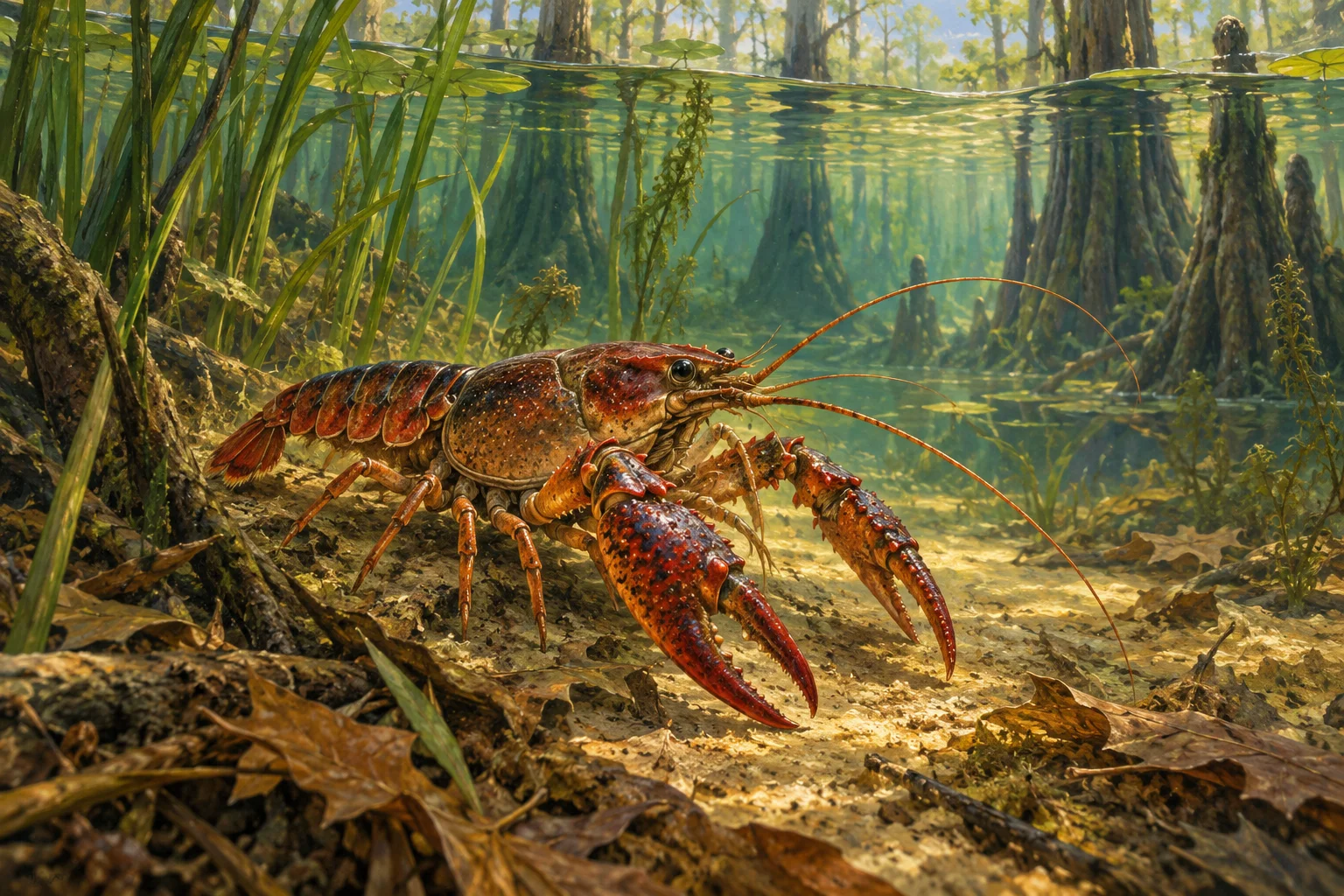
Crawfish are freshwater crustaceans—animals related to crabs and shrimp—with a hard outer covering and claws at the front. Recreational crawfishing means catching them for personal use.
Choose the place and permitted activity before choosing traps. A pond used to produce crawfish, a wild wetland and a roadside ditch have different access questions. Finding water or seeing crawfish doesn't tell you whether you can enter or collect them there.
A little crawfish biology helps
LSU AgCenter's crawfish introduction explains red swamp and white river crawfishes and their life cycles.
Molting means shedding the hard outer covering to grow. Burrows are holes or tunnels in the ground used as part of the crawfish life cycle. Flooding and changing water levels affect how the habitat is used.
Those ideas help explain why an area changes through the year. They don't mean every flooded field will provide a catch. Watch the habitat without digging up banks or opening burrows for a look.
Start with a place you're allowed to use
A managed crawfish pond is a working production area. Permission to visit, permission to catch crawfish and permission to use a particular method need to be clear with the owner.
For public water or managed land, check the site manager's activity rules as well as the Louisiana Department of Wildlife and Fisheries' recreational crawfish guidance. Ask about the actual access, gear and keeping conditions.
Use a named location and manager rather than choosing a promising-looking ditch from the road. Ask how you reach the checking position, when you can enter and whether a later gear check needs another access arrangement. A broad Atchafalaya Basin guide gives background on the setting, not access to every parcel in it.
Describe whether you want to watch a demonstration, help check existing gear or set and recover your own. Those are different requests. Keep the owner's or manager's answer with the method and dates, and leave unanswered access or gear questions open until resolved.
Learn one complete trap check
A trap is a container designed for animals to enter. Bait is food used to attract them. The trap, checking method and any marking requirements need to fit the rules for your outing.
Have an experienced person demonstrate the whole check: retrieving the permitted gear, opening it, identifying and sorting what came back, then closing and resetting or packing it. Resetting means preparing it for another use. Arrange the checking area, containers and handling tools before adding bait.
Ask to do one agreed part with help, then have that action checked before taking on the next. For example, learning to retrieve the trap doesn't yet show how to open it, assess the catch or secure it afterward. Tell the instructor which of those steps you haven't learned.
Keep a count and record of where you put the gear, using only locations you can recover it from the authorized access. For each item, know who will check it and whether the next step is another authorized set or removal. Bring one item under control and finish its catch check before dealing with the next. Give claws and tangled line room; agree who handles the gear and catch, especially when children are watching or helping.
If water rises or the bank becomes difficult, stop and seek appropriate help rather than wading farther for the catch.
Finish the visit properly
Before starting, agree who wants the catch, who knows the appropriate handling method and where it goes after collection. Include identification and the applicable keeping conditions in the demonstrated catch check rather than treating everything in the trap as ready to take home.
Get storage and preparation instructions for crawfish, naming who provides the container, handles the catch and takes it to the agreed destination. A bucket that looks fine doesn't establish the holding conditions or time. If you're only observing or learning the gear, say that when arranging the visit so the finish fits that aim.
Compare the gear recovered with your starting count, and collect lines and bait packaging. Don't release live crawfish or used water into a different waterbody. Use the clean, drain and dry guide for equipment moving between places, keeping any unfinished cleanup job on the list before the next use.
Finish the catch handover and any cleanup still outstanding. If gear remains for an authorized later check, confirm who returns and how they regain access; don't leave an unassigned retrieval job. A useful first outing can be learning the animal and checking one manageable setup without making the day depend on a food catch.