
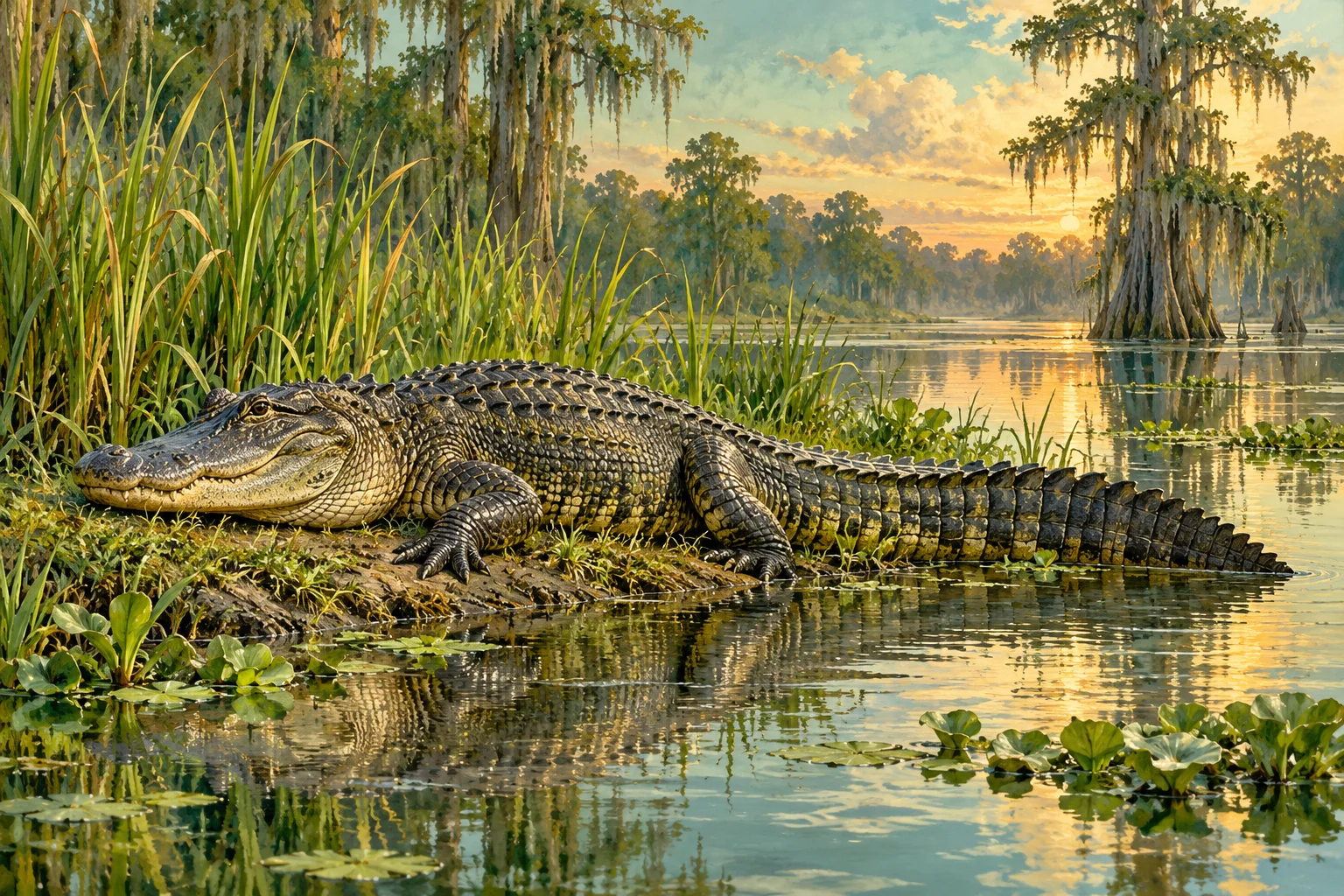
American alligators are large reptiles that live in Louisiana's wetlands. Wetlands are places such as marshes, swamps and waterlogged edges where land and water meet.
You may see a broad head or part of an armored body at the surface. Seeing an alligator doesn't automatically mean it is approaching you, but its position matters when choosing where to fish or launch a small boat.
Start by looking at the bank
Begin with a permitted fishing position and the actual approach from parking. Before unpacking, check where people will stand, where gear will go and the route back to the vehicle. Notice vegetation hiding the water's edge, room to step away and any animal near the opening you intended to use. Include the viewing or fishing position and return path in the check, not only the first place you reach.
Keep what you can see separate from what is obscured. An earlier visit or a photograph doesn't establish the position of animals on this visit, and not seeing one isn't a guarantee about the whole bank.
If an alligator is beside the only clear opening, keep the bait packed and choose another spot. You don't need to test whether it will move for you or retrieve a float from beside it. A different bank needs its own permitted access, approach, room and return checked; a change of plan doesn't make every nearby edge usable.
From a boat, give it space without following it along the bank. Let it move between land and water without a group of people or boats closing around it.
Keep food out of the encounter
Alligators are predators: animals that catch and eat other animals. Feeding one can encourage it to associate people with food, creating a problem for later visitors as well as your own group.
Don't offer bait, fish, scraps or anything else. Don't cast at an alligator or try to draw it toward a hooked fish for a photograph.
The Louisiana Department of Wildlife and Fisheries (LDWF) alligator guidance advises keeping fish scraps away from fishing and swimming areas. Before starting, assign who contains bait and any catch, who collects scraps and rubbish, and where the site permits disposal. Use those arrangements rather than throw cleaning remains beside a launch. If a disposal arrangement is unclear, resolve it instead of assuming the water's edge is the answer.
Plan for children, pets and small craft
Agree who watches the children and who watches the surroundings before fishing starts. An adult concentrating on a child's float may miss movement along the shoreline. Keep children close and pets away from the water's edge; hand over the watching job explicitly if an adult needs to step away.
For a canoe or kayak, identify the actual launch and landing, even if they are the same place. Check both access arrangements and the approach with the person responsible for the outing; a clear launch earlier doesn't describe the later return. If you can't use the spot while leaving the animal room, change the plan. Avoid dangling hands or feet in the water near an alligator.
On a guided outing, agree who alerts the crew to an animal and who manages children, gear and boat movements. Keep those roles explicit when someone takes a break. Asking about the animal is different from asking an inexperienced guest to manage it.
An alligator gar is a fish, not a young alligator. The gar guide explains that separate animal and its name.
When to leave and report a concern
A distant animal passing through is different from one repeatedly approaching people or fishing activity. If an alligator keeps approaching, stop the activity, move away and follow LDWF's reporting guidance.
Give a usable location or exact access point, observation time, animal position and visible behavior. For an illustrative report, ‘repeatedly came toward anglers at the named launch; fishing stopped; last seen beside that opening’ describes events rather than a guessed mood such as ‘angry.’ Add the actual time and current or last-seen position from your observation.
State whether it is still visible and when that was last checked. Reporting time can differ from observation time. Leave uncertain details unresolved instead of moving closer for a missing feature or estimating size from a poor view. Use the responsible reporting guidance for the next action; sending a report does not itself settle how a site can be used afterward.
Don't try to catch, relocate or chase it with fishing gear. Contact emergency services if someone is in immediate danger. For the visit itself, use another bank or postpone the launch if you can't leave the animal room. The bank-fishing guide helps you plan a different permitted access point.