
An alligator gar is a fish, not an alligator. It is a native fish of the region, with a long body, a broad snout and prominent teeth.
Its unusual appearance can make a sighting memorable. You can learn about it through observation without deciding to catch or handle a potentially large fish on your first visit.
Start with the right identification
The U.S. Fish and Wildlife Service profile describes alligator gar and its habitat. Texas Parks and Wildlife's biological reference explains distinguishing features, including its broad snout.
Louisiana has other gar too. A long body or glimpse of teeth doesn't settle every identification. A broad snout is a useful alligator-gar clue, while some other gar have a noticeably narrower one. Read the full comparison before an outing, then use several visible features with experienced help if needed. The planned target or word ‘gar’ doesn't supply the species of every catch.
A biological reference helps identify the fish and understand habitat. It does not supply the applicable Louisiana fishing permission or turn an uncertain sighting into a reason to capture the animal.
Native means naturally occurring in the region. An invasive plant or animal has been introduced outside its natural range and causes harm as it spreads. The invasive-species guide explains that difference. An unfamiliar-looking fish isn't a reason to call it an invasive pest or kill it.
Understand the connected-water setting
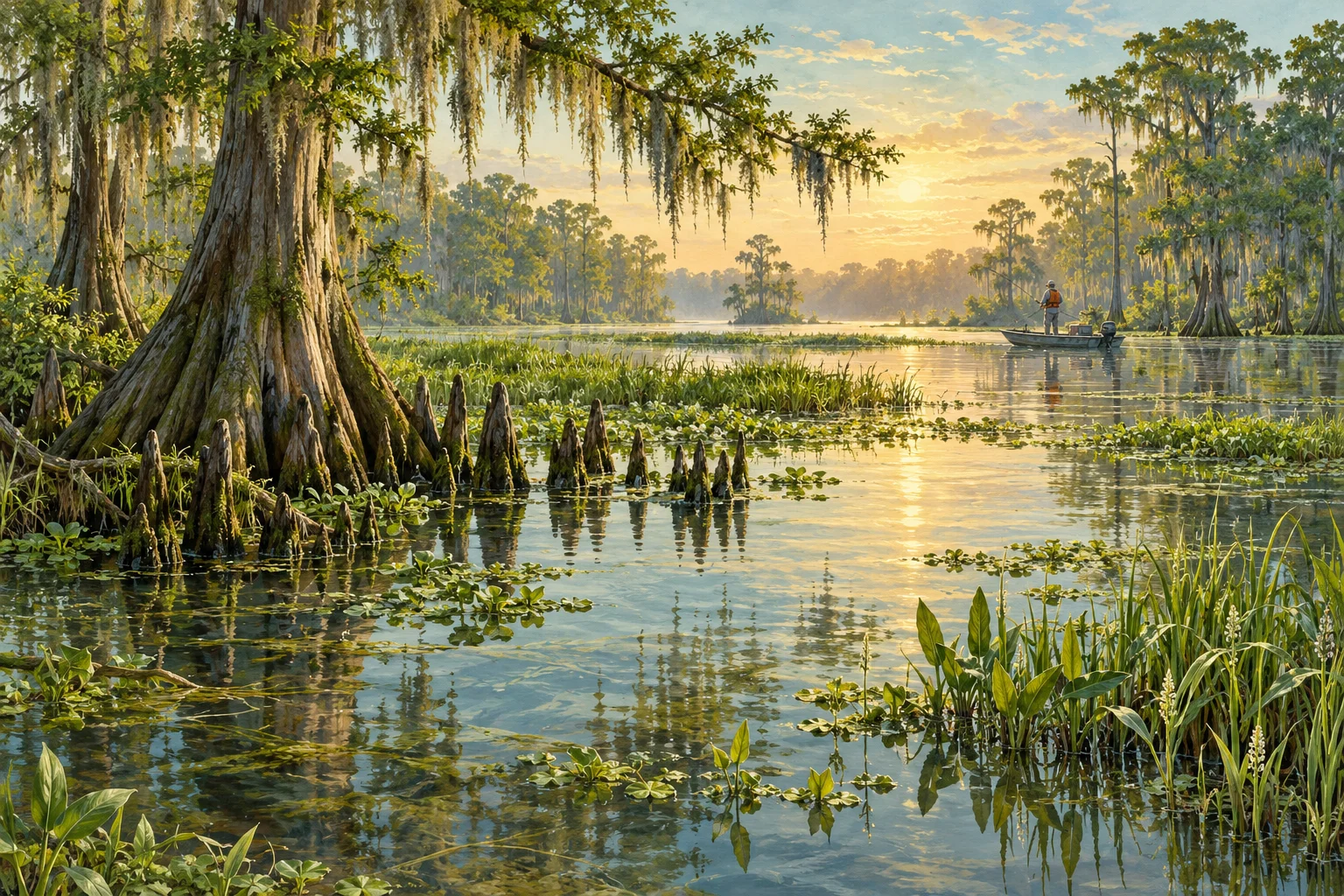
A floodplain is land beside a river that can be covered when water rises. Backwaters are areas connected to the main flow, often with slower water.
The federal species profile explains the role of flooded land with plants in alligator gar breeding. The fish's habitat includes the river and these neighboring waters.
Water levels can change the available connections. Keep the named water, place and date with a report or observation; a general habitat description doesn't show today's route, depth, usable access or fish location. Connected habitat, permission to use a bank or launch and the craft operator's route are separate questions. A water-level reading from elsewhere does not complete that local plan.
A surface appearance doesn't always mean feeding
Gar can come to the surface to breathe air. A fish appearing there isn't automatically chasing bait or in distress.
If you see one surface, pause and watch. Note which parts you actually see: the snout, body or only a fin. Describe their shape and how the fish moves. If the snout stayed underwater, leave that detail unknown rather than filling it in from a reference picture.
For an illustrative note, ‘long body at surface; snout not seen; possible gar’ preserves the view without forcing an alligator-gar identification, feeding explanation or injury diagnosis. Record the place, observation time and any direction you saw; repeated glimpses need not be separate fish.
If a photograph is possible from your existing position without disturbing the fish, it can help later comparison. Keep unseen features unknown when checking a reference. You don't need to turn the sighting into an improvised capture.
Deliberate fishing needs a different plan
Seeking a large gar involves more than increasing the line strength on a light setup. The method, space, equipment, people and release arrangements need to work together.
If deliberate gar fishing is the goal, find someone experienced in that activity and establish the actual method before booking. Ask for a demonstration of guest jobs, appropriate supervised practice, turns, how to request help and how control passes back. Equipment supplied and instruction included are separate answers.
Landing means bringing a fish under control within reach. Agree who lands, identifies and measures the catch, handles hooks and manages release or lawful keeping, with the actual equipment and help ready beforehand. Describe the group's practical needs and clarify where other guests remain during those jobs. A general freshwater guide may not offer this service; the species name alone doesn't establish the plan.
For a first fishing trip, it's reasonable to choose a smaller-fish lesson and keep gar as something to watch. If a gar takes your bait unexpectedly, get experienced help with the hook and release rather than trying to control its mouth or lift it by the line.
Check the activity and rules beforehand
Use the Louisiana Department of Wildlife and Fisheries' freshwater information for the species, water and method. A biological reference from another state doesn't establish Louisiana's harvest permission.
For observation, choose a particular permitted position or agreed boat activity with an approach, facilities and complete return that work for the group. Retain place and time, features and movement, compare them with the references afterward and keep uncertain details unknown. No sighting or capture is needed to learn about the habitat.
For deliberate fishing, keep the actual water, method, boat or bank, group participation, experienced help, hours and full quote together. Check personal requirements, catch conditions and any proposed change of area or method separately. Confirm release preparation or lawful-catch collection and cold transport as applicable. Arrange those jobs before the visit, including the plan for an unexpected catch.