
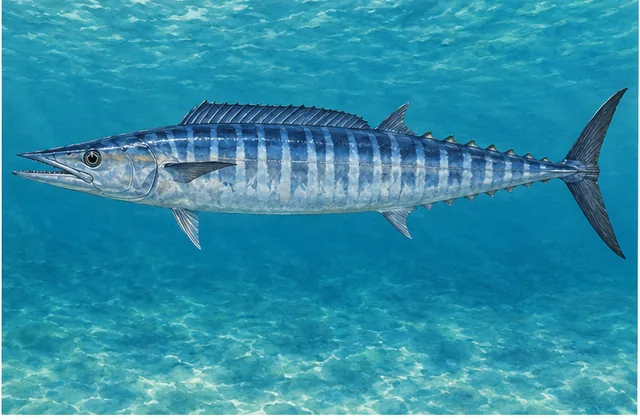
Wahoo are long, streamlined saltwater fish with sharp teeth, found in the Gulf's open water. They are predators that eat other fish, and anglers often seek them by trolling.
If you're new, trolling simply means pulling a bait or lure behind a moving boat. It doesn't mean everyone stands at the rail casting all day. An offshore day takes you out into the Gulf, away from shore. Knowing the fishing method helps you decide whether the activity sounds enjoyable.
Meet the fish before the tackle
The National Oceanic and Atmospheric Administration's wahoo profile explains the species and its habitat. Read the full reference before the trip and have uncertain identification resolved before a keeping decision; a wahoo-focused offer doesn't identify every catch.
Their long body and toothed jaws help explain why bringing the fish under control at the boat—landing—is a crew job on a beginner charter.
You may hear pelagic, a word for fish associated with open water rather than the bottom of the sea. An offshore plan may include looking around water boundaries or underwater features, then moving between areas.
A current edge is where moving waters meet or behave differently. The crew may investigate it for food fish and predators. It is a place to look, rather than proof of a wahoo underneath. A report or photograph from another date does not establish today's edge, route or catch; keep the actual boat plan with the operator's decisions.
What happens while trolling?
The crew places baits or lures at different positions behind the boat. That arrangement is sometimes called a spread. Rods may sit in holders while the boat moves and the crew watches for a bite.
A leader is the section of line near the hook or lure. Wahoo's teeth influence how the crew rigs it. If the boat supplies fishing equipment, confirm what is included before buying your own. Ask the crew to show the hook, leader and any other parts guests need to recognize.
Before fishing starts, learn:
- How the crew will call out a bite and assign the rod.
- Whether you'll take the rod from its holder or be helped with it.
- Where to stand and how to ask for help.
- Which other lines the crew needs to clear.
Have that sequence demonstrated with the actual rod and reel before a bite: called turn, assigned position, crew-directed rod handover, winding, help request and return of control. Learn which jobs stay with the crew instead of assuming an unused rod or another line is yours to move.
Waiting, searching and moving are part of this method. A trolling turn is different from repeated casting practice; say which activity you want before booking and ask what teaching the offer includes.
Learn the reel and leave landing to the crew
An outfit is the rod, reel, line and other equipment used together. The reel's drag lets line leave against resistance when a fish pulls; that pull is tension. Have the crew demonstrate winding in, line going out and how to ask for help before a bite. Follow its setting rather than tightening the drag whenever line moves.
Keep loose equipment and unused hooks out of the working area. When a fish comes close, follow the crew's direction and leave room for landing. Don't reach toward the mouth or a lure to help with a job you haven't learned.
Before booking, agree turns, breaks, support and crew assistance, including how to ask someone to take over. Have any support equipment and change of control demonstrated rather than invent an adjustment under load. Describe everyone's practical needs for riding, fishing, rest and boarding; supplying a rod doesn't establish a suitable seat or individual lesson. The offshore-methods guide explains how guest jobs change between methods.
Choose the outing you want
Venice, Port Fourchon and Grand Isle are departure areas to investigate. Get the actual dock, entrance, parking, arrival and departure, assigned boat and full-group quote. Separate both rides, searching, moves, turns and breaks within the boat hours, then unloading, payment and any collection before road travel.
Mark fuel, supplied equipment and requested services as included, extra or unanswered. Keep the full charge separate from deposit credit, payments and remaining balance. A smaller boat base price or balance due is not automatically a smaller full-visit cost.
Ask whether wahoo are the focus or a possibility while fishing for several kinds of fish. Establish who provides the next weather or service decision, when to expect it and the terms for cancellation or a changed boat, method, duration or date. Evaluate any proposed alternative against the original activity and connected travel. A favored month doesn't settle the forecast or confirm an offer for your date.
Use Louisiana's saltwater guidance and federal Gulf recreational information for the confirmed fish, fishing area, date and type of boat trip. Check personal requirements separately. Before fishing, agree identification, hook handling, release or lawful keeping while leaving landing with the crew.
If taking fish home, use the fish-cleaning guide to agree preparation, charges, collection place and time, collector, packaging and cold storage through the journey. Allow for that handoff before a hotel, transfer or flight commitment; the expected catch and prepared portions remain uncertain until known.