
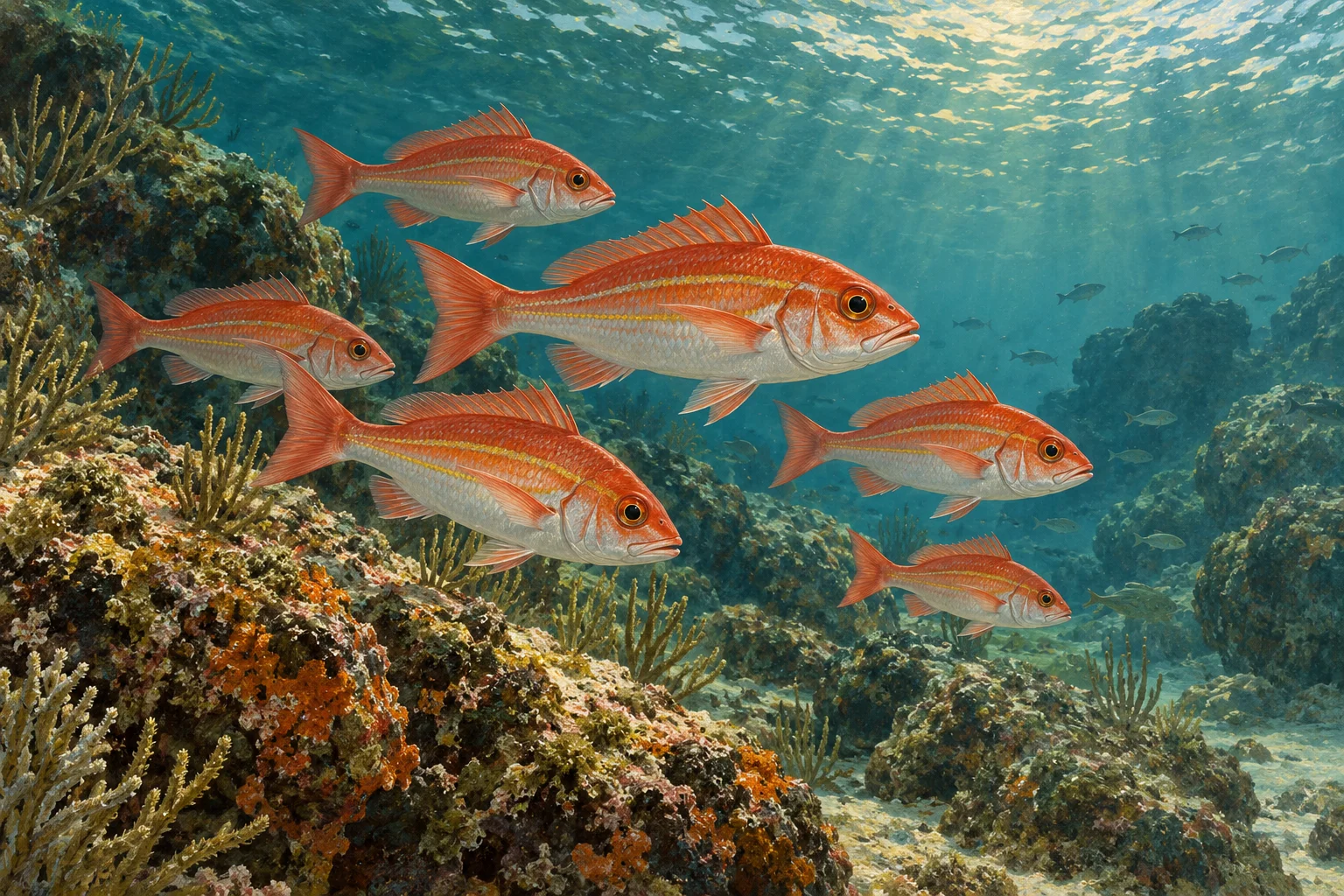
Vermilion snapper are Gulf saltwater fish often encountered on reef-fishing outings. A reef is a natural or built underwater habitat that adds shape and hiding places to the seabed. Vermilion snapper are their own species, rather than small red snapper.
That distinction matters when several fish come up from the same area. A red or pink body is a useful thing to notice, but it doesn't give every fish the same name or rules.
Learn a few visible clues
The National Oceanic and Atmospheric Administration's vermilion-snapper profile describes a relatively streamlined body, reddish upper side, pale underside and fine markings.
Use the whole profile when comparing fish. Lighting and movement aboard the boat can make a quick color judgment unreliable. If you're new, ask the crew to show you which visible features they use to separate vermilion from the other snapper in the catch.
Look at the reference before the trip, then use several features together and have uncertain identification resolved before a keeping decision. A vermilion-focused booking doesn't identify every red or pink fish in the catch. Preparing the comparison and handling roles beforehand avoids making the first catch your first introduction to the species.
Understand where the bait is going
Vermilion snapper use areas with bottom types such as rock, gravel and sand. Fish can be above the bottom, so the crew may be trying to place a bait at a particular level in the water column—the space between surface and seabed.
A rig is the arrangement of hooks, line, weights and other parts you fish with. The rig's weight helps it sink, while current, or moving water, can push it sideways.
Keep bottom depth, the intended bait level and evidence of fish position as three questions. A boat over deep water doesn't automatically mean the hook should reach that bottom. Have the intended presentation explained before lowering the rig. Line paid out and line angle are things to observe, not a direct depth reading when the rig is moving sideways.
Follow one drop from start to finish
Have the crew identify the actual rig parts and demonstrate line release, stopping, the intended presentation, hook response and winding back. Rehearse the controls as directed and learn how to call for help before a bite. With the crew directing the method:
- Lower the rig under control, with space between your line and the next angler's.
- Stop at the intended level and notice the line's angle.
- Watch the line and feel changes in pull through the rod. That pull is tension.
- Wind the rig back when instructed, then check the bait, hooks and line before another drop.
A bite, contact with the bottom and a snag—a hook caught on an object—can all change the pull. Have the response demonstrated for your actual hook; the feeling alone doesn't establish the cause. The offshore-methods guide explains the lowering and return jobs.
If the line becomes tangled with another rig, tell the crew and reset together. Check bait, hook and line condition before repeating; adding weight or releasing more line isn't a universal correction.
For an illustrative note, ‘line moved sideways; returned rig was tangled; crew checked and reset it’ records what happened and the next job. It doesn't measure the bait level, identify the cause of every pull or establish fish absence. Getting the routine comfortable matters more than lowering the rig as quickly as possible.
Plan the effort and the catch
Ask about the intended bait level, how much lowering and reeling it involves, demonstrations, supervised practice, turns and whether a suitable fishing seat is available on the assigned boat. A supplied rod doesn't establish individual teaching or seating for the method. Describe the full group and practical needs before paying.
Separate arrival, departure, both rides, moves and breaks, expected dock return and readiness to leave after unloading, payment and collection. Keep the actual activity, boat positions and hours with the full-group quote and included, extra or unanswered charges. Ask who provides the next decision and what applies to a changed boat, method, duration or date before arranging connected travel.
Prepare for unexpected or uncertain catches as well as fish you hope to keep. Agree who brings a fish within reach, identifies and measures it, handles hooks and manages release or lawful keeping. Fish brought up from depth may need special release help; establish equipment and someone prepared to use it before the first drop. The catch-and-release guide introduces that preparation. A fish swimming away is not proof of later survival.
Use Louisiana's saltwater information and the applicable federal guidance for the confirmed species, fishing area, date and boat and trip category. Personal requirements and catch conditions are separate questions; a red-snapper announcement doesn't provide this species' answer.
If keeping fish, agree preparation, charges, collection place and time, collector, packaging and cold transport before the trip. Allow for that handoff before the road journey or another commitment. The fish-cleaning guide follows the service and collection arrangements.