
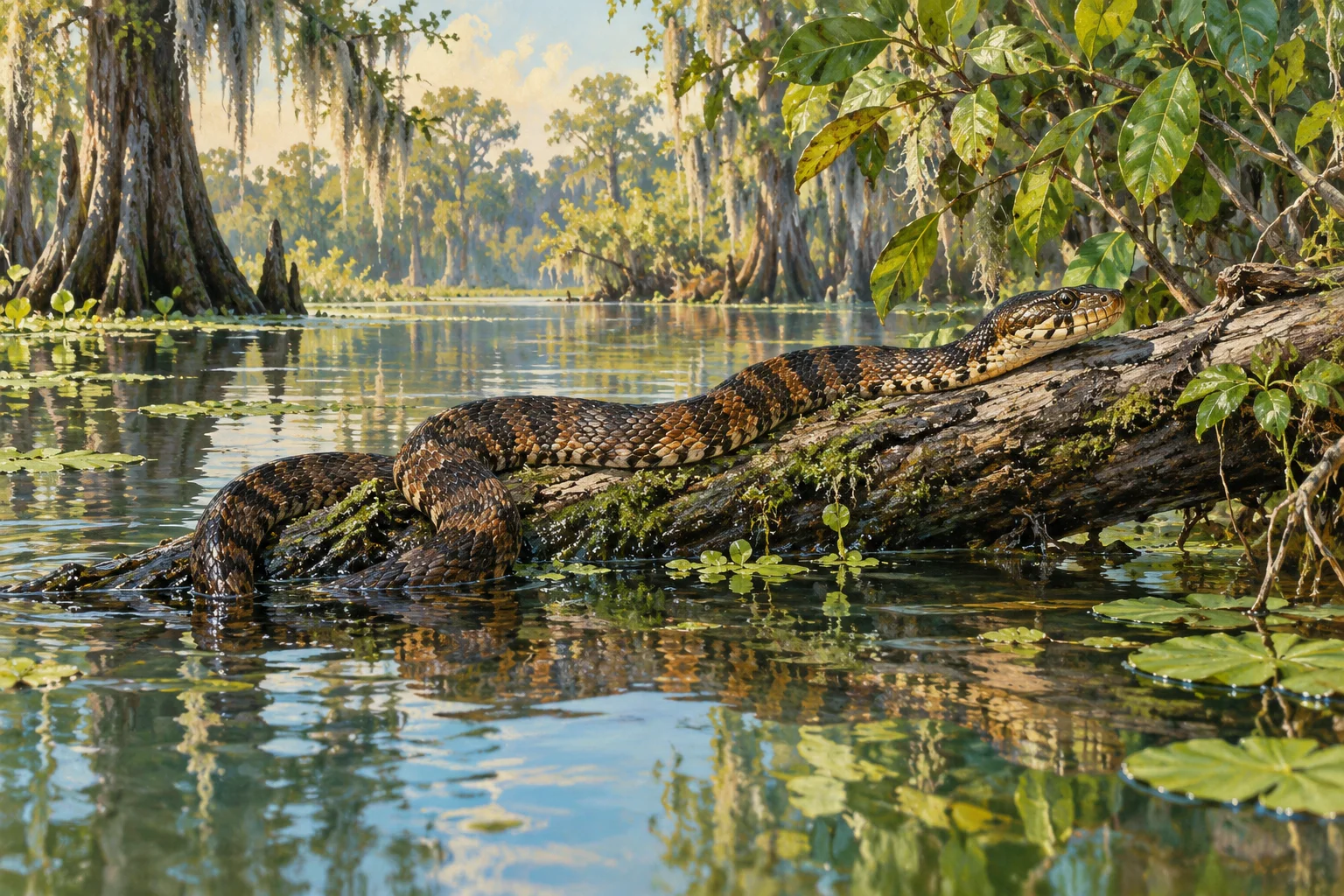
Several kinds of snakes live around Louisiana's water edges. Some are nonvenomous water snakes. Cottonmouths, also called water moccasins, are venomous snakes that can use similar places.
Venomous means an animal can inject a harmful substance through its bite. Being beside water doesn't tell you whether a snake is a cottonmouth, and you don't need to identify it before giving it room.
What can you learn from a glimpse?
From your existing position, describe visible bands, spots or other pattern, body shape and movement. If only a head or short section showed, record the rest as unseen. Keep the place and observation time with the note. Movement across a channel is something to describe; it doesn't by itself establish a species or the animal's intent.
Young and adult snakes can look different, and broken light or muddy water can hide features. A triangular-looking head or a particular swimming position isn't a dependable beginner identification shortcut.
The Louisiana Department of Wildlife and Fisheries' species reference is a starting point for comparison afterward. Compare the features you actually saw, and leave obscured ones unknown. Don't move closer to inspect eyes or small markings needed for a name.
For an illustrative note, ‘unidentified snake beside the landing; short patterned section visible; remainder obscured’ is useful without a species name. A blurred photograph or reference consulted later does not fill in features it never showed. If another glimpse appears after the animal disappears, keep uncertainty about whether it was the same individual.
At a bank or boat landing
A boat landing is a place where you get into or out of a boat. Include the actual approach, waiting space, gear position and return in the visit plan. Pause before using it if a snake is nearby. Keep children and pets back and leave the animal a route away. If the space is narrow, wait farther away or use another permitted access point instead of trying to make it move.
An alternative bank or landing needs its own permission, approach and return arrangements. An earlier clear launch or a photograph doesn't describe the space at the later takeout. Agree who alerts the crew or site manager and who remains responsible for children and pets; watching wildlife isn't a handover of those jobs.
Don't poke it with a rod, throw objects or pick it up for a picture. If you can take a photograph from your existing position, use the zoom and leave the encounter there.
A snake in or beside a boat needs space too. Keep people back and seek appropriate local help rather than improvising a capture in a confined area.
Reduce surprises while getting ready
Look before reaching into a boat stored outdoors, an equipment compartment or a gap beneath a dock. Put the items you'll need somewhere visible and reachable, so you aren't searching by hand in a hidden space while concentrating on the fishing.
At the shoreline, choose a clear approach and look before stepping into vegetation or debris. Appropriate footwear and a visible walking route are useful preparations for the whole outing.
You don't have to search for snakes to go fishing. The point is to notice the space you use and avoid reaching or stepping blindly.
Keep the record simple
For a later comparison, retain location, observation time, visible pattern and body section, movement and unknown features. Separate the species question from the immediate choice of a usable approach. Compare several features with a reference; ask a qualified local wildlife specialist when the distinction matters.
For a concern at a managed site, describe the actual location, visible behavior and whether the animal remains visible or where and when it was last seen. Reporting time may differ from the observation time. Keep uncertain details unresolved; don’t move closer to fill them in. Follow the responsible site or wildlife guidance for the next action rather than improvise a capture.
A blurred image may stay unidentified. You can still use the observation to choose a clearer bank or a different landing next time.
For a bite, seek emergency medical care promptly. Don't try to catch the snake for identification; doing so can expose someone else to a bite. This is a reason to get help, rather than turn the encounter into a handling lesson.