
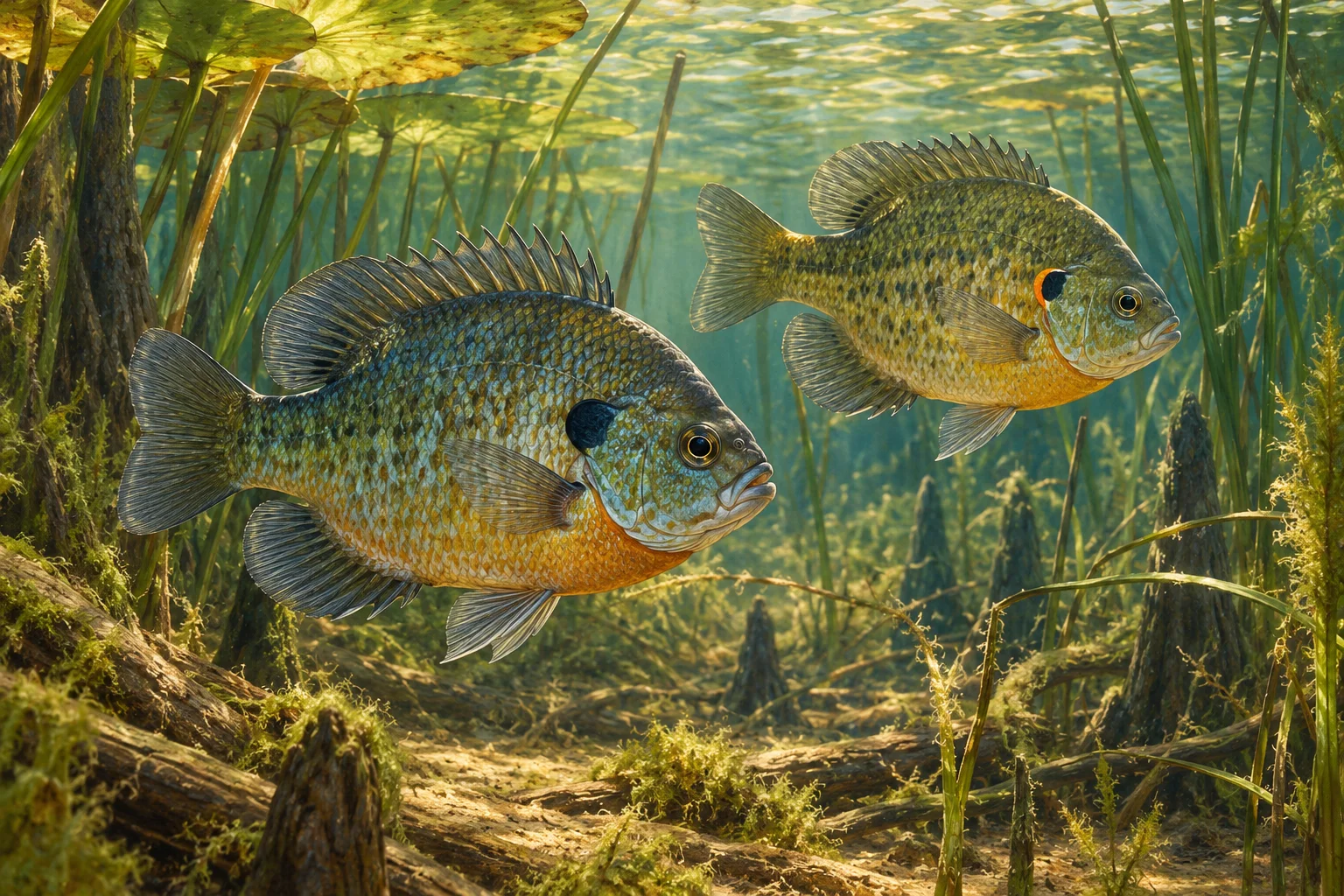
Bluegill and redear are freshwater sunfish. “Bream” is a common name anglers use for several sunfish, rather than one exact species.
An outing for these fish can be a way to learn to cast a baited hook and watch a float for signs of a bite. Start by learning which fish you might catch and how the parts of the setup work together.
Look at a few features together
A bluegill has a small mouth, and the Texas Parks and Wildlife profile describes a dark mark near the rear of the dorsal fin. The dorsal fin is along the fish's back.
The redear profile describes the colored edge of its ear flap, a small part of the gill-cover area behind the head. The name refers to that feature.
Study the whole comparison before the outing, then use body, fin and gill-cover features actually visible on a catch. Young fish, changing light and related sunfish can make one colored patch misleading. Keep uncertain identification open and ask for experienced help; ‘bream’ doesn't identify every sunfish as bluegill or redear. Use the references for recognition and applicable Louisiana guidance separately for your outing's rules.
Picture a simple float setup
A float, cork or bobber sits on the surface. A baited hook hangs below it, sometimes with a suitable small weight to help the bait settle.
A rod controls the line; a reel stores it and winds it in. A small piece of worm on a suitable hook is one bait choice. You want the fish to reach the hook as well as the bait; a big bundle on a large hook can make that harder. Before your first cast, have someone point out the line, float, hook and any weight, then show you how to cast them together.
Have the actual line controls, hook response, return and bait inspection demonstrated as well as the cast. With known equipment and appropriate help, make a manageable cast, let the float settle and follow its later path. A float can move because of flowing water, a caught hook or a fish; a dip alone doesn't diagnose the cause. Use the response shown for the actual hook.
The float marks a surface position, not the exact bait location or bottom depth. Bring the setup back at the checks you've been shown and before its path reaches an obstruction or becomes unmanageable. Inspect bait, hook and line for missing bait, plants, tangles or damage before repeating.
Choose a reachable place to practice
Choose a named public site that permits the activity, with an actual entrance, usable approach, casting space and room for landing help. Check its manager's notices, hours, seats or breaks, toilets and return route for the group. A pier may be worth investigating instead of a steep bank, but its approach and current arrangements still need checking.
Cover means objects or plants in the water. An outside vegetation edge can give you a feature to look at, but doesn't establish the depth or guarantee a bite.
Start with a reachable cast and a clear route back, using the operator's agreed position if aboard. Retrieve means bringing the line back. Inspect hook, bait and line afterward: returned plants tell you about that attempt's path, not a measured depth or fish location.
Make one small change
The distance between float and hook helps set the arrangement, while flow and line angle affect the bait's actual position. If plants repeatedly return, have a float-spacing adjustment shown or compare a clearer cast path, keeping other parts and movements the same. Don't change spacing, bait and path together.
For an illustrative note, ‘same setup and movement; first path returned plants; clearer path returned clean’ records one comparison. Keep catch or no catch separately. If adjusting spacing instead, retain the same intended path and have the change explained for that rig; no single spacing is right for every bank.
Before a bite, ask someone to demonstrate when and how to move the rod with your particular hook. The hooking-and-landing lesson explains why that response needs to match the setup.
With children, assign supervision and help with bait, hooks, tangles and any catch, with an explicit handover when an adult takes a break. Give each cast room and plan watching, turns and rests as part of the visit. A supplied rod for each person doesn't establish simultaneous casting space or individual instruction. For a guided lesson, agree demonstrations and supervised attempts for the actual method.
Finish the whole outing
Check the site's facilities and Louisiana freshwater requirements. Identification, keeping conditions and consumption advice are separate questions.
Before fishing, agree who brings a catch within reach, identifies and measures it, handles the hook and manages release or lawful keeping. If keeping fish, establish preparation, any charges, who collects them, collection place and time and cold transport. Include those jobs and the walk or ride back before onward travel.
Bring drinking water, suitable clothing and a container for rubbish and trimmed line, with shared jobs assigned. The line-and-waste guide helps with cleanup. One controlled setup and a useful observation are worthwhile outcomes without a promised catch.