
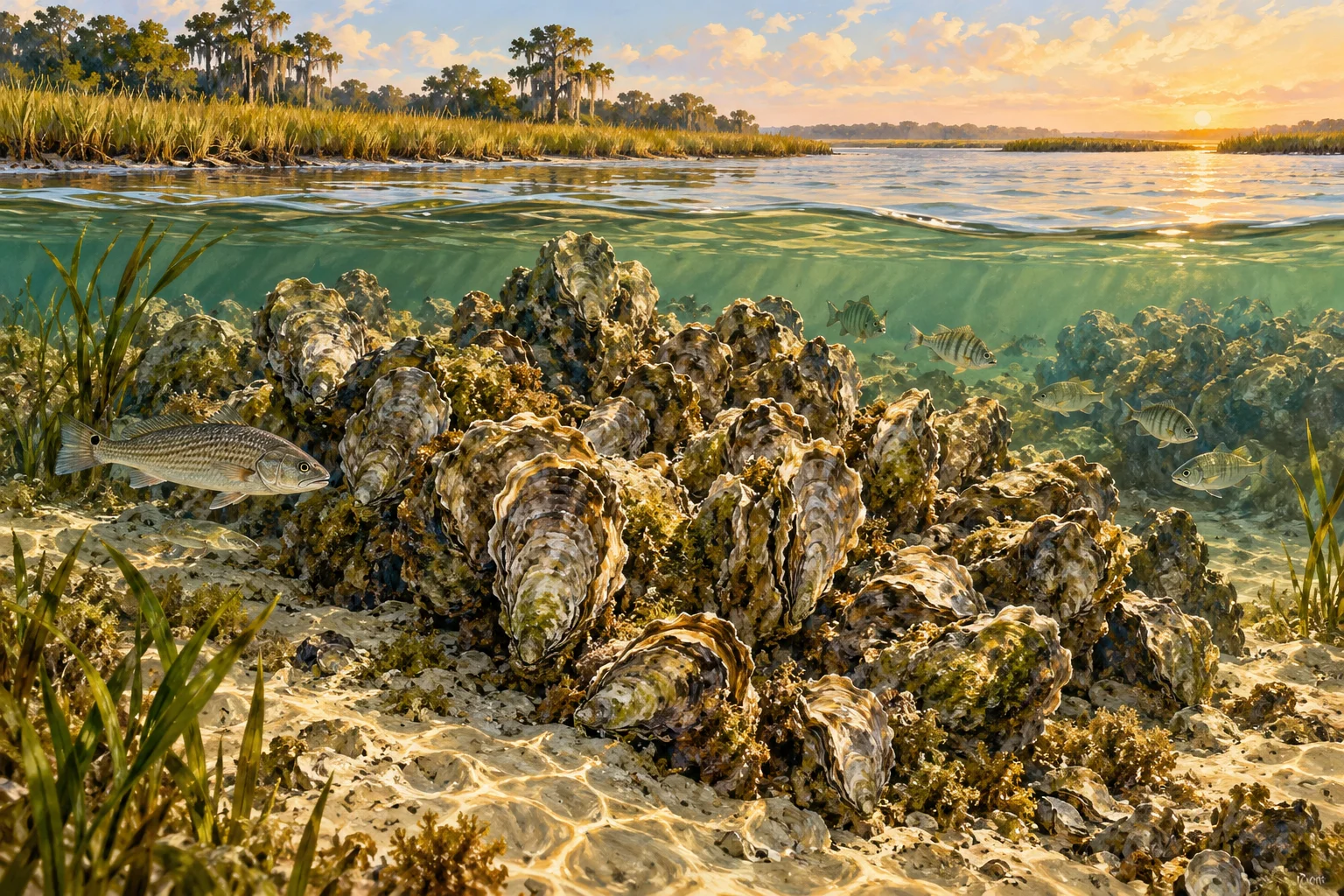
Oysters are shellfish with two shells that live attached to surfaces in coastal water. They feed by filtering small particles from the water. Groups of oysters and their shells can build a reef, an underwater habitat used by other animals too.
You may hear about an oyster reef while fishing for black drum or learning about wetlands. Start by choosing the activity: learn about the habitat, fish nearby or collect oysters. Each choice needs its own access and preparation answers; a reef mentioned in a fishing description isn't an invitation to harvest.
Why reefs interest anglers and wildlife
Shell adds shape and shelter to the underwater setting. Fish and other animals can use the area, which is why reefs come up in coastal fishing conversations.
Sharp shell and changing water depth also affect how a boat or fishing rig moves nearby. A reef name on a map isn't a place to walk onto, beach a boat or collect shellfish without further information.
For a first habitat visit, an authorized observation point or an educational outing can be enough. Ask where guests observe, how they get there and what they can learn without entering a working area. You don't need to harvest oysters to understand the reef.
What do grounds and leases mean?
Public oyster grounds are areas managed for oyster harvest under the relevant public rules. A private lease gives specified rights over an area; it doesn't become open to visitors because it is visible from the water.
Identify the precise grounds or lease, who manages it and whether your proposed activity is allowed. If a trip description only names a nearby town, ask for the actual area before checking permissions or notices. Other boats working there don't establish your permission to collect.
Harvest means collecting animals. If harvesting is your goal, identify the area before choosing equipment or planning a meal. Keep the proposed collection position, date, method and permission contact in one note so each official check refers to the same outing.
Two official checks answer different questions
The Louisiana Department of Wildlife and Fisheries' recreational shellfish information addresses fishery requirements: method, licensing, areas and current harvest notices.
The Louisiana Department of Health shellfish program addresses shellfish sanitation, including area classifications and health-related closures. Classification means the program's category for an area; it isn't something you can determine from clear-looking water.
Keep each notice beside the question it answers. For both sources, record:
- The exact area name or identifier and its boundary.
- When the notice takes effect, its current status and the date you checked it.
- The activity or requirement it covers, including any linked conditions.
Check that each notice actually covers the collection position. Nearby areas may have different names or identifiers; don't apply a result just because it mentions the same general part of the coast.
Keep three answers separate: permission for your activity, the applicable fishery requirements and the shellfish-health information. Each needs to fit the same collection position and date. A nearby opening doesn't extend automatically to your area.
For example, permission to visit a lease may leave collection permission unanswered, and a notice naming nearby public grounds may cover a different boundary. Record what each answer actually covers and which question is still open; don't combine partial answers into a general ‘open’ label. If the location or collection date changes, revisit the affected permissions and notices.
Before collecting anything
Before using gear, resolve any unanswered area, permission, method or notice question. If two sources appear to describe different areas or statuses, ask the responsible program about the exact position and date rather than choose the answer that suits the trip. Keep the source links, effective dates and replies with the plan, and recheck near collection.
Learn the actual handling method and arrange the equipment, storage and transport it needs. A cold chain means keeping seafood appropriately chilled through collection, transport and storage. Name who handles each stage, where the catch goes and who collects it. Use shellfish-specific handling guidance for that plan; a cooler on the packing list doesn't describe the whole chain.
An open area isn't a blanket assurance about eating raw shellfish. Use the health program's guidance and appropriate advice for individual health questions rather than treating this habitat introduction as a food-safety clearance.
A swimming advisory answers a different water-contact question. If an oyster requirement remains unresolved, pause collection and ask about an observation or other permitted activity while checking it. Confirm the access for that alternative too. The reef can still be interesting without becoming a source for dinner that day.