
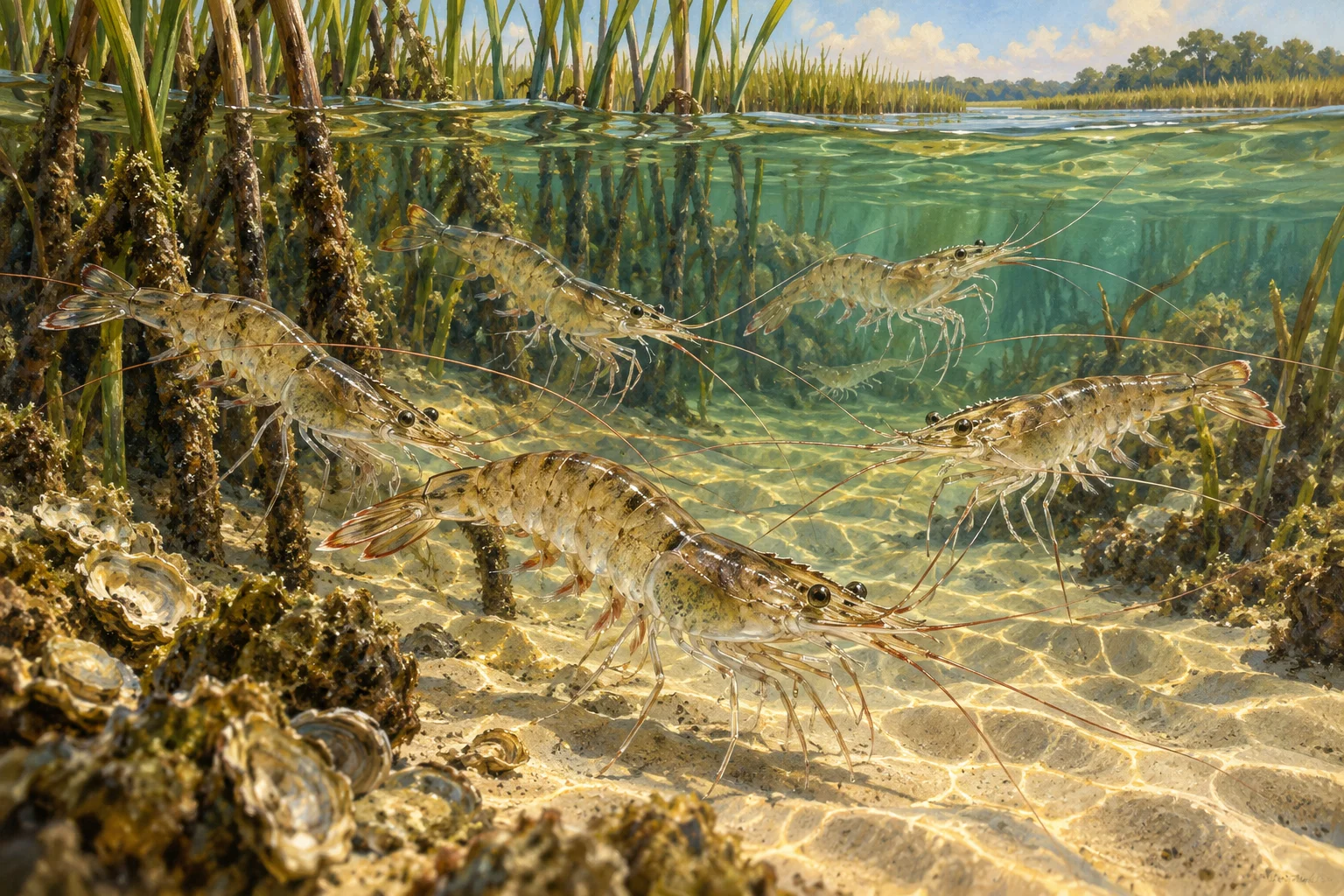
Shrimp are small, swimming animals with a hard outer covering and jointed legs. They belong to the crustacean group, along with crabs and crawfish.
Recreational shrimping means catching them for personal use rather than running a commercial shrimp business. Start by identifying the method, named water and instruction you need. A cast-net lesson and a boat-and-net outing involve different equipment and guest jobs.
Why the coastal setting matters
White shrimp and brown shrimp are different species. The National Oceanic and Atmospheric Administration's accounts explain life cycles connecting offshore reproduction and coastal nursery habitat.
An estuary is where fresh water and seawater mix. A nursery is habitat where young animals grow. Those words help explain why one species can use different parts of the coast during its life.
For the actual outing, match the chosen method, named waters and dates to current notices. Use the Louisiana Department of Wildlife and Fisheries' recreational shrimping reference. The life-cycle account explains the animal; it doesn't supply an opening date for your trip.
Cast net or trawl?
A cast net is thrown so it opens over an area of water, then retrieved. It has weights and a retrieval line, and takes practice to control.
A trawl is a net towed through the water. It adds boat operation, towing and gear handling to the job. Learning a cast-net throw doesn't teach someone to run a trawl.
If you're joining a lesson, say whether you've used that type of net before and ask which jobs you'll do. For a cast net, have the instructor show how to arrange the line and weights, make the throw, retrieve and sort the catch. Practice in a suitable clear area before working near other people or water. Don't attach the retrieval line to your body.
Ask whether practice, individual help and sorting instruction are included in the proposed session, along with the net and other supplies. If a trawl outing is offered, confirm which tasks the operator handles and which a guest may learn; the cast-net sequence below isn't a trawl-operating lesson.
Follow one set all the way through
A set means putting the net out and bringing it back once. Before the first one, prepare the working space, containers for sorting and the storage for any catch you'll keep. Agree who handles the net, who checks the catch and where observers wait. Decide how to signal that the previous catch and equipment are ready before another throw.
- Confirm the place allows the activity and gives the net a clear retrieval path.
- Keep other people outside the throwing area and organize the line and weights.
- Make the throw you've learned, then retrieve under control.
- Check what came back before another set.
Bycatch means animals caught unintentionally. Check what came back before deciding what to keep, and get help with unfamiliar animals. Use the applicable rules and handling guidance for that catch. Before another throw, put kept catch into the prepared storage, finish dealing with the other animals and check the net and line for tangles or damage.
For example, a throw may open well while the learner is still unsure how to retrieve and sort what comes back. Ask the instructor to repeat that part before another set. Someone else wanting a turn doesn't finish the previous catch check or transfer the handling job automatically.
If the net snags, stop rather than entering unfamiliar water or pulling from an unstable position to recover it.
Plan the end before the first throw
Check the specific licensing, gear and current-season requirements before using the net. Keep the actual place, dates and method together when reading notices or asking the department and the site manager what applies. Permission to reach a shoreline doesn't by itself permit the intended gear. A general fishing-season headline doesn't answer the shrimping question for every area.
Name who supplies the chilled storage, who handles and takes the shrimp home, and how long the collection and journey will take. Use reliable handling guidance for shrimp; a container alone doesn't establish the storage conditions. Confirm those arrangements before choosing a food catch as the session's goal. Keep unwanted catch and bait waste off public paths.
Recover the net and line, collect rubbish and inspect the equipment. Assign any damage or unfinished cleaning job before another person uses it. The clean, drain and dry routine helps keep material from one waterbody from traveling to the next.
Finish with the equipment recovered, catch check and handover complete, and cleanup accounted for. If a site or weather change prevents the planned session, confirm the new place, method and instructions rather than reuse the earlier permission and season assumptions. The first session can stay short while you learn one complete throw, retrieve and sorting routine.