
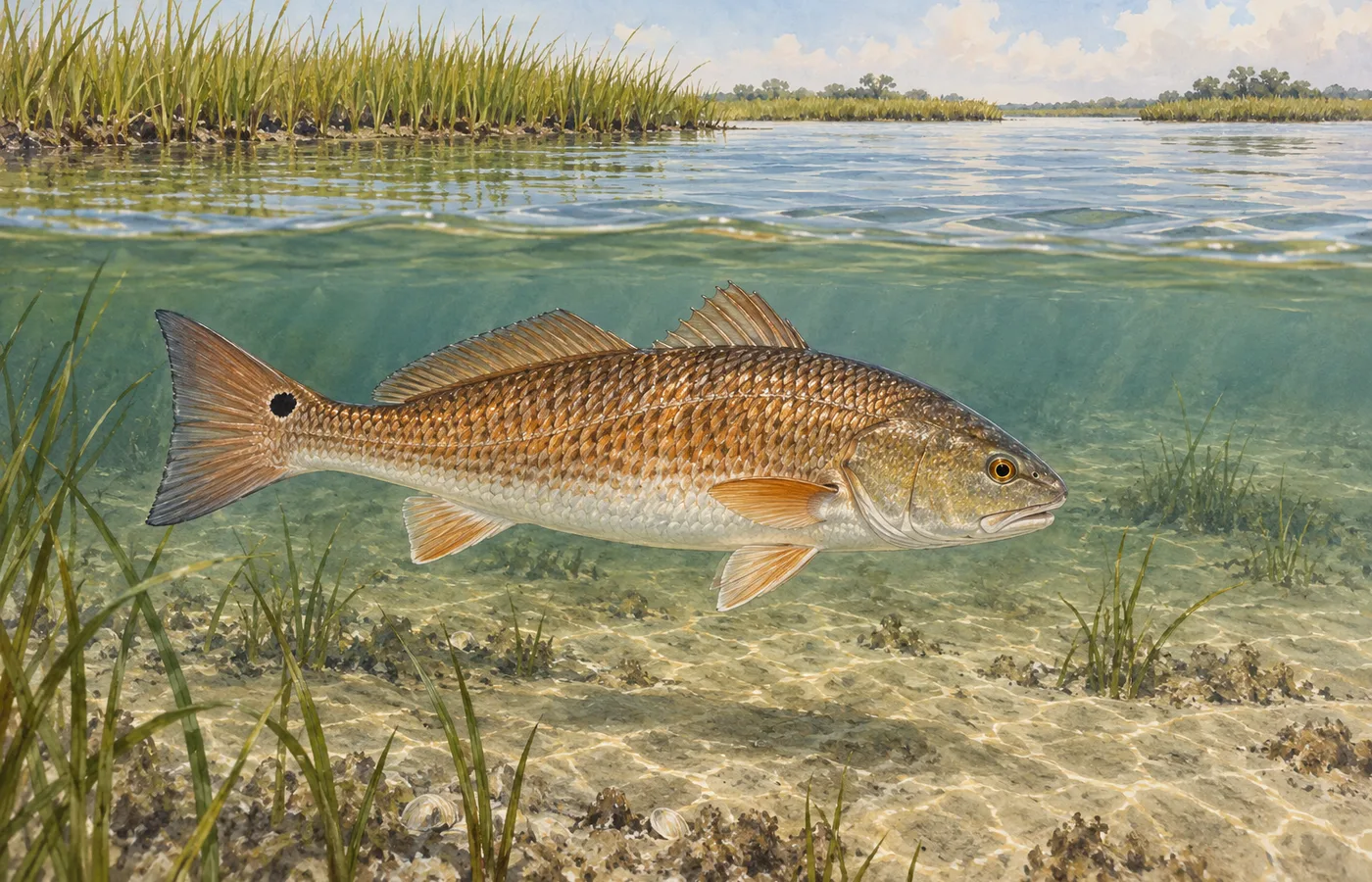
Redfish is the common name for red drum, a coastal fish found around Louisiana's marshes, bays and connected waters. It isn't another name for red snapper.
A first redfish outing can be about learning a bait or lure setup and understanding the water around it. You don't need a long list of fishing gear or a prediction of the perfect tide to begin.
Recognize a few useful features
Red drum often have a bronze or reddish appearance, a pale belly and one or more dark spots near the tail. Color varies, so a pale fish isn't automatically a different species.
The Louisiana Department of Wildlife and Fisheries' red-drum profile helps with the full comparison. Black drum are another fish; their whisker-like chin barbels are one useful distinction to learn from a reference.
Look at the reference before fishing and use several features together: body appearance, the tail area and the features that distinguish similar fish. If uncertain, get identification help before a keeping decision rather than let the trip's target name identify every catch. A spot or color alone isn't a full identification.
Connect the fish with the habitat
An estuary is a coastal system where fresh water and seawater mix. Younger red drum use estuarine habitats, while larger adults can use more open coastal water. Shrimp, crabs and smaller fish are part of their food.
That gives you a reason to investigate vegetation, shoreline interruptions and moving water, but not proof that a fish is waiting at every edge. Separate the feature you can see from the question you're testing. A grass edge doesn't establish bottom depth, and naturally moving surface material doesn't measure the flow at every depth or throughout a route.
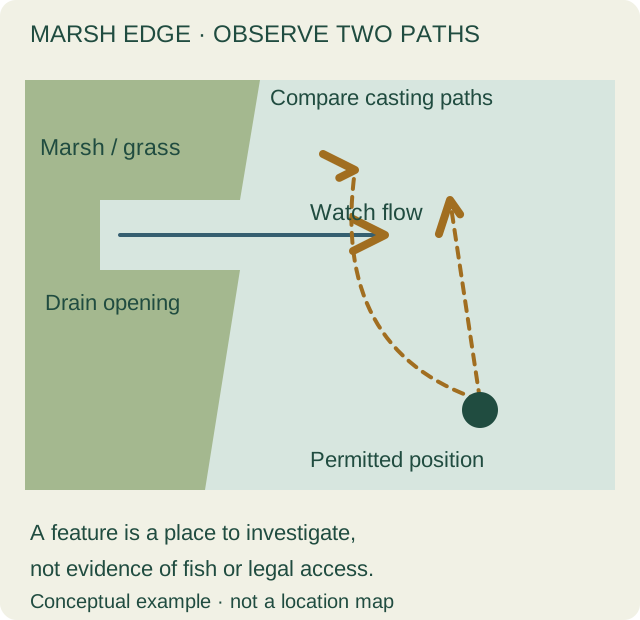
A drain connects areas of marsh water. Current is water moving in a direction. In this drawing, two casts investigate different paths beside a drain and grass edge.
 Open the full-size illustration →
Use the drawing to compare two paths from the same fishing position. Follow the water-movement arrow and compare where each cast lands and where its path goes afterward. Landing beside a feature is not the same as staying beside it. The drawing illustrates a question to investigate, not measured current, depth or a fish location.
In an actual outing, choose a suitable permitted position and known setup with appropriate help. Keep boat positioning and moves with the operator's directions. Bring one manageable attempt back and inspect it before comparing another. The drawing isn't a real access or boat route.
Picture two simple fishing activities
A popping cork is a float you can move to make a splash or clicking sound, with a baited hook or suitable lure below it. The rig is that arrangement of line, float, hook and other parts. Cast it out, let it settle, make the cork movement you've been shown and watch during the pause. The cork lesson explains the movement and line control.
A paddletail is a soft lure with a flattened tail that moves as it travels. On a suitable weighted hook, you can cast it and bring it back along a path. Bringing it back is called the retrieve.
The methods ask different things of your line control. With the cork, have slack control, short movement, pause and return demonstrated for the actual rig. Watch between movements and check that the bait or lure isn't tangled around it. A dip alone doesn't identify a fish, water movement or a snag; learn the bite response for the actual hook instead of applying one pull to every setup.
With the paddletail, notice whether it returns clean or covered in plants, and inspect the lure's fit before another cast. The float's position shows the surface path; the bait can trail behind it in moving water. A lure without a float needs its own line and movement observation. Neither method measures where fish are simply by being in the water.
Learn one controlled attempt
Start with a short cast along an open edge you can reach, with space for the cast and a clear return. Follow the line or float after landing and retrieve before the path reaches an obstruction or becomes unmanageable. Bring it back and inspect for plants, tangles or a twisted lure before casting again.
If you're new to the rod and reel too, learn the casting movement in a clear area with help first. The casting lesson introduces that skill.
Choose a change you can observe: send the next cast on a slightly different path, or change how quickly you bring the lure back. Keep the other parts the same so you can compare where it travels and whether it collects plants. The paddletail lesson explains that lure's movement.
Sight fishing means finding a fish or visible opportunity before casting toward it. It can be an activity to learn separately, using fly or other suitable gear. If that's what interests you, say so when arranging a lesson.
Arrange the outing and catch decision
Tell the guide your experience, full group and learning goal: repeated cork practice, lure retrieval or a specialist sight-fishing lesson. Ask about demonstrations, supervised attempts, turns and who handles bait, tangles, landing and hooks. Establish the assigned boat, riding/fishing/rest positions, meeting point, full schedule and included versus extra services. A redfish label doesn't promise every method or individual teaching. An independent visit needs a named permitted access, known equipment and manageable return plan instead.
Use current Louisiana red-drum information for the applicable keeping conditions, alongside the personal requirements for the actual outing. Prepare identification, measuring, handling and release roles before fishing. If keeping fish, arrange cleaning, collection, charges and cold transport; a target species is not confirmation of a catch or a lawful amount to take home.
Keep a short note of the feature and what your setup did. For example: ‘The cast beside the grass brought back plants; the one farther from the edge came back clear.’ That's a more useful starting point for your next attempt than changing three lure colors at once.