
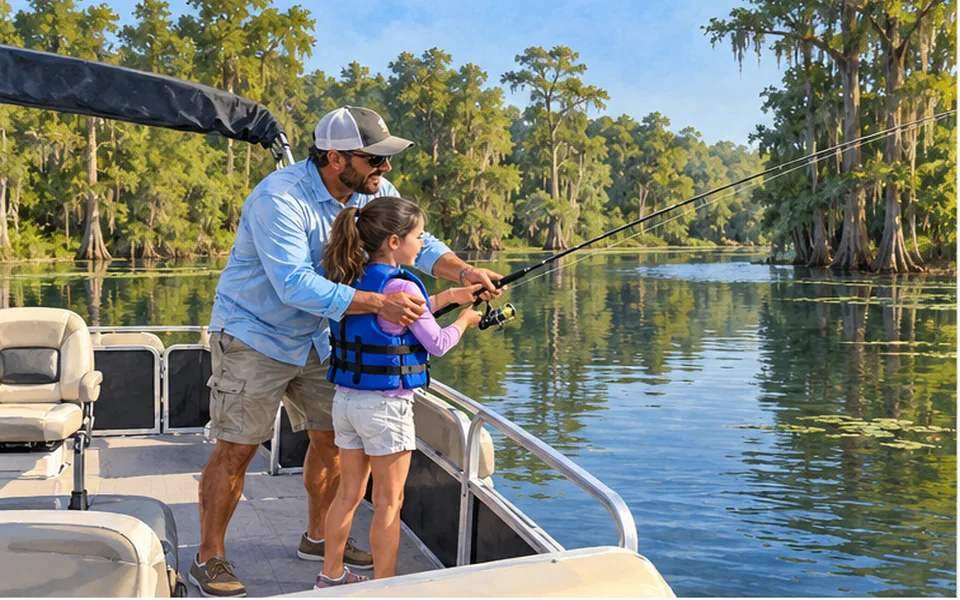
A family fishing trip works best when the activity and pace fit the children and adults actually coming. It could be a short visit to a public pier, a lesson on a lake or a boat trip with a captain.
Find out whether the children want to hold a rod, watch or take turns. Choose the outing by the whole time away, the help available and a workable break plan. Catching fish is a possibility; it needn't determine whether the family enjoyed the day.
Start with what the children would enjoy
A first visit can include watching the water, trying one fishing task, having a snack and stopping. Ask the child which part sounds enjoyable before choosing the place or booking a boat.
A bank is land beside the water; a pier extends over it. At a shore site, check the walk from parking, the water's edge, room for rods, toilets, shade and somewhere to sit. Think about how you would pack up and return to the vehicle.
A guide is someone you hire to help you fish, and a charter is a boat trip booked with a captain. On a boat, a break might mean sitting aboard or changing activity. An early return needs an agreement with the operator; don't assume the boat can head straight back whenever a child tires.
Tell the provider the children's ages and experience privately, and describe the introduction you want rather than relying on a “family friendly” label. The children's first-fishing page helps plan a small first task and the adult help around it.
Choose the outing around the whole group
Compare the actual time away, boat ride, help and facilities. A short advertised trip may still involve driving, boarding and a ride before fishing begins.
On a boat, ask where people sit, whether there's shade and a bathroom, and how everyone gets aboard. For shore fishing, check the parking, path, fishing position and facilities of the actual place.
Include adults and children who only want to watch in the headcount. Anyone staying ashore needs their own meeting, transport and meal arrangements.
Ask whether your family has the boat to itself or joins other guests, how fishing turns work and how the agreed breaks fit that format. A private booking may give the group more choice within the agreed outing; it doesn't by itself promise an immediate return whenever someone wants one.
For example, compare a short boat lesson with a shore visit using the same family: time to reach the fishing position, one task the child can try, an adult-supported break and a way to finish. If the boat proposal leaves the break or seated position unresolved, ask about it before choosing on advertised hours or price.
Agree who helps with what
Name the adult watching each child, who handles bait and hooks, and who helps with a caught fish. Get the replacement adult's agreement before the responsible adult steps away or starts another task. On a guided trip, ask which jobs the crew handles; the captain is also operating the boat. Keep those jobs clear if guests take turns fishing or an adult stays ashore.
Explain the parts before handing over the equipment:
- The rod is the pole used to control the line.
- The reel stores the line and winds it back.
- The hook holds bait and can catch a fish; its sharp point needs care.
- Bait is something such as a worm or shrimp on the hook. A lure is an artificial item used to attract fish.
- A float, also called a cork or bobber, sits on the surface and can show movement from a bite. A bite is a fish taking or touching bait; water can move a float too.
Choose one job first: hold the rod with help, turn the reel handle or watch the float. Have one complete attempt shown before the child's turn, including bringing the line back and checking the hook, bait and line. Keep unused rods and sharp items in an agreed place.
Casting means sending the line out with the rod. Arrange hook-free practice equipment, instruction and clear space for learning that movement. Keep others out of the casting area and follow crew directions aboard. The casting lesson explains the controls and sequence.
Let a child watch a fish without requiring them to touch it. Ask the guide for help with unfamiliar fish and removing hooks. The freshwater checklist helps divide equipment and personal-supply jobs.
For boat trips, confirm properly fitting life jackets and which sizes the provider supplies; don't assume adult equipment will fit. Discuss access or assistance needs privately. Use Coast Guard life-jacket guidance and the rules for the actual outing. This page doesn't set a universal exemption or wearing rule.
Keep preparation simple
Use one family list for clothing layers, sun protection, drinking water, familiar snacks, food not supplied and personal necessities. Keep a spare change dry if useful, and check what bags or coolers are allowed.
Plan a simple break: sit with an adult, have a snack, watch the water or put the rod away. On shore that may mean finishing the visit; aboard, use the arrangement agreed with the crew. The child doesn't have to handle a rod throughout the trip.
Ask what rods and other fishing equipment are included before buying things for one day. Check the Louisiana Department of Wildlife and Fisheries' current license information for the people and activity involved; don't assume a family label settles them.
Find out where to meet, when to arrive and what happens after the return. If bringing fish home matters, arrange cleaning, packaging and collection before the trip. Afterward, ask what the children liked and what they'd try next time; enjoying watching a float is a useful starting point too.
Know the family price and change terms
Ask for the complete price for everyone coming, using the same ages, guest count, date and requested activity as the proposal. Keep included equipment, extra charges, deposit, balance and unanswered items visible. A child's discount or a free observer place needs confirmation; it isn't something to assume from an adult rate.
Read the payment and cancellation arrangements, including what happens if the provider cancels or your family decides not to travel. Ask what a changed boat, date or shorter outing means for the price, payments and essential family arrangements before accepting it. One fewer guest doesn't automatically mean a lower boat price.
Keep one confirmed plan with the actual boat or shore location, everyone coming, arrival/return times, break and supervision jobs, supplies and payment status. Name one adult to pass on updates while keeping personal assistance details private. A shared family plan or an unanswered inquiry isn't a reservation; get the provider's confirmation under its booking process.
A first inquiry could be: “Two adults and two children would like a beginner outing. We'd like help with equipment and room for breaks. What would fit us, what is supplied and what is the full price?” Share ages and personal needs privately where relevant.
Provider references: Go Long's family information and Borderline Crappie Trips. The Coast Guard's life-jacket information provides equipment background. Confirm the current service, actual boat and family arrangements directly.