
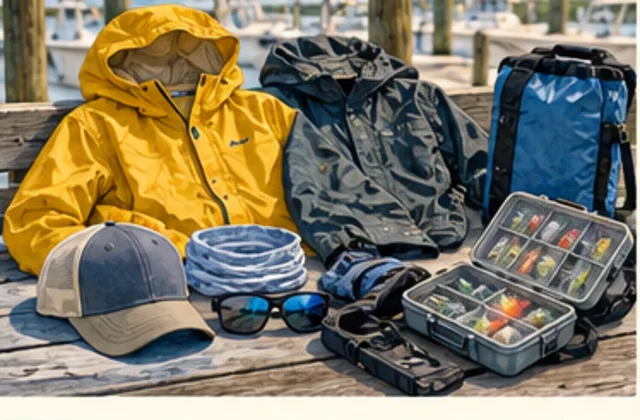
The combined packing guide includes freshwater preparation, supplied equipment, clothing and the return journey.
Freshwater fishing means fishing in water with little salt, such as a lake or river. You might fish from a bank or pier, take your own boat or meet a guide.
Choose the actual bank/pier, guided service or own-craft outing first. This is a preparation guide, not a list of items to buy. For each useful job, record the person arranging it, the answer or supply needed, and anything still to resolve. Equipment provided and equipment included in the price are separate answers.
Confirm the place, people and time
- Save the actual entrance, fishing position, launch or boarding point, parking and site/provider contact; a lake name alone is not a meeting instruction.
- Label opening hours or requested arrival, departure, expected return and time to finish afterward. Add transport and keep estimates distinct from confirmed instructions.
- Count everyone coming, including children and anyone who won't fish.
- Agree the fishing activity, teaching/help, turns and breaks, plus the person/method/time for communicating a change.
- Match site access and weather information to the actual place and date. For river-connected water, retain the relevant station/time with water-level information; it does not confirm a usable launch or route.
A river gauge measures height at a station, not depth at every fishing position. Record what you read and its time separately from the site manager’s access answer. The gauge explanation helps with the measurement; the access guide helps trace the actual approach, fishing position and facilities.
Check rules for this outing
Use LDWF's license and permit information to check each person, then check the actual water, the fish you plan to catch and the equipment. Don't treat a site entry fee or another guest's license as the answer for everyone. The license guide explains what information to gather.
If a lake or river is shared with another state, check the rules for the water and activity you intend to use rather than assuming a general Louisiana checklist covers it. The water-boundary lesson explains those questions. Have required documents ready in the form the responsible source accepts.
Sort out fishing equipment
With a guide: identify the actual method and complete equipment supplied, what is included or extra, and the instruction promised. Ask who demonstrates the controls, whether guests practice, how turns work and who handles bait, tangles, landing and hooks. Keep these answers with the actual boat/service rather than another outing’s list.
From shore: bring the rod and reel, the chosen hook-and-line arrangement, bait or lures, spare parts you know how to fit and line-cutting tools. Tackle means fishing gear. Learn the arrangement before relying on it; the freshwater-rig guide explains float and other setups. Prepare the landing and hook-removal equipment needed for your intended fishing, with help for jobs you haven't learned.
With your own boat or kayak: identify the launch, parking, route and return arrangements as well as the fishing gear. Complete the separate equipment and operating preparation for that craft and the people aboard. This personal checklist doesn't replace boating instruction or the craft's own checks.
Pack the personal bag
- Drinking water and suitable food or snacks.
- Clothing for the whole outing, including a useful layer or rain protection.
- Hat, sunglasses and sun protection.
- Footwear suited to the route and activity.
- Phone, keys, necessary documents and a way to keep them dry.
- Personal essentials and a dry change when useful.
- A contained place for rubbish and trimmed fishing line.
Check the actual route to toilets, shade and rest areas, not just whether the site lists them. Choose a manageable bag and keep during-trip water/layers reachable under the site or boat arrangement. Assign shared food, drinks, bags and coolers so they are neither duplicated nor assumed. The packing guide expands the list without requiring specialist purchases.
Arrange the return
Agree on release or lawful keeping before fishing, with help for identification, landing and unhooking jobs you have not learned. If keeping fish, establish who cleans them, charge, collection point/time and packaging. Assign the travel cooler, ice, collector and destination storage; a boat’s fish box is not automatically a container you take home. The fish-cleaning guide explains the handoff.
Leave time for collection and agreed payments after fishing. Assign cleanup of wet gear too, especially before another lake or river. The clean, drain and dry guide covers the boat, personal gear and retained water.
For a hypothetical shore visit, ‘we have a rod’ still leaves a suitable setup, instruction, bait, permitted fishing position and landing/return jobs to arrange. Write the missing job and who will resolve it, rather than mark the whole outing ready.
Before leaving, read the plan back against the actual date, site/boat and group: meeting/return, requirements, equipment/help, personal/shared supplies, costs and change contact. A different site or service can change several of those answers. Keep unresolved essentials visible and revisit the plan rather than forward an old checklist as the new arrangement.
The checklist tool records equipment categories and browser-saved ticks; old ticks can carry across outings. Use trip notes for named assignments, times, sources and questions, then review the actual answers for this visit.