
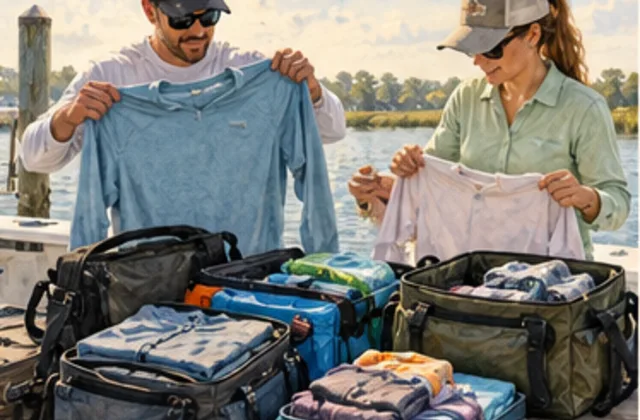
Turn the provider's answers into a practical list for the actual outing: what is supplied, what the price covers and what a guest still needs to arrange. The combined packing guide connects that list to clothing, personal items and the return plan.
You usually don't need to buy a pile of fishing equipment before trying a guided trip. Start by asking the provider what comes with your booking and what you need to bring.
Ask: ‘What do you supply, what does the price include, and what do we bring?’ Those are three different questions. For example, the crew might provide an item but charge for it separately; ‘supplied’ alone doesn't say whether you've already paid for it.
Ask about the basic fishing kit
If the equipment names are new, here's what they mean:
- Rod: the long, flexible pole you use to send line out, control it and help bring a hooked fish in.
- Reel: the device attached to the rod that holds line and lets you wind it back in.
- Tackle: a general word for fishing equipment, often used for the small parts such as hooks, weights and floats.
- Bait: something put on a hook to attract a fish, such as a shrimp or a small fish.
- Lure: an artificial imitation used to attract a fish, rather than natural bait.
Ask which parts are supplied for the actual fishing you'll do and whether guests share equipment or turns. For instruction, ask who shows you the controls, helps with baiting or lure changes, explains the bite response and takes over if you are unsure. Having a rod aboard doesn't by itself describe the help included.
If you want to bring your own equipment, check that it suits the method and there is room for it.
Also ask about any charge for lost or damaged equipment. Knowing the policy is more useful than assuming your own rod or every replacement item is required.
Separate fishing supplies from personal items
Check food, drinking water, ice and cooler space individually. A boat may carry ice for fish without providing cold drinks or room for a large guest cooler. Ask what the ice and cooler space are for, where guest items stay and whether you need a separate transport container after the return. Treat ‘ice supplied’ as a question about its intended use, not a complete plan for food, drinks and the journey home.
Agree who in your group is bringing shared food and drinks. For your own bag, plan clothing for the outing, sun protection and whatever personal items you need. The packing guide gives you a practical starting list.
Give the crew the full guest group and ask which life jackets they provide, how they confirm a suitable fit and what anyone needs to arrange separately. For children or someone who needs assistance, settle those details ahead of the trip instead of relying on ‘life jackets available.’ Follow the actual crew's briefing and applicable requirements.
Check what costs extra
A quote is the price offered for a described trip and group. Ask the provider to label the items:
- Included: covered by that price.
- Extra: supplied, but charged separately.
- Bring or arrange: the guests' responsibility.
- Not yet confirmed: a question still needing an answer. Don't count this as included or free.
Fuel, live bait, meals and fish cleaning are useful items to check. If a charge varies, ask how it's worked out and what estimate to use. You don't need a general “usual price”; you need the answer for your trip.
For each shared item, keep four details together: who provides it, whether it is included or extra, any charge basis or quantity still to confirm, and who brings or collects it. An item can be supplied at a separate charge, while a guest-arranged item still needs a named person to do the job. A promise to arrange it isn't the same as having it packed or ready.
Licenses and permits need their own check too. Ask what the provider arranges, then use LDWF's license information to establish what applies to each guest. Don't treat the words “all included” as an answer about everyone's requirements.
Think about what happens back at the dock
If you hope to keep fish, ask who cleans them, what preparation you receive, whether packaging costs extra, and when and where the fish will be ready. Fillets are meat cut away from the backbone; that doesn't necessarily mean every small bone has been removed. ‘Cleaning included’ doesn't describe every step of getting the catch home. The fish-cleaning guide explains the questions.
Find out what cooler and ice you'll need for the journey home and whether it should stay in your vehicle during the trip. For an illustrative cleaning-included booking, ask what cut and packaging are actually supplied, when it is ready and who collects it; that inclusion doesn't automatically supply a container or storage at the destination. If you don't plan to keep fish, say so when discussing the outing.
Share the confirmed list with the group. Assign shared food, drinks and any requested cooler to specific guests, and keep unanswered items marked with someone responsible for following up. Each guest can then pack their personal bag without everyone duplicating the same equipment.
Before departure, distinguish confirmed supplies from guest jobs still pending: assigned, obtained and packed or ready for collection are different stages. If the boat, method, group or return arrangement changes, revisit the affected items and charges with the provider. The group-readiness page helps keep the latest list and responsibilities in one place.