
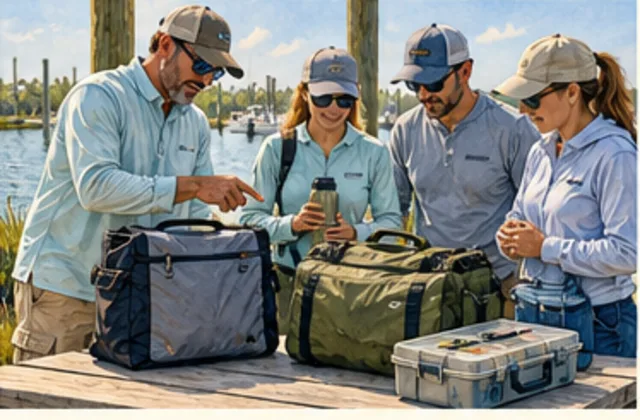
Agree on one day the group actually wants, get the provider's answers for everyone coming, then keep the confirmed plan and unfinished jobs in one current message. The boat-space and group-planning guide connects passenger questions, payments and supply jobs.
One person may picture a short lesson with breaks; another may want a long boat ride and a full day fishing.
Start with that conversation before collecting money. Then keep the practical details in one shared message instead of scattering them across a busy group chat.
Agree on the day and count everyone
Ask what people want to do, how much time they're happy to spend away and what they'd like to spend. Include anyone who wants to come along without fishing.
Give the provider a full count of adults, children and observers—people coming without fishing. A quote is the price for the described trip and group. Ask separately how many may come, how many fish at once and whether that price covers everyone named. The boat-capacity guide explains those differences.
Give people a way to discuss essential boarding, seating or assistance needs privately. Don't ask someone to share personal details with the whole group just to join the plan. Give guests a chance to confirm the proposed time away, activity, budget and essential arrangements before one person commits for everyone. Treat an observer as part of the passenger count, not as a reason to assume a free place.
Choose one contact and agree the money
One person can handle the provider conversation and pass on the confirmed answers. That doesn't make them responsible for guessing everyone else's preferences or paying for every dropout.
Before booking, agree:
- The confirmed group price, extras and any amount still unknown.
- Each person's share and who sends money to the provider.
- When friends pay the organizer, if one person is collecting.
- What your group will do about someone's share if they cannot come.
Keep estimated or unanswered costs labeled that way. Don't divide a base price and describe the result as the final amount while extras are still unresolved.
A deposit is an advance payment under the booking terms. Confirm whether it counts toward the total and keep the balance, the amount still due, clear. Your agreement among friends is separate from the operator's cancellation terms.
For an illustrative dropout, don't simply divide the old quote by a new head count or assume one less guest lowers the boat price. Ask the provider what changes, then confirm the revised shares and any unresolved payment with the remaining group. Keep an expected refund separate from money actually received.
Share one useful trip message
Use this as a starting point and fill in the confirmed details:
Our fishing day
Last updated: …
Date and people coming: …
Exact meeting point, parking, arrival time and boat departure: …
Expected return and time needed afterward: …
What we'll do and what the crew supplies: …
What each person brings or arranges: …
Shared food and drinks—who brings what: …
Group price, each person's share, payments made and amounts still unknown or due: …
Trip contact and how we'll hear about changes: …
Open questions, who follows up and when we need the answer: …
Link the actual meeting address rather than only the nearest town. Update this same message when details change and tell guests which version to use. Ask everyone to check who is coming, their share or payment status and assigned supplies before trip morning. Keep bank details, identity documents, personal license copies and private assistance information outside the shared message. Show enough to organize the outing without making the group chat everyone's personal records store.
Divide the supplies, not just the bill
Decide who brings shared food, drinks and any requested cooler. Check space with the operator before everyone packs a large bag. For each shared item, distinguish who is assigned from whether it has been obtained and packed or arranged for collection. If someone leaves early or cannot come, transfer the job explicitly rather than assume the supplies will travel with another guest.
Each guest should check the license or permit requirements that apply to them and have the required documents arranged. Don't assume the group organizer's booking covers everyone's fishing requirements.
If fish will be taken home, agree who collects them, who brings the transport cooler and how the group wants to share the catch. Check any cleaning and packing charges with the provider and leave time after return for collection and payment.
Keep changes clear
Ask the provider when a weather or other change will be communicated. The organizer should pass on the actual message, including the new meeting time or outing details and any question still unresolved.
For a changed boat, date or outing, tell guests what changed and what is still being decided. Check whether the alternative works for the people involved, then update the meeting details, supplies and payments as needed. Keep the provider's written terms and payment records together; the group chat isn't a substitute for them.
Revise the same trip message with a new update time and a short account of what changed: people, boat/method, price, meeting/return, supplies or open decisions. Ask affected guests to confirm the new arrangement rather than leave two competing plans in the chat. Before setting off, check that a contact, collector and essential shared jobs are still assigned; ‘someone will bring it’ remains unfinished.