
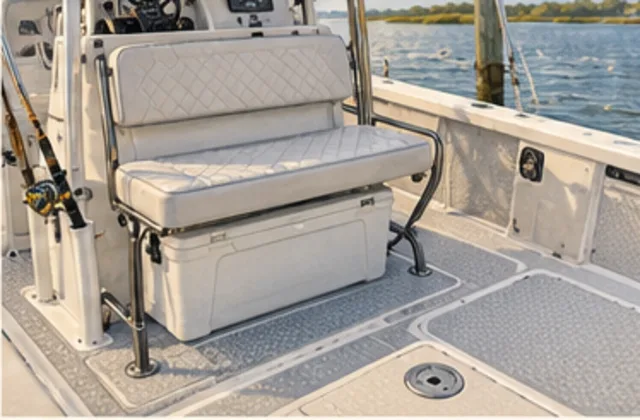
For a booking, passenger capacity means the guest limit to confirm for the actual boat and operation. It answers ‘How many of us may come?’ It doesn't answer how many can fish at once or how many are covered by an advertised price.
Count every guest before asking about a booking, including children and people who will only watch. Explain the intended fishing activity as well as the number: a group taking turns with one rod needs a different teaching arrangement from everyone trying to cast together. The provider must establish the actual boat and operation; this page does not calculate a lawful limit from length, seats or price.
Ask about three different numbers
How many guests may come aboard? Ask about the limit for the actual boat and trip. Don't work it out from a photograph, the number of seats or another boat's listing.
How many can fish at once? People need space to use rods, move and get help. Casting means sending your line out with a rod, so several beginners learning to cast may use the space differently from people taking turns at one fishing position.
How many does the price include? A quote for four guests may have a different charge for another person. It doesn't, by itself, tell you the boat's passenger limit.
Write the three answers separately beside the assigned boat, activity and quote date. Keep an unanswered figure open rather than borrowing it from another offer. Neither price coverage, available rods nor a photograph establishes the passenger limit.
For an entirely fictional inquiry, a group could receive three answers: five guests allowed, two fishing at once and four covered by the base price. That would leave turns and the fifth guest’s price to resolve. Those numbers are not a recommended or typical boat limit; the example shows why one answer cannot stand in for all three.
Think about the people coming
Ask where everyone sits during the ride, and where they stand or sit while fishing. Find out how turns work and how much individual help the crew can give.
Describe the jobs people want: instruction with casting, lowering bait, taking turns or watching. Ask how the crew shares help, handles unfamiliar hooks/fish and makes room for breaks. A passenger place, a riding seat, a seat for resting and a suitable fishing position answer different questions. Establish the actual position if someone wants to fish seated.
For beginners, ask for the sequence of a demonstration, supervised attempt and turn change. If only some can fish at once, discuss what others do while waiting. ‘Everyone may come’ is not a promise that everyone casts simultaneously or receives individual tuition.
Check the practical things early: shade, a bathroom, steps into the boat and seating at the fishing position. Someone who wants to watch still needs an agreed place aboard. Discuss assistance needs privately with the person coming and the provider.
What if you need more than one boat?
Make one entry per boat: assigned guests/count, trip contact, exact meeting point, arrival/departure/return, activity and full quote. Keep personal names and contacts in the appropriate private group record. Ask who coordinates the event and who sends each boat’s changes; the same marina name does not establish the same boarding point or timing.
A proposal for multiple boats needs confirmed space, guests, service, price and terms for each one. Ask whether departures depend on one another and what happens if only one boat cannot operate. Do not add two advertised limits and treat that sum as an available event booking.
Get any proposed guest reassignment and price change from the provider; the other boat cannot be assumed to absorb extra people. Boats can use different places or return at different times. Keep arrival, catch collection, onward transport and the meeting afterward with each boat’s own arrangements.
Keep the full headcount in every request, including people who won't fish. Arrange the group's transport and meeting afterward around the actual return from each boat.
Make one simple group plan
Before collecting money, ask what people want to do, how long they're happy to be away and what they want to spend. Someone may picture a short lesson while another wants a full day. Choose one contact to get answers from the provider and keep the group informed.
Agree the full quote for all guests, extras, paying shares and the person paying each provider. A sponsor or non-paying guest remains in the boat count. The standalone cost calculator can divide equal paying shares; the guided plan divides by its guest count, so keep unequal or sponsored payments separately.
If friends pay an organizer, record who advanced what, when payments are due and how a dropout affects the group’s agreement. That is separate from the operator’s terms. A deposit is an advance: establish how it is credited and retain the balance, money still due, beside the full cost rather than replacing the total with that balance.
Keep one message with the confirmed details:
Our fishing day
Last updated: …
Date, everyone coming and boat assignments: …
Actual meeting point, parking, arrival and departure times: …
Expected return, onward transport and any time needed at the dock: …
What we'll do, what the crew supplies and what each guest brings: …
Shared food, drinks and cooler—who brings each: …
Group price, paying shares, payments made and amounts unknown or due: …
Trip contact and how changes reach us: …
Link the actual meeting address, rather than just the town. Ask everyone to check their assignment, payment and supplies. Keep private contact or assistance details out of public shared links.
Divide shared supplies and plan the return
Assign food, drinks and any requested cooler instead of everyone packing duplicates. Check bag and cooler space with the provider. Each person should arrange the fishing license or documents their own activity requires; the organizer's booking does not settle those requirements.
If keeping fish, agree who collects them, how the catch will be divided, who brings the transport cooler and where each share will be stored. Confirm cleaning/packing charges and leave time after return for collection and payment.
Keep changes clear
Ask when the provider will update you about weather or other changes. Pass on the actual answer, what has changed and anything still undecided. For a new boat, date or activity, check that it works for the people coming before updating the meeting details, supplies and payments.
Label a replacement as proposed until the people affected and provider have settled the arrangement. Check actual guest count, riding/fishing/rest positions, instruction, quote and terms again for a new boat or activity. Then update the group message, mark its version and state what is confirmed versus still awaiting an answer. Retain the previous version, written booking terms and payment records; a group chat is not a substitute for them.
A useful question before paying is: “There are five of us, including one person who may only watch. Can you take our whole group, how many can fish together, and what is the total price?” The number describes the inquiry, not a recommended boat limit.
For operator-side background, see the Coast Guard's charter-captain information and passenger-operation notice. Other background references are Coast Guard boating information, NWS marine information and MGFC's contact page. The provider must confirm its own boat and arrangement; this page doesn't calculate a legal limit.