
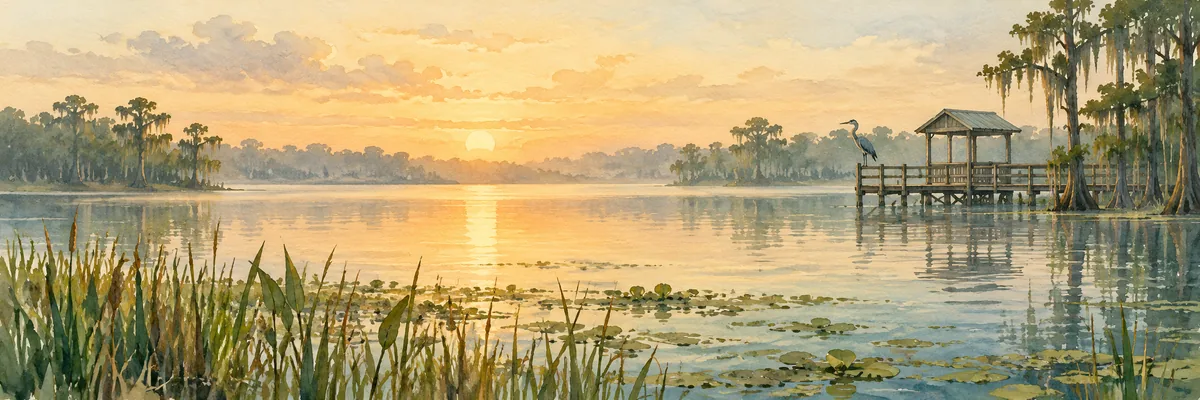
Cypremort Point is a coastal destination by Vermilion Bay. Its state park is a useful place to investigate a shore-fishing visit, a cabin stay or an outing by kayak or powered boat.
Start with the activity you'd enjoy. A short shore session, a kayak outing and a powered-boat day need different preparation even when they begin in the same broader area. Choose one actual facility or launch rather than treating the destination's amenities as a single included experience.
Use the park information to choose a specific visit
The official Cypremort Point State Park page describes fishing facilities, kayak access and accommodation among its amenities.
Treat that as a starting point, then read current notices and check the actual facility, hours, charges and allowed activity. A published amenity isn't confirmation that every part operates on your date. Keep the facility name, manager, entrance and arrangements with the date of your plan.
Check the route from parking to the chosen fishing position or launch, including how equipment gets there and back. For someone needing a shorter or step-free approach, establish the actual route and help required. Save the relevant notices and booking details so you can check that same facility again before leaving. A substitute facility needs its own access and activity answers.
Picture a shore session
Bank fishing means fishing from land. A pier extends over the water. Check room to cast, a place to rest, toilets and exposure to sun or weather at the particular position. A boat ramp is not automatically a shore-fishing position.
Before packing fishing gear, learn how its parts work together: the rod controls the line, the reel stores and winds it, and the hook holds bait or forms part of an artificial lure. Have the casting and return shown with the equipment you'll use. Casting means using the rod to send the line and bait or lure out; it needs clear space around you, not only water in front. The casting lesson explains that movement.
From a suitable permitted position, try a manageable cast with a known setup and appropriate help. Follow the line or float after landing, then retrieve—bring the line back with the reel—before it reaches an obstruction. Inspect for plants, tangles or a caught hook before repeating. One shorter or clearer cast is easier to compare than changing several parts at once; the result does not establish depth or fish presence.
For an illustrative first visit, the goal could be a few controlled casts and time to inspect the setup, followed by a break at an agreed place. No catch is needed to complete that learning goal. Confirm whether equipment or instruction is available rather than assume a public facility supplies it.
For children and observers, plan space for watching and breaks as well as the people handling rods. Ask about the particular facility instead of assuming the whole shore is available for fishing. The bank-fishing guide covers the full shore-outing preparation.
Decide separately about kayaking
A kayak is a small craft, usually moved with a paddle or pedal system. A launch is the place where you put it into the water; it doesn't establish the suitability of every route beyond it.
Confirm the actual entry and exit, equipment you must bring, any hire arrangements and instruction available. Identify the craft provider and what the charge includes if hiring; park access does not by itself supply a kayak, lesson or fishing setup.
Plan the return to the exit point using current weather and water information for the intended route. Allow time for landing, carrying and loading the craft before the relevant facility or hire deadline. Do not schedule the end from time on the water alone. The kayak-fishing guide explains what the paddling and fishing jobs involve.
Open bay water is a different task from a sheltered practice area. If you're new to the craft, get instruction before adding fishing equipment and trying to manage both at once. A first shore visit can be a complete choice while you learn craft handling separately; adding a kayak is not simply a way to reach farther with the same preparation.
Keep the boat ramp and accommodation details clear
The park information distinguishes a boat launch outside the entrance from facilities within the park. Check the manager, entrance, parking, charges and return arrangements for the actual launch rather than assuming park admission covers it. A powered-boat outing needs its own craft, operating skills, route and current information; this destination page is not navigation instruction.
If booking a cabin or other accommodation, identify the property, nights, people, included facilities, check-in and checkout. A room doesn't automatically include a craft, a fishing guide or permission to use another dock. Keep lodging, launch access and any hire bookings identifiable, including their own payment and change terms.
Match checkout to the shore cleanup or craft loading and any collection. Establish where bags and cold-stored fish can go if the outing continues after checkout. Do not assume the room remains available because fishing or boating finishes later.
Understand the coastal water and the return
Brackish water mixes fresh water and seawater. It describes the environment, while Louisiana's official saltwater line is a separate licensing question.
Use the Louisiana Department of Wildlife and Fisheries' license guidance for the actual activity and place, and check catch rules separately. Decide release or lawful keeping and learn the necessary handling before starting.
Pack drinking water, clothing for the outing, personal essentials and a contained place for rubbish. Assign shared food, equipment and any cooler, checking what is actually supplied. If keeping fish, arrange handling, preparation, collection and cold storage through the journey home.
Leave time to collect equipment and rubbish, carry bags or load the craft before the applicable closing or return deadline. Keep a way to contact the site, hire provider or accommodation for unresolved arrangements. If the chosen facility or activity changes, revisit access, equipment, instruction, costs and return jobs rather than treat another option as automatically equivalent.