
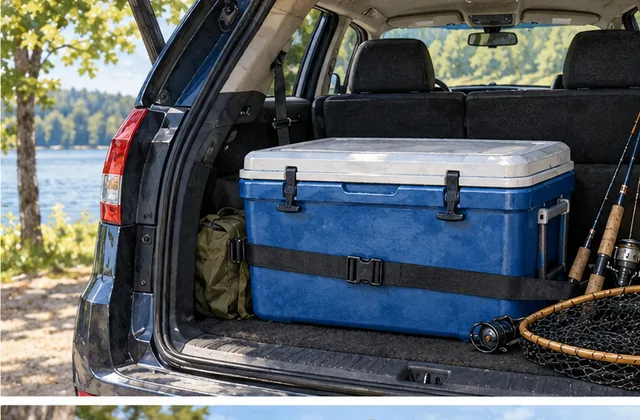
Plan the route for each share of the catch, from collection to its next confirmed storage. Include waiting, transfers and overnight stops as well as the drive or flight. Use the chilling and transport guide for the container and cooling supplies.
Transporting your catch means more than getting a cooler into the car. You need to know what you're collecting, how it will stay properly stored and which rules apply along the journey.
Plan that journey before deciding to keep fish. If nobody has suitable storage or a realistic use for them, discuss release preferences before the outing.
Start with the handoff
Ask the crew or cleaner what you'll receive: whole fish, cleaned fish, fillets or frozen portions. A fillet is meat cut away from the backbone; processing can include cutting, packing or freezing, depending on the service.
Confirm when it's ready, whether it's chilled or frozen, who collects it and what cooler, ice or packaging you supply. If friends leave in different cars, name each person's share and destination before dividing packages. Each recipient needs their own suitable storage plan; one cooler doesn't solve several separate journeys.
Keep the expected handoff separate from the actual collection: what was requested, what is ready, its chilled or frozen condition and when responsibility passes to the collector. If a service or freezing step isn't ready, revise the departure and storage arrangements rather than treating the booking as completion.
Keep the species, where the fish came from and collection details with each share. Agree how the cleaner identifies your group's packages and check any official identification or documentation requirements before cutting or dividing. Personal labels help organization; they don't replace required records.
For a drive, plan beyond the mileage
The cold chain means keeping perishable food properly cold through each stage. Write the actual sequence: collection, any wait or meal stop, drive, overnight stop if needed, and final storage. Confirm the storage available at each stop rather than counting only the hours spent driving. For each stage, record who has the fish, where it goes next and who has confirmed that storage. Keep an unanswered hotel or pickup question visible until it is resolved.
For an illustrative split journey, one share goes straight home while another stays overnight before a flight. The second share needs answers for the hotel, airport transfer, carrier and destination pickup; the first driver's cooler plan doesn't cover those stages. If both shares initially travel together, name the point where they separate and who takes over each one.
Use an appropriate container and cooling arrangement for that journey, keeping raw fish protected from contamination and separate from ready-to-eat food. Secure the cooler and avoid opening it repeatedly for snacks.
If a delay adds a night away, arrange that night's storage rather than extending the original plan by assumption. Use the cooler guide for the supplies and handoffs, and the FDA seafood guidance for temperature and handling instructions.
For a flight or shipment, ask the carrier first
Check the actual airline or shipping service before paying for packing. Ask about the accepted container, cooling materials, weight, labeling, baggage or shipment arrangements and any connections.
Don't assume loose ice, gel packs, dry ice or a taped cooler are treated the same way by every service. Dry ice is a different cooling material with its own handling and carrier conditions; don't add it casually as an alternative to ordinary ice.
Keep the carrier's answer with the actual itinerary: service, route, connections, accepted container and cooling material, and any size or weight conditions. Record the source, stated conditions and date checked; a saved answer for another service or itinerary may leave this journey unresolved.
Confirm the period before check-in and the journey after collection at the other end, including who receives the fish and the next storage place. A marina's packing service, carrier booking and actual baggage or shipment acceptance are different stages. None automatically arranges final storage. If the service or connection changes, revisit the affected packing and handoff questions before relying on the earlier answer.
Check the catch rules before cutting or transferring fish
Possession concerns fish you have with you or hold under the applicable rules; it isn't necessarily identical to what you're allowed to keep in one fishing day.
Check requirements for the species, waters fished, landing, cleaning, sharing and route. Some rules need fish to remain identifiable or require particular documentation. Match the official guidance to each affected activity and place, retaining its source, effective period and the date checked. An answer about keeping the fish where it was caught may leave cleaning, possession, transfer or another part of the route unanswered. Don't use a generic label template as proof of compliance.
Start with Louisiana fishing information and the other responsible agencies for your trip. Ask while the fish can still be handled as required, rather than discovering a condition after it has been cut up.
Keep a short return note for each share:
- Species, origin, preparation and collection details, with any required records.
- Named collector and actual chilled or frozen condition at handoff.
- Route, transfers and overnight stops, including who holds the fish at each stage.
- Container and cooling arrangements, carrier conditions where relevant, and next confirmed storage.
- Any question still open or change that needs an updated answer.
Personal trip notes organize the journey; they don't establish legal compliance or food condition. If the recipient, route, service or overnight stop changes, update the affected stages before handing over the fish.