
Work through three separate moments: checking the arrangements before booking, getting aboard with the crew and settling into the position for each part of the day. The first-charter guide places these steps in the full trip from booking to return.
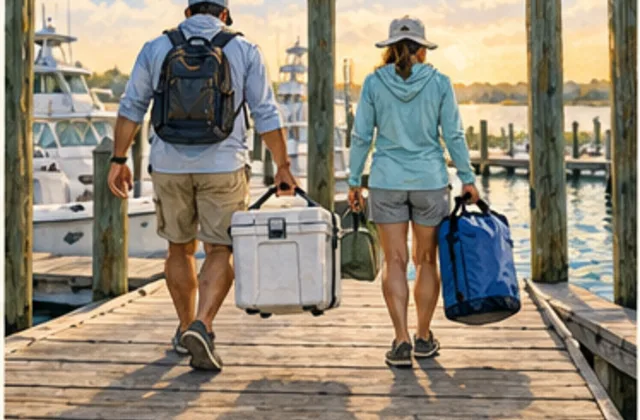
A dock is a platform beside the water used to reach boats. Getting from it onto the boat may involve a step, gap or narrow entrance, and the boat or dock can move. That part of a first trip may look different from the fishing photos.
Tell the crew it's your first time. Let them show you where to board, what to hold and where to put your things. You don't need to figure it out while carrying a cooler.
Check the boat before you book
Ask about the actual route from parking to your seat: the walk along the dock, any steps or gaps, and where you'll fish once aboard. If someone needs help, discuss the arrangement with them and the operator ahead of time.
Ask for a photo of the actual boarding point and seats. Then describe the step or movement you need to check: stepping down, crossing a gap, using a handhold or fishing while seated. Ask what help the crew can provide and what still needs arranging. Discuss personal assistance needs privately, with the guest involved, rather than have someone guess for them. ‘Easy access’ doesn't answer those questions. The access-planning guide follows the full journey from parking to fishing.
Check these comforts too:
- Seating: where people sit during the ride, and whether there's a usable seat for anyone taking a break.
- Shade: where it is and how much of the group it covers.
- Toilet: whether there's one aboard and how much privacy it has. A boat's toilet is often called the head.
- Shelter: where guests can get out of spray or rain.
A deck is the boat's floor area. A raised deck used for fishing may offer standing room without being a suitable seat for the ride. Ask the crew to explain the layout rather than choosing from the boat's passenger number alone. Check the route between the riding seat, fishing position, toilet and break space, not just whether each feature exists. If the boat or meeting dock changes, confirm the affected arrangements again.
Let the crew get you aboard
Wait until the crew says they're ready. Tell them if a step looks difficult or you need more time. Arrange for bags and other gear to be passed or loaded as directed, so you aren't trying to manage everything while stepping across.
Once aboard, ask where your bag goes. Keep walking areas clear, and learn where the crew wants guests during departure. Use the handholds and seats they identify for that boat.
If the crew names a handhold or boarding place you can't identify, ask them to point it out before you step. If the gap or step differs from what you discussed, stop and explain what doesn't work before trying it. Let the crew and guest resolve the next step instead of having companions improvise a lift. The sequence and assistance must fit that boat and person.
Settle in before the ride
The crew's briefing is its explanation of the boat, guest positions and what to do during the trip. Ask where your life jacket is, how to put it on, how fit is checked and when it needs to be worn for that outing. Learn how to get the crew's attention if you need help.
The bow is the front of the boat; the stern is the back. The helm is where it is steered. If the briefing uses a word you don't recognize, ask the crew to point to the place or show the action.
The crew should tell you where to ride and when it's okay to move. If you need the toilet or an item in a stored bag during the ride, get their attention and ask before leaving your position. Don't pick a position from a general internet tip: seats, handholds and boat layouts differ.
Wear clothing suited to sun, wind and spray, with layers you can adjust. Ask which footwear the operator wants guests to use. Keep water and useful personal items where you can reach them without unpacking into the walking space.
Speak up when you need a break
Tell the crew early if you feel uncomfortable, unwell, too hot or too cold, or need the toilet. There's no prize for quietly enduring the day, and the crew can't help with something they don't know about.
Before moving around to fish, ask where to stand and how to share space with other rods and hooks. When you're finished, put equipment where the crew directs.
For example, a guest may have a suitable riding seat but need a different arrangement to fish seated. Raise that before the fishing starts; don't assume a standing casting area will work because the ride was comfortable. Ask where the rod goes during a break and how to return to the seat when the crew prepares to move.
Before departure, be able to identify your riding place, stored bag, life-jacket arrangements and how to get help. Before fishing, know your position and how to stop and stow the equipment as directed. Use the same approach on return: wait for the crew's instructions and say if the step ashore needs more time or different assistance.