
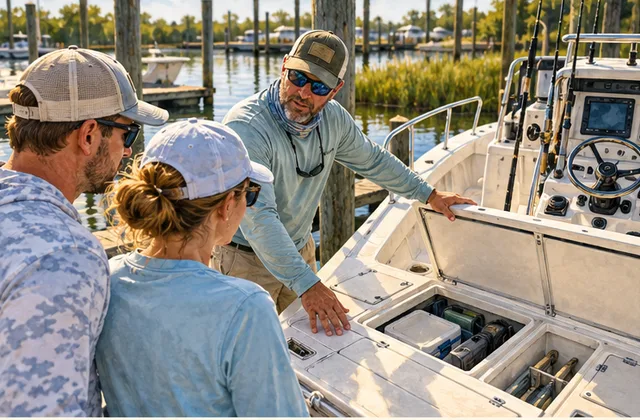
Picture the day in stages: meet and board, ride out, learn the fishing setup, take turns or breaks, then return and finish the handover. The first-charter guide connects that sequence to the questions to settle before booking.
A fishing charter is a paid boat outing with a captain. The captain operates the boat and leads the trip. There may also be a deckhand, a crew member who helps with equipment, fish and guests.
You don't need to arrive knowing how everything works. Here's the usual sequence to picture, with the details set by your particular booking.
Meet the crew and get settled
Use the confirmed meeting point and arrival time. A marina is a place where boats are kept; it can have several docks, so save the specific meeting instructions rather than only the marina name.
Check in with the booked guest count and tell the crew you're new. Confirm the expected return and any detail that differs from your booking before departure. If you are delayed or cannot find the boat, use the agreed contact to confirm the dock or boarding point.
Let the crew explain how to board and where to put bags. Ask where you can sit, how to use any toilet and what to do when you need help.
Listen to the briefing before departure. If you haven't understood something about the boat, equipment or life-jacket arrangements, ask for a demonstration.
Ride to the fishing area
The boat ride to a fishing area is often called the run. If the booking says dock-to-dock, the advertised time includes leaving the dock, the ride out and the return ride—not just time fishing. The trip-length guide explains how to read that schedule.
Follow the crew's directions about where to ride and when to move. Use the time to get comfortable with the boat; there's no need to unpack all your things or assemble gear while it's moving.
Ask where the first fishing stop fits into the plan. The ride can be quite different between a lake, a marsh and open coastal water. A stop, species or order of activities discussed in advance may change with the captain's plan for the day; ask what the change means for your part in the outing rather than treating this sequence as a fixed itinerary.
Learn the first setup
A setup is the rod, reel, line and hook or lure used for the activity. Bait is something such as shrimp on a hook; a lure is artificial. At the fishing area, the crew should explain which setup you'll use and who handles each part.
You might cast—send the line out with the rod—lower a hook toward the bottom, or fish while the boat moves. The fishing-methods explanation shows the differences.
Watch one complete demonstration before trying it: how line goes out, how to stop or move it, how to wind it back, and the response to a bite—a fish taking or touching the bait or lure. Then try that sequence with the crew's help. Ask which parts you do yourself and which the crew does, including baiting and hook removal.
For example, if you understand how to send the line out but not how to stop it, ask the crew to repeat that part before your next attempt. Describe the action you are unsure about; you don't need the equipment's technical name to ask for help.
If you hook a fish, ask for help bringing it to the boat and removing the hook. Don't feel you have to handle unfamiliar fish or sharp equipment to prove you're joining in.
Expect pauses, moves and turns
Before the boat moves between spots, stop fishing when directed and ask where the rod and exposed hook go. Return to the riding position, then wait for the crew to explain when and where to start again. Your fishing position may differ from your riding seat; don't assume the place you used the rod is the place to stay during the next ride.
Not everyone necessarily fishes at once. On some trips guests take turns with the rods; on others each person has a setup. You can also take a break and watch. Tell the crew if you're uncomfortable or need a pause rather than waiting until you're miserable.
A quiet spell is possible too. Ask what you should watch for or change, and let the crew direct any move or different setup. A booked fishing trip doesn't promise a catch at each stop.
If you are taking a break when turns change, tell the crew so they know whether you want to rejoin. You can ask for the setup to be demonstrated again after a move or change of method.
Return and finish at the dock
Let the crew tie up and tell you when to get off. Check for your phone, bag and other personal items before leaving.
If you've kept fish, confirm the cleaning location and when you can collect them. That may take time after the boat returns. Agree who will collect the catch and take it to the arranged cooler or storage; don't assume the whole group leaving the boat means that handover is complete. The catch-cleaning guide explains the collection questions.
Check the balance, the amount still due, and any agreed extras against your booking before paying. Ask about an unfamiliar charge before settling it and keep the receipt. If no fish are coming home, there may still be payment and personal-item checks before you leave.
Leave room in the rest of your day for that handover. The boat's return time and the time you're ready to drive away aren't always the same. Finish with three checks: everyone and their belongings are ashore, the booking's payment is settled or any open amount recorded, and any catch collection has a named person and agreed arrangement.