
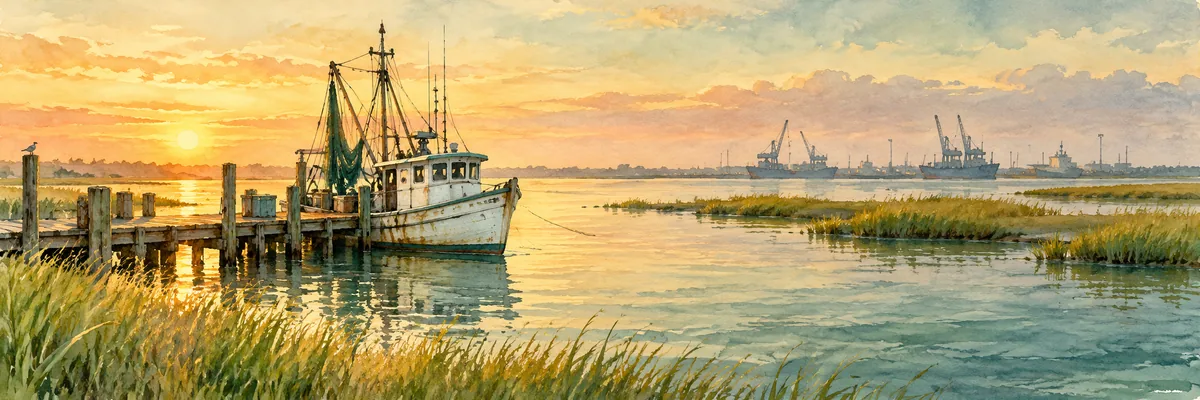
Port Fourchon is a working coastal port in Lafourche Parish, used by commercial vessels serving offshore industry as well as by fishing departures in the area.
For a first visit, think of it as a place to meet a particular boat, rather than a resort where every dock is a visitor facility. Choose the fishing activity and get the guest meeting instructions before arranging the drive or stay. A listing for the wider area is a starting point, not directions to a public fishing spot.
Get the departure clear before planning the drive
An offer may describe the wider Fourchon, Leeville or Grand Isle area. Those names don't identify the same marina or boarding point.
Get the marina or dock name, address or map pin, entrance, parking instructions, requested arrival and a contact for the day. Ask where to go after parking and who will meet you. If you've been given a company office address, check whether it's also where guests board. Keep arrival separate from boat departure, and save the final instructions where you can retrieve them on arrival.
Give the driver the entrance and boarding instructions, not just the destination name. Establish where passengers and bags can be dropped off, where the vehicle stays and how pickup works. If two messages show different docks, resolve that before setting off instead of choosing the pin that looks closest.
A visible dock or commercial slip doesn't establish public access. Follow the operator's guest instructions and the site's arrangements. Someone looking for independent bank fishing needs a specifically permitted fishing position; a charter departure address does not supply one.
Picture the fishing, not just the port
You might be investigating a coastal nearshore trip, a longer offshore outing or a marsh/bay trip from the surrounding area.
Nearshore means relatively close to the coast; offshore means farther into open sea. Inshore usually refers to coastal marshes, bays and coastal lakes. The labels help start a conversation, but don't specify one distance, ride or fishing method.
Ask what you'll do with the rod. Casting sends bait or a lure out using the rod; a lure is an artificial object used to attract fish. Other trips may have you lower bait beneath the boat or move a weighted lure up and down. Trolling means pulling bait or lures behind a moving boat, with guests taking turns when a fish bites. The offshore-methods guide explains those jobs.
For a first lesson, ask to see the complete action for the actual method: how to release and stop line, what movement or pause to use, what to watch for and how to bring the line back. Establish supervised attempts, turns and help with bait, tangles, landing and hooks. Repeated casting practice and taking a turn on a trolling rod are different learning experiences, even if both offers mention the same fish.
American Gulf Fishing Charters and Down The Bayou's offshore information are references for investigating their services. Get the actual boat and offer for your booking; these references do not confirm a current departure or availability.
Build a practical arrival and stay
Choose accommodation after the departure is confirmed. A room described as near a destination may still need a separate transfer to the dock. Check the actual route and current travel information rather than relying on a generic drive-time claim.
Write down arrival, departure, expected dock return and readiness to leave after unloading, payment and any fish collection. Dock-to-dock means departure to return, including both rides, moves and breaks. It is not all hands-on fishing. The duration guide helps fit the boat day around a room, pickup or onward journey.
Ask what food, drinks and personal items to bring, then arrange them before boarding. Don't assume the meeting location has every shop or service you might need. Assign shared supplies and establish what bag or cooler space is available aboard.
If fishing and lodging are packaged together, identify the property, nights, rooms, meals and who handles each booking and payment. Match check-in and checkout to the boat schedule. A changed departure or date needs its room and transfer implications checked separately; a package description does not settle every change term.
Let the crew explain the working harbor
Commercial traffic and the fishing boat's operating plan are matters for the crew. As a charter guest, learn where to wait for boarding, where your bag goes and which seats to use during the ride. Wait for the crew's directions before stepping aboard or moving into its working area.
Describe everyone's practical needs for the assigned boat before paying: boarding help, riding seats, fishing positions, breaks, shade and toilet arrangements. Count children and observers too. Passenger allowance, people fishing at once and guests covered by the price are separate questions. The boarding-and-comfort guide helps you discuss assistance.
If you're bringing your own boat, a destination article isn't local navigation instruction. Prepare the craft, route, skills and current information appropriate to the outing rather than copying a description of a charter departure.
Settle the price and return details
Keep the quote tied to the boat, date, hours, activity and full group. Mark fuel, bait, equipment and requested cleaning as included, extra or unanswered. A separately calculated fuel charge needs its basis and estimate before the base price can be treated as a complete total. Keep the full charge, credited deposit, payments made and balance separate.
Ask who gives the next decision, when to expect it and what applies if the trip is canceled or the boat, dock, duration or fishing activity changes. Check that a proposed alternative still suits the group before rearranging the stay and transport.
Resolve the applicable fishing and catch requirements for the actual outing and agree release or lawful keeping. For fish taken home, establish handling, cleaning, charges, collection place and time, and cold storage for the journey. Assign the collector and transport cooler rather than leave the handoff to whoever is last off the boat.
Keep the confirmed boarding instructions with the quote and return arrangements, and share them with your driver. A changed departure means updating the entrance, parking, route and pickup as well as the destination name.