
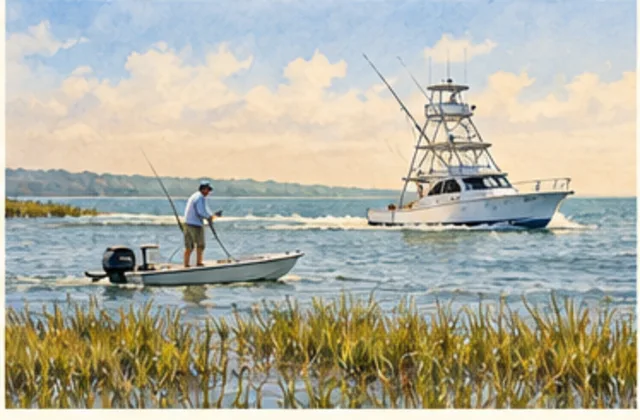
An overnight fishing trip keeps you out on the boat through the night. You might leave one day and return the next, with fishing, travel and rest fitted around that schedule.
That's different from a fishing weekend where you return to a hotel each evening. Before choosing, decide whether everyone wants to remain aboard through the night. Compare the whole time away, places to rest, meals and return travel, not simply the number of fishing hours. The fishing-weekend guide helps compare an outing with nights on land.
What happens during the night?
The plan depends on the boat and the kind of fishing. Some trips include fishing after sunset; others use part of the night for travel or rest. You won't necessarily fish continuously, and everyone doesn't have to handle a rod at the same time.
Ask for the expected order of the trip: departure, ride, fishing periods, meals, rest and return. Times may be estimates, so ask which parts can change. Find out whether guests take turns and whether you can stop fishing to rest while others continue. A species list won't explain that experience.
If you're new to boat fishing, say so. Ask what you'll be doing, what help the crew provides and whether a day trip would be a more comfortable introduction. Make clear whether you want to fish after dark or mainly want more time away: the word ‘overnight’ doesn't establish either experience.
Write the proposed sequence with dates beside it. A departure on one evening and a return the following morning can be mistaken for a full second fishing day if the offer lists only times. Ask which hours include travel, fishing and rest, and keep estimates labeled as estimates.
Find out what sleeping aboard actually means
“Overnight” describes the schedule. It doesn't promise a bed or a private room.
A bunk is a bed aboard a boat; a cabin is an enclosed space. Ask for photos of the actual sleeping area, how many guest sleeping places it has and whether those places are available together or shared in turns. Confirm bedding and where personal bags go. A seat for a break isn't the same arrangement as a bunk.
Also ask about:
- A toilet and privacy for using it. You may hear a boat's toilet called the head.
- Shelter from spray, rain, sun and night air.
- Space to sit out of the way when you're taking a break.
- Storage for bags, food and drinks.
- Which crew members are aboard and how guests should get help during the night.
Explain any essential access, seating or rest needs before paying. Trace the route between the fishing area, rest space and toilet, including any steps or assistance. Ask how to get the crew's attention at night and where guests wait when they are not fishing. These are details to settle with the operator before leaving the dock.
For example, ‘four bunks’ doesn't tell a group of six whether everyone can rest at once or whether two people must wait for a turn. Ask who uses each sleeping place, when it is available and whether that arrangement works for everyone. Don't describe a shared rest schedule as a private sleeping space.
Pack for living aboard, not just fishing
Start with the operator's list. Check each meal and drinking-water supply across the whole outing, along with bedding and fishing equipment. Mark what is included, what costs extra and what guests bring. 'Meals supplied' still needs an answer about which meals and any essential food needs. Put the meals against the dated schedule so a late return doesn't disappear from the supply questions. Discuss personal requirements privately and confirm what the provider can actually arrange.
Bring compact personal items you can keep dry: clothing layers, rain protection, a change of clothes, sun protection and toiletries. Ask what footwear and personal lights the crew wants guests to use. Space may be limited, so confirm before bringing large coolers or extra equipment.
Assign shared food and drinks to named people, then confirm the boat's storage arrangements. Check that assigned supplies have been obtained and packed or have a confirmed collection plan; an inclusion still to ask about is an open item. Keep items you'll need during the night within the agreed guest storage space. The packing guide helps separate your personal bag, group supplies and things left for the return.
Plan the return before you leave
Save the actual departure and expected return dates as well as times, especially when the trip crosses midnight. Confirm the price for the actual group, fuel or other extras, deposit and balance, leaving any unanswered charge visible. Ask how weather changes affect the boat, overnight hours, activity and payments. A shorter day trip or another date may be an offered alternative; get its details before deciding whether to accept it. Use the marine-forecast guide for the full outing rather than only the first afternoon.
Leave room after the expected return for unloading, payment and any fish-cleaning arrangements. Name who collects any catch and where it goes while the group rests or travels. Don't plan a long drive that depends on everyone coming back well rested. Arrange rest or another driver in advance, with room for a changed return time.
Before paying, keep one confirmed outline with the boat and guest count, dated schedule, sleeping arrangements, included and guest-supplied items, payment/change terms and return plan. Recheck the affected details if the boat, group or dates change; a replacement boat with the same passenger count may offer a different night aboard.
For an example of an operator's trip information, see Paradise's booking page. The current boat, schedule and terms need to come from your own booking. If keeping fish is part of the plan, check the applicable rules with LDWF and NOAA Fisheries.