
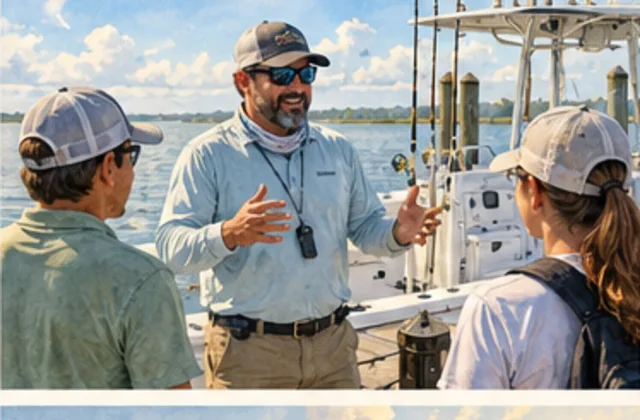
A fishing guide is someone you pay to take you fishing and help you along the way. A fishing charter is a boat trip you book with a captain. Going on your own means arranging the place, equipment and fishing yourself—whether you're on a bank, a pier or a boat.
Choose by the activity and the jobs you want help with, not simply whether you own a boat. Going independently does not mean going alone; it means arranging the outing yourself. Guided help can also vary, from instruction through a complete sequence to crew-managed fishing where guests take turns. Describe the experience you want before comparing the price.
What a guide helps with
A guide may help choose the place, prepare equipment and teach its use. Establish which of those jobs the actual service includes. Local knowledge, a supplied rod and time aboard are useful but do not automatically amount to a lesson with repeated practice. Ask about the method, group size, instruction and turns for the outing you are considering.
Tell the guide what kind of help you're looking for. “I've never cast a fishing rod” is a different starting point from “I can fish, but I've never been on this lake.” Casting means using a rod to send your line out over the water.
Ask: ‘Will I set up the rod, cast and bring the line back myself, or will the crew do some of that?’ Also find out whether everyone has a rod or shares turns. Both can be enjoyable, but a trip where you mostly watch may not give you the practice you wanted.
Separate equipment from help using it. Ask which rods, bait or lures suit the planned activity, who prepares them, who handles hooks and fish, and which services are included in the price or extra. Arrange release or lawful keeping, cleaning, collection and the journey home too. A supplied rod does not settle instruction or every catch-care job.
Keep the jobs that remain yours: reaching the actual meeting point, personal fishing requirements, clothing and essentials, agreed shared supplies and payments. Establish the assigned boat, boarding/facilities, departure/return and change terms. Use the provider’s actual instructions rather than carrying over another trip’s inclusions.
What going on your own involves
You don't need a boat to fish independently. A public bank or pier can give you a simple place to start. Bank fishing means fishing from the shore; a pier lets you walk out over the water.
You arrange three things yourself:
- A usable place and return: identify the permitted fishing position, opening hours, fees and actual approach from parking or a launch. Include the return point, facilities, transport and what changes would make you revisit the plan.
- A complete setup you can use: a rod is the pole you hold and a reel holds and winds line. Match the hook, any weight or float, bait or lure to one intended method. A lure is artificial; bait is natural food on a hook. Borrowed equipment still needs a suitability/condition check and someone who can show you its controls.
- The whole fishing sequence: learn release, stopping line, waiting or moving the bait/lure, bite response and retrieval—bringing line back. Arrange help with landing and unhooking before catching a fish, rather than treating those as jobs to improvise afterward. The first-cast lesson and freshwater setup guide explain a starting point.
Going independently doesn't mean going alone. An experienced friend can help you learn, and you can go with family or a group without hiring a guide. You choose when to stop, but you'll also deal with tangled line, missing supplies and decisions about where to try next. Keep the first visit short enough that stopping or changing the plan is easy.
A kayak or your own boat adds a separate craft-and-route job: preparation, launch, operation, applicable equipment/requirements and return. Fishing skills do not by themselves prepare you to operate a craft on unfamiliar water. Compare that whole undertaking with a managed bank/pier visit rather than treating every independent option as the same amount of work.
Compare more than the price
With a guide, compare the instruction and supplied equipment as well as the trip length. Get the price for everyone coming: some trips charge for the whole private boat, while shared trips may sell places per person. The private and shared trip guide explains that difference.
For an independent visit, list suitable equipment already owned or borrowed, then itemize missing equipment, bait, access/rental/launch charges, travel and return supplies. Distinguish reusable purchases from costs for this outing. Keep unknown amounts visible; borrowed equipment may reduce a purchase without removing the need to learn and arrange its use.
Compare the same guests, intended activity and full time away. A complete guided quote includes different work from a park entrance fee. Likewise, buying a whole new kit for one comparison can obscure an option using suitable equipment you already have. Keep inclusions, preparation and instruction beside the money.
For a hypothetical goal—learning one controlled cast—ask a guide about demonstrations, supervised attempts and turns. For an independent alternative, identify suitable access, hook-free practice equipment, the lesson and an experienced helper where needed. Compare what you will actually practice and who does each job, rather than assuming either format supplies the same experience.
The cost guide helps itemize the money, and foundations helps choose the first action. Neither a lower cost nor more advertised hours establishes the right level of instruction for your group.
Start with the experience you want
If your goal is “show me how to fish,” look for a guide who welcomes beginners and explains the teaching they offer. If your goal is “a couple of quiet hours outside,” a straightforward bank or pier trip may be closer to what you want.
You can combine the approaches: take an appropriate lesson, then practice the learned sequence at a suitable independently arranged place. Ask which setup, controls and practice conditions transfer, and which jobs still need help. A lesson on one method or boat is not a promise that all equipment and places work the same way.
Before choosing, write the activity, people, desired help, access/transport, equipment and unresolved jobs for each option. Use the independent-fishing collection or ask a provider for the matching guided service. There is no need to buy a boat or plan a large outing to make a useful start.
Background references: Louisiana's fishing information, recreational fishing guidance, South Toledo Bend State Park information and Coast Guard boating information. Check the current information for the place and activity you choose.