
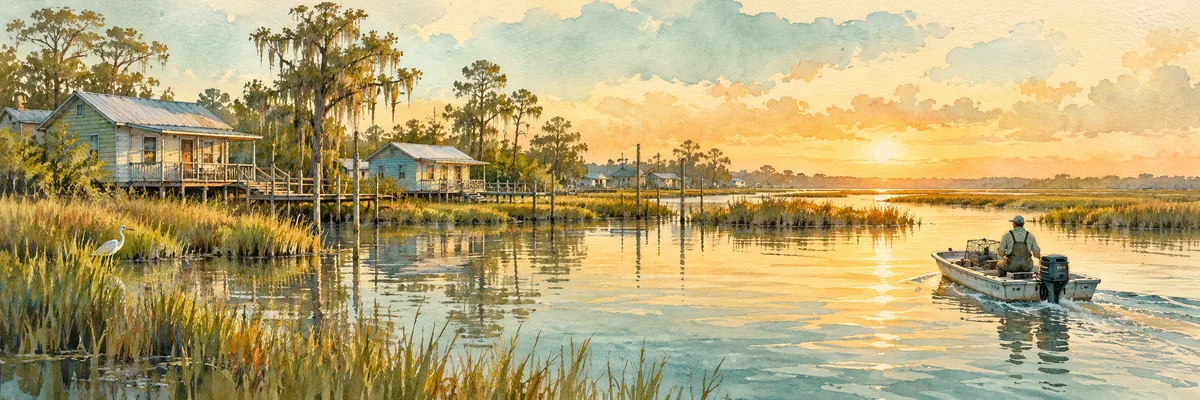
Cocodrie is a fishing departure area in Terrebonne Parish on Louisiana's coast. It can be a base for exploring marsh and coastal fishing rather than a single standard boat trip.
Tell a provider whether you want a first lesson, casting practice or a group outing with room for breaks. Then connect that activity to the actual dock, boat and any stay being offered. A regional destination name does not settle those arrangements.
Picture the marsh and coastal day
Inshore fishing usually means marshes, bays and coastal lakes. A lure is an artificial object used to attract fish; natural bait is food placed on a hook. With a float setup, a cork or bobber sits on the surface and a baited hook or lure hangs below it. Ask to see how the parts fit together, how to control loose line and what response the actual setup requires when the float moves.
A marsh day can include fishing beside grass edges and moving between connected waterways. Casting sends bait or a lure out with the rod; retrieving brings it back. From an agreed boat position with suitable help, practice a short cast with a clear return path. Follow where the line or float moves after landing, bring it back before an obstruction and inspect for plants or tangles before another attempt. The inshore-methods lesson explains those activities.
For an illustrative observation, a float landing beside grass and then moving into it raises a question about the path after the cast. Try a shorter or clearer cast with the same demonstrated setup before changing bait, weight and movement together. Plants on the returned hook do not establish depth or whether fish are present. Keep the boat's position and any move with the operator's instructions.
The boat may also cross more open bay water between stops, so ask about that part of the ride too. Marsh scenery does not describe the whole route or establish sheltered conditions throughout.
A nearshore outing uses coastal waters relatively close to land. Its route, boat and fishing method can differ from an inshore day; it isn't automatically the same activity for fewer or more hours.
Ask what guests actually do and how the crew helps someone new. A list of possible fish doesn't explain whether you'll be casting, lowering bait or taking turns. For a learning-focused visit, establish demonstrations, supervised attempts and who handles bait, tangles, landing and hooks before booking.
Keep Cocodrie and the assigned dock connected
Cocodrie Anglers' information describes service in the broader Cocodrie/Bayou Dularge area. Use it to investigate that provider, then get the actual meeting point for your booking.
Get the dock or marina name, address or map pin, entrance, boarding directions, parking instructions and trip contact before choosing a room or arranging a ride. Keep requested arrival separate from boat departure. A Cocodrie/Bayou Dularge service description doesn't tell you which boarding point your trip uses.
If you're driving in early, think about finding the departure in unfamiliar surroundings. Arriving the previous day may be an option for your group, but compare the extra night with your actual schedule and budget. Give whoever is driving the final directions and ask how a changed dock or time will be communicated.
Ask what a stay or package includes
If an offer mentions lodging, ask which property, which rooms, how many nights and whether meals are part of it. Lodging simply means the accommodation where you'll stay. Count everyone staying as well as everyone fishing; those groups may differ.
Separate the package into the boat service, rooms and meals, with what each includes and any extras. A supplied rod and reel do not imply food, drinks, a room or fish cleaning are included. A room described as near the fishing still needs its actual journey to the assigned dock checked.
Match check-in, the required morning arrival, expected boat return and checkout. Resolve where bags go after checkout and whether an early meal or later fish collection is arranged. The lodging guide covers the stay without assuming the boat's schedule changes the property's terms.
Agree who handles each booking and payment, and what happens if weather changes the fishing date. A package can still contain services with different change or cancellation terms. Keep an unanswered term visible rather than assume one contact or payment makes all arrangements interchangeable.
Match the boat to the people coming
Count everyone, including people who would like to watch. Separate the allowed passenger count from people fishing at once and guests covered by the price. Ask about instruction, turns, usable seats during the ride and while resting, shade and the toilet arrangement on the actual boat.
If someone needs boarding help, describe the step or movement they need assistance with and ask how it works on the assigned boat. Discuss personal needs with the people concerned and provider. Confirm whether the seat is available during fishing as well as the ride, and how someone can take a break. The accessibility guide helps you discuss those needs before paying.
Ask what bag and cooler space is available. You can pack a practical personal bag without arriving with equipment the crew already supplies. Assign shared food and drinks to named members of your group so a shared item is neither duplicated nor forgotten.
Make the end of the day straightforward
Get the whole-group quote with fuel, bait, equipment and other services clearly marked as included, extra or unanswered. Keep the full charge, deposit credit, payments and amount still due separately. Ask about the next decision contact, timing and terms for cancellation or a changed boat, activity, duration or date before arranging connected travel.
Resolve personal fishing and catch requirements for the actual people, water, date and activity, and agree release or lawful keeping before fishing. If taking fish home, confirm handling, cleaning, charges, collection and cold storage for your journey. A cooler for the drive may stay in the vehicle; use the operator's instructions for what goes aboard.
Keep expected dock return separate from readiness to leave after unloading, payment and collection. Assign who collects fish, who brings the transport cooler and where the group goes next. The dock-to-dinner guide follows that handoff.
Share final meeting instructions and packing jobs with everyone coming. If the departure or service changes, revisit the route from the room, boarding and seating, learning activity, cost and return arrangements affected by it. Finish with one current plan for the particular Cocodrie-area outing, not a mixture of old and new messages.