
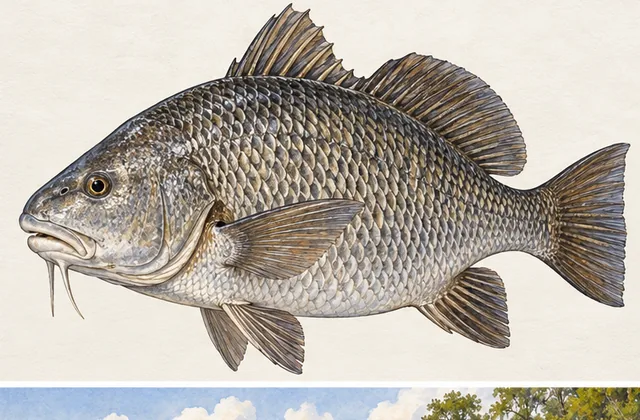
Black drum are coastal fish, distinct from redfish, which are red drum. They use marshes, bays and passes—connections between coastal waters—and feed on animals including crabs, shrimp and mollusks.
A mollusk is an animal such as a clam or oyster. That food helps explain why anglers talk about placing bait on or near the bottom when discussing black drum.
Learn a few visible clues
Black drum have whisker-like feelers called barbels under the chin. Younger fish can show dark vertical bars, which become less obvious as they grow.
Redfish and sheepshead can enter the same identification conversation, so compare several features with the Louisiana Sea Grant black-drum reference. A striped fish isn't automatically a black drum, and one color isn't a full identification.
Look at those features in the reference before the outing, and ask the crew to point them out on a catch. Use the chin, body markings and full comparison together instead of letting a nickname or advertised target identify the fish. Keep an uncertain name unresolved until you have the identification needed for a keeping decision.
Understand what a bait setup does
Natural bait is food placed on a hook. A bottom rig uses a weight and hook arrangement to reach the intended area on or near the bottom.
You may hear about shrimp or crab bait. A bait rig lets you present that food in an intended area and watch for a response. Have the actual weight, hook and line arrangement shown, including how to release and stop line, hold or move the bait as intended and retrieve—bring the line back with the reel. A setup meant to hold bait is not automatically worked like a moving lure.
Keep the rod under control and inspect the bait, hook and line on return; a bare or tangled hook is a different result from the intended presentation. The weight needs to suit the setup and water movement, rather than simply being the biggest one in the box. Learn the hook response before fishing; a changed pull can involve a fish, movement or an obstruction.
Another method uses a float, also called a cork, at the surface with bait below it. The float shows the surface position rather than the hook's exact location in moving water. Ask where the bait should travel and how to respond with the actual rod and hook. A float setup and a bottom setup answer different presentation questions; neither measures fish position simply by being in the water. The coastal-rig guide compares the arrangements.
Learn the feature without copying a spot
Shell, plants and posts are examples of cover—objects or plants in the water. Structure means the shape of the bottom, such as a channel edge or slope.
From a suitable permitted position, use a known setup with appropriate help. Choose a reachable placement with space to cast and a clear path back. Watch where the line travels as bait sinks, and retrieve before it reaches an obstruction or becomes unmanageable. Inspect bait, hook and line before repeating. Keep boat position and any moves with the operator's directions.
A visible shell edge doesn't establish the bottom slope, depth or fish beneath it. A hook can catch an object as well as a fish; if that keeps happening, compare the path rather than add weight or pull harder by default.
For an illustrative comparison, a cast beside a reachable shell edge returns debris on the hook. After inspection, compare one slightly clearer path using the same setup and movement. Record what changed and whether the next return was clear; catch or no catch is a separate observation. This doesn't measure depth or establish fish absence. You don't need to move closer to a bridge or navigate into a pass to practice that control.
Be clear about the day you want
A small-group marsh introduction and deliberately seeking a large fish can involve different equipment, effort and landing arrangements. Explain the desired activity, not just a fish name or photograph.
For a guided trip, ask whether black drum are the focus or one possible catch on a mixed-species day. Establish demonstrations, supervised attempts, turns and who handles bait, tangles and hooks. Keep that activity with the actual boat, guest positions, whole schedule and full-group quote; supplying rods doesn't establish individual instruction. If the service changes, revisit those affected answers.
For your own outing, choose a permitted place and learned setup, with a manageable return and appropriate landing help arranged beforehand.
A large fish needs a suitable plan; don't lift it with the line or rod tip because you're unsure of the next step. Let the crew explain its process.
Keep the catch decision separate
Once you know which fish you've caught, check the Louisiana Department of Wildlife and Fisheries' saltwater information, including measurement, size, count and other conditions. Don't apply a remembered redfish rule to black drum.
If you intend to eat the catch, use the consumption-advisory guide for the eating check and arrange preparation and storage separately. A size nickname such as “puppy” or “bull” doesn't establish a legal category, food quality or health assurance.
Before starting, agree who brings a fish within reach, who identifies and measures it, who handles the hook and how release or lawful keeping is managed. The hooking and landing lesson explains those jobs. Personal fishing requirements, the catch decision and consumption advice remain separate checks. If keeping fish, establish preparation, charges, collection and cold transport before the return journey.