
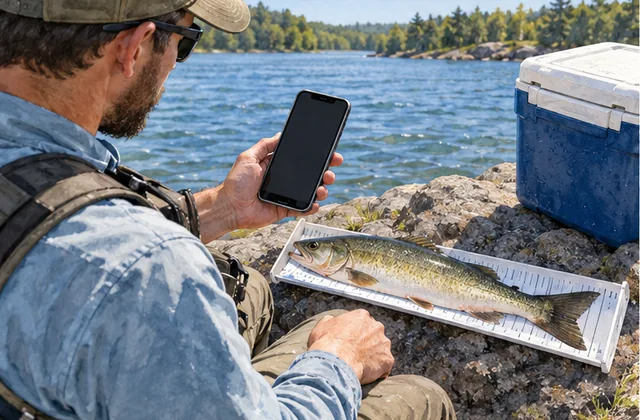
A fish-consumption advisory is official advice about eating fish, often for a particular species from a particular waterbody. It may recommend limits on how often or how much certain people should eat.
It's a different question from whether you're allowed to catch or keep the fish. A legal catch isn't, by itself, an answer about eating it.
Why the advice can vary
Some contaminants—substances that can be harmful—can be present in fish without being visible. The relevant advice can depend on the place, species and the people who will eat the catch.
Don't use appearance, smell, a good catch report or a “best eating fish” list to answer that question. Nor should you assume advice for one lake applies unchanged to another.
Start with the water and species
Use Louisiana's official advisory resource. Have the actual waterbody name and confirmed fish species ready.
A waterbody is the named lake, river, bayou or other area of water. Check the defined area in an advisory: a river section or connected water may be described more specifically than the nearest town.
Ask the person who caught or supplied the fish for the actual fishing water and species, not only the town where it was collected or cleaned. If either is unknown, keep that question open before choosing an entry. A marina, cleaner, package label or nearby town is not automatically the catch's origin. Keep each distinct source of fish identifiable when several people share a catch. The fish-identification introduction explains useful observations and names.
Read the whole entry
Check these details together:
- Place: the exact water or section covered.
- Fish: the species and any size category mentioned.
- People: who the advice is for, including any separate advice for children, pregnancy or other groups.
- Amount and frequency: how the source defines a serving or meal and the period it covers.
- Additional instructions: any preparation guidance, exceptions or related advice.
A serving is the amount the advice defines for a person. A family sharing a meal still needs to read the advice for each person and the source's stated period. Write down its serving definition, frequency and relevant group together; don't turn the phrase 'one meal' into an unlimited portion.
Keep the entry's source, named area, issue, effective or update date as stated and date you checked it separately. Opening a page today does not update the advice's date. Check status and linked updates alongside the full entry. If the map, place name or advice is unclear, ask the responsible agency which entry applies. A missing search result isn't an all-clear. If several pieces of guidance appear relevant, ask the responsible source how to read them together rather than add their meal allowances yourself. A more favorable nearby entry, a heading without its conditions or a different household's answer doesn't resolve a mismatch.
A usable record keeps place or section, confirmed species and any size condition, the relevant people or group, serving definition, frequency and period, extra instructions and source dates together. If one part doesn't match, leave that question unresolved instead of borrow another entry's allowance.
Don't invent a kitchen fix
Different concerns need different guidance. Cooking or trimming isn't a universal way to remove environmental contaminants. Follow the actual advisory rather than assuming smaller fish, skin removal or a particular cooking method settles it.
The FDA/EPA advice about eating fish, from the Food and Drug Administration and Environmental Protection Agency, is another reference for the people who will eat the meal. Read its scope alongside the local advisory; broad fish choices and advice for a particular waterbody answer different questions.
Keep a useful note with the catch
Keep waterbody or section, confirmed species, applicable entry and source dates and date checked with each catch or share, alongside the entry's relevant instructions. Preserve species and origin when fish are portioned or collected; cleaning and packaging don't supply missing advisory information.
For an illustrative split catch, one share driven straight home and another taken to a different household retain their own origin/source details. Each recipient checks the relevant people and eating plan; dividing the catch or calling it one group meal doesn't create a new combined allowance.
Pass on origin, species, the official source and handling and collection details needed by the recipient, keeping private health or eligibility details out of public/shared trip notes. If origin, species, recipient or eating plan changes, revisit the affected advisory match rather than assume the earlier answer transfers unchanged.
If eating the catch is central to the outing, do this check before deciding what to keep. It leaves time to choose an appropriate plan instead of trying to solve uncertainty at the dinner table.