
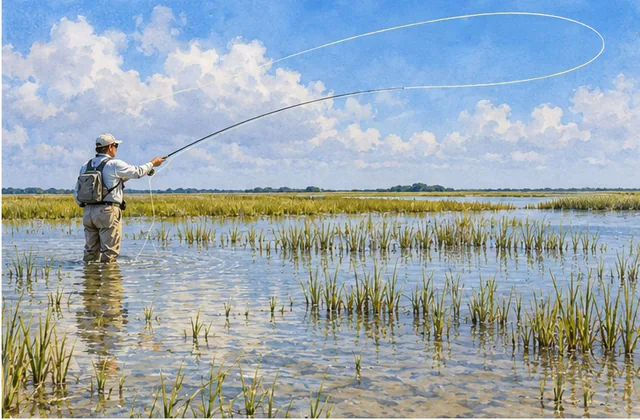
Fly fishing uses a specialized rod and line to cast a small artificial lure called a fly. A fly might imitate a shrimp, small fish or another food item. It isn't necessarily an imitation of a flying insect.
The casting movement takes practice. Start by deciding whether you want an introduction or already have skills you'd like to use on a fishing trip. For a first lesson, confirm that the offer includes practice, individual help and the equipment you'll learn with.
Picture the equipment and movement
The rod is the flexible pole; the reel holds the line. A leader is the separate section joining the main fly line to the fly. The fly can be very light, so the fly line helps carry it during the cast.
Your lesson involves both hands: controlling the rod and managing loose line. You'll learn to send the fly out, let it land and move it through the water. Pulling line in by hand to move the fly is often called stripping. Ask to practice that part too, not only the casting movement.
Have an instructor demonstrate the grip, line handling and casting movement, then watch you try. Begin in suitable clear space with hook-free practice equipment. Ask where your loose line should lie and where others need to stand before trying it with a hooked fly aboard a boat.
Work through a complete attempt: prepare the line, make the cast, move the fly and recover the line as shown. If one part is unclear, ask for that action again before adding another task. For example, a cast that lands where intended still leaves the question of how the guide wants you to move the fly afterward.
Sight fishing is related, but isn't the same term
Sight fishing means finding a fish or visible opportunity before placing a cast toward it. It can use fly gear or other suitable tackle.
On a marsh sight-fishing outing, the guide may spot something first and tell you where to look and cast. Before starting, agree how those directions will work. For example, if the guide uses clock directions, ask them to show which way is 12 o'clock from your position. Searching and waiting can be part of the day; you won't necessarily cast continuously.
Light, wind and visibility affect what you can see and do. Ask what the day involves if those conditions make the intended activity difficult. Does the offered alternative still include the lesson or activity you wanted, and how would it affect the hours or payments? No booking can promise a particular number of visible fish.
Tell the guide exactly where you're starting
“I've never held a fly rod” is useful information. So is “I've fished fresh water, but not from a coastal boat.” You don't need to exaggerate your experience to join the conversation.
Ask whether the outing includes learning the cast, managing the line and moving the fly, or expects those skills already. Find out whether practice happens before departure or during the booked hours. Some specialist days use skills you've learned elsewhere; choose an offer that actually includes the beginner help you want.
Discuss turns too. A booking for several people doesn't necessarily mean everyone casts at once. Ask how practice, individual help and fishing turns are divided, what companions do while waiting and whether a guest can take a break. Compare that format with the whole group's expectations before booking.
Check the actual boat and supplies
Confirm the rod, reel, line, leader and flies supplied for the trip before buying gear. If you'd like to bring your own equipment, send the guide its details and ask whether it fits the planned method.
Check where you'll stand or sit, boarding, shade, toilet arrangements and room for your bag. Ask about the route between your riding seat and casting position, and whether the planned instruction works from a position you can use. Wading means entering the water to fish; a shallow-water trip doesn't automatically include it. If wading is proposed, confirm the instruction and equipment arrangements separately before buying specialist clothing.
Choose a lesson, not just a fish name
Southern Fly Expeditions and Poisson Rouge are references for specialist services. Ask each about its current instruction, availability and terms.
A useful inquiry names the dates, group, experience and what you'd like to learn. Ask for the actual meeting point, full time away, complete price, supplied equipment and change arrangements. Keep the lesson content, practice time and any unresolved charges with that proposal. Sending an inquiry doesn't reserve the outing; obtain the provider's confirmation under its booking process.
Your first goal can be modest: understand the cast, follow the guide's directions and make a controlled attempt. Before finishing, ask the instructor to repeat one action you want to practice later. Note the equipment used, the action and what still needs work; arrange any later hook-free practice in suitable clear space. A distant target or large catch doesn't have to define the first lesson.