
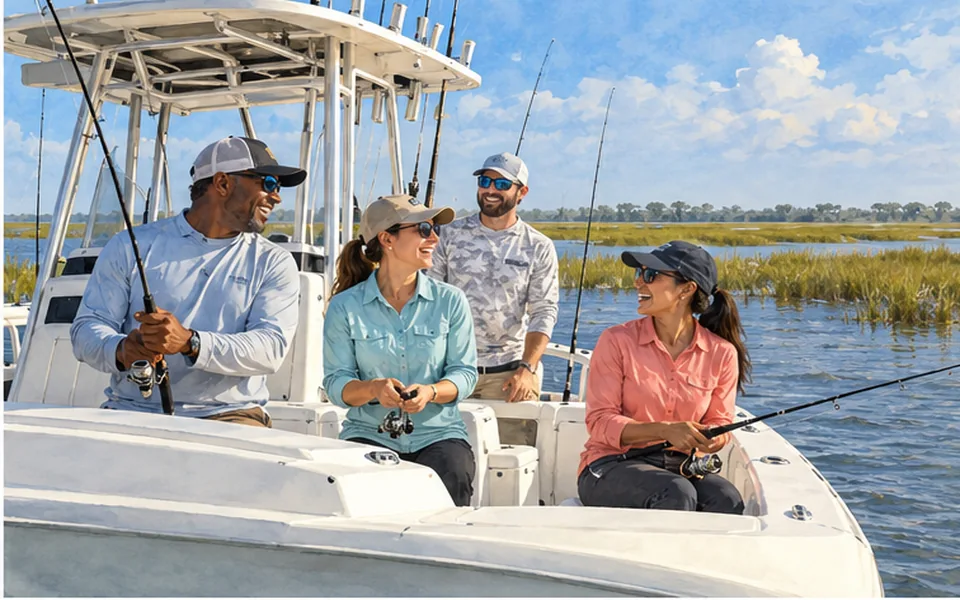
A group fishing trip might be a company outing, a bachelor party or another celebration. Choose what people would enjoy before collecting money: a lake lesson, a coastal charter or a longer day in the Gulf.
One organizer can keep the plan clear: who's coming, what they'll do, which boat each person uses, the full cost and who handles changes. Keep three stages clear: the proposal, internal or group approval, and the provider's booking confirmation. Company purchasing and friends splitting a bill have different details to settle, so those questions are explained separately below.
Decide what kind of event you want
A charter is a boat trip booked with a captain. On a private charter your group books the outing; a shared trip sells individual places alongside other guests. Several boats and a meal afterward are a different arrangement again. A lodge-based event may add rooms, catering and gathering space.
For a company day, discuss whether the purpose is a client visit, an employee thank-you or part of a retreat. For a celebration, start with what the person being celebrated and their friends actually want. Ask how much of the outing is riding, fishing or taking turns. A freshwater guide may suit a lake lesson; “nearshore” means closer to the coast, not necessarily a short trip. Offshore heads farther into the Gulf.
Explain how much time guests have and their fishing experience. Ask what beginners do, how instruction is shared and what seats, shade and bathroom facilities the actual boats provide.
Give people who don't want to fish an alternative plan they want to join. Ask about participation and essential arrangements privately before assigning boats; don't treat an invitation as agreement to fish. A boat headcount isn't necessarily the full number attending dinner or staying overnight. Confirm the meeting, transport and meals for guests staying ashore too.
Get the boat groups clear
Keep a private list of each boat, who is assigned to it, its meeting point, trip contact and quote. Confirm who coordinates the captains if several boats are involved. Give guests the instructions for their own boat rather than only the event's general destination. Count people who only want to watch too. Ask separately about each boat's passenger limit, room to fish and group quote; don't choose a headcount just to make the advertised share look cheaper.
For a fictional headcount example, eighteen people divided into groups of three would need six boats. That is allocation arithmetic, not evidence of an available fleet or a passenger limit. The provider must confirm the actual boats and groupings.
Find out how an early return or a change affecting one boat is handled. Several boats booked for one event won't necessarily stay beside each other or return at exactly the same time. Keep each boat's status visible: proposed, confirmed or still awaiting an answer. An allocation list or approval to spend doesn't establish that the provider has reserved the fleet.
Build a proposal someone can approve
List each boat's complete cost, then shared event costs such as transport, meals and rooms. Include each confirmed charge once and mark estimates or unanswered charges clearly. Check fuel, equipment, cleaning and fees for each boat; an inclusion on one quote doesn't settle another. The cost guide explains keeping the price, payments and unknown costs separate.
Include:
- The event purpose and the guest and fishing counts.
- Boats, services, proposed schedule and actual departure points.
- Confirmed charges, estimates and open questions.
- Payment dates, quote expiry and change terms.
- Who approves spending, makes the booking and keeps the supplier contact.
For a company outing, ask for the invoice—the bill used for payment—and any supplier details your organization needs. Confirm who can approve the proposal, who may accept the provider's terms and who actually sends payment. Check those steps against quote expiry and payment dates before promising a booking. Don't assume a provider's description of corporate services answers your purchasing requirements.
If the provider revises a boat, service or total after approval, show the change and unresolved cost to the spending approver before accepting it. Keep the approved version, provider confirmation and payment record together rather than let an old total stand in for the revised event.
Agree the payment split for a celebration
Decide which costs friends will share before anyone books. Travel, rooms and meals belong in that shared total only if the group agrees to include them.
For a made-up example, $2,100 split equally among six people is $350 each. If five friends cover the sixth person's share, those five pay $420 each. These are calculation examples, not charter rates or evidence of boat capacity.
Agree who holds the booking, who collects money and when friends pay. A deposit is a payment ahead of the trip; the balance is what's still owed. Record contributions received separately from money paid to the provider, along with due dates and unpriced extras. If someone drops out, ask how the service and provider price change before revising shares. Keep an expected refund separate from money returned. Your agreement among friends is separate from the provider's terms.
Check the celebration's party rules
Ask about drinks, containers, coolers, food, music and decorations before packing. Another boat's policy doesn't give permission on this one. Share the confirmed rules, assign shared supplies and leave unapproved items out until the provider answers. Arrange transport and the group's conduct around the actual outing's requirements.
Make the day workable for guests
Get the actual meeting address, arrival and return arrangements before promising meetings or meals afterward. A trip marketed to visitors staying in New Orleans may board elsewhere. Include travel, boarding, unloading and any fish collection in the schedule. If keeping fish matters, arrange the applicable rule checks, cleaning, collector and transport cooler before the day.
Talk privately about essential access or assistance needs before assigning people to boats. Keep guest contact details and personal needs with the organizer rather than in a public share link. Make room for guests who want to watch, rest or learn slowly, and ask how instruction and turns work.
If you want a friendly competition, discuss a format with the provider that fits the activity and applicable rules. The event can be about learning and time together without depending on a catch tally.
Agree who handles changes
Ask who decides whether each boat goes out, when you'll hear and who passes the answer to guests. Agree what happens if all boats cancel or only one cannot provide its trip: guest assignments, payments and any replacement boat or date need answers. The weather-and-cancellation guide explains the questions to settle before booking.
For example, if one boat cannot provide its trip while the others can, ask which guests and charges are affected, what alternative is offered and whether its seats, method and hours fit. Confirm any new allocation with the provider and affected guests; don't assume another boat can absorb the group or that the whole event has the same refund outcome.
Rooms, meals and transport can have their own terms. Check the effect of that change on the gathering and journey home, then keep one dated plan and one internal contact for attendee updates.
Compare the provider's written response with your requested dates, guest counts, activity, boat groups, return time, other services and company approval needs. Give each unanswered item an owner and keep it open until the relevant reply settles it. After confirmation, pass each group its own meeting and contact details without circulating the full private guest list.
Provider references: Go Long's corporate information, its bachelor-party information and TopWater Charters. Each describes its own services; confirm the current arrangement, assigned boats, policies and full quote directly. No fleet is reserved by this page.